How to Pressure Wash Roof Shingles Without Causing Damage
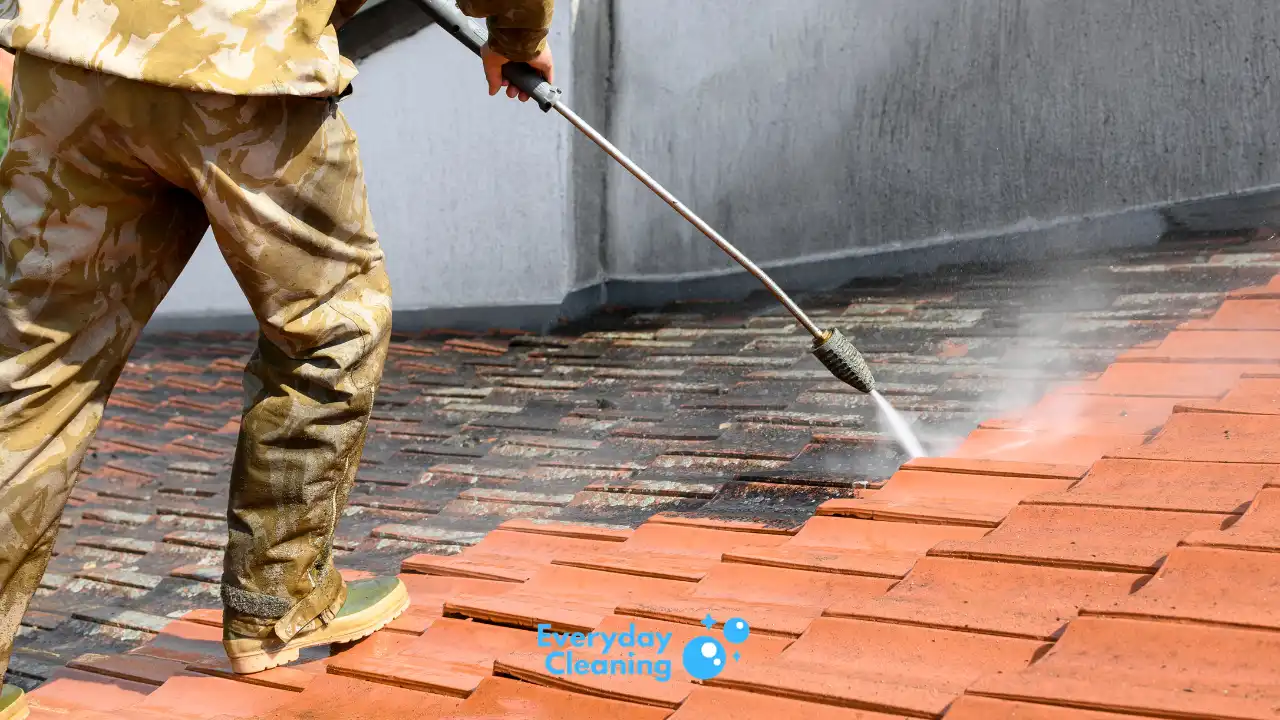
If your roof is covered in moss, lichen, or algae, a pressure washer can clean it effectively without damaging the shingles. You just need to use the right technique.
What You Need Before You Start
You do not need a lot of gear. A standard gas or electric pressure washer works fine for most residential roofs. If you are still shopping for one, check out the best pressure washer for roof cleaning to find a model sized for this kind of job.
The most important thing is having the right nozzle tip. The wrong tip can strip granules off your shingles or force water underneath them. Both outcomes are bad.
You will also want non-slip footwear and a dry place to stand on the roof. More on that in a moment.
The Best Pressure Washer Tip for Roof Cleaning
Use the 25-degree tip. That is the green tip on most standard nozzle sets.
The 25-degree tip produces a wide, strong stream that dislodges moss, lichen, and algae without concentrating pressure on one small spot. It is aggressive enough to clean but controlled enough to protect the shingles.
Do not use a 0-degree or 15-degree tip on roof shingles. Those are too focused and will blast granules off the surface faster than you think.
How to Pressure Wash Roof Shingles Step by Step
Step 1: Set Up Safely
Before you climb up, plan your footing. Wet shingles are slippery. Work from a dry section of the roof whenever possible and move carefully.
Wear rubber-soled shoes with good grip. If your roof pitch is steep, consider a safety harness. Falling off a roof is not worth a clean surface.
Step 2: Test One Shingle First
Do not start blasting the whole roof right away. Pick one shingle and clean just that section.
After cleaning it, inspect it closely. Check whether the colored granules are still intact or if you can see them washing off in the water. If granules are coming loose, you are either too close or using the wrong tip.
This test takes 30 seconds and can save you from damaging an entire roof section.
Step 3: Aim the Spray Downward
This is the most important rule of how to pressure wash a roof. Always aim the nozzle down the slope of the roof.
Never aim the spray up the shingles. Pointing the water upward drives it underneath the shingles and can create leaks inside your attic or ceiling. Even at moderate pressure, water forced under shingles is a serious problem.
Keep the spray going in the same direction that rain naturally flows: from the ridge down to the eaves.
Step 4: Adjust Distance to Get the Balance Right
Hold the spray tip a few feet away from the shingle surface to start, then adjust as needed.
The goal is maximum cleaning with no shingle damage. If you are too close, you risk stripping granules. If you are too far away, the moss and algae will not come off cleanly.
Move slowly and keep the tip moving. Do not hold the spray in one spot for too long.
Step 5: Work in Sections
Move across the roof in manageable strips. Clean one section, inspect it, then move on.
This gives you control over the results and helps you spot any problem areas early. Take your time. Rushing leads to missed spots and uneven cleaning.
What About Moss, Lichen, and Algae?
Moss tends to be the most stubborn of the three. It can have deep roots embedded between the shingles.
Pressure washing will remove most surface growth, but very thick moss may need a second pass or a pre-treatment with a roof cleaning solution before you wash. Let a moss killer or roof cleaner dwell on the surface for the recommended time, then pressure wash it off. The same approach works well if you deal with moss on other outdoor surfaces — the guide on how to remove moss from a patio covers a similar process in more detail.
Algae and lichen usually respond well to a single pass with the pressure washer at the right distance and angle.
Will Pressure Washing Damage My Shingles?
It depends entirely on technique. Done correctly, pressure washing is safe for asphalt shingles.
The key risks are granule loss and water intrusion. Granule loss happens when you use too much pressure, get too close, or aim incorrectly. Water intrusion happens when you spray upward.
Shingles that are already worn or near the end of their lifespan are more vulnerable. If your roof is old and the granules are already thinning, be extra careful with distance and pressure.
Asphalt shingles in good condition can handle pressure washing without any issue. A 20-year-old roof can come out looking clean and undamaged when the job is done right.
Safety Tips to Keep in Mind
- Always stand on a dry section of the roof
- Wear shoes with good grip
- Work slowly and check your footing before each step
- Aim the spray downward at all times
- Do not use the zero-degree or 15-degree red and yellow tips on shingles
- If your roof pitch is very steep, use a ladder and extension wand from the ground instead
Cleaning from the ground with an extension wand is slower, but it eliminates the fall risk entirely. For steep roofs, that tradeoff is worth it.
How to Pressure Wash a Roof: Common Mistakes
Spraying upward. This is the single biggest mistake homeowners make. Water forced under shingles leads to leaks. Aim down, always.
Using too much pressure. High PSI is not always better. A controlled 25-degree spray at the right distance does more useful work than a powerful focused blast that strips granules.
Not testing first. Skipping the one-shingle test means you might clean half the roof before realizing you are causing damage. Always test before committing.
Rushing the job. Roof cleaning is not fast. Moving too quickly means you miss spots and increase the chance of slipping. Slow, steady passes give better results.
Frequently Asked Questions
Can you pressure wash an asphalt shingle roof?
Yes, you can. The key is using the 25-degree tip, aiming the spray downward along the slope, and keeping an appropriate distance to avoid stripping granules. Done carefully, it is safe and effective even on older shingles.
What PSI should I use to clean roof shingles?
Most homeowners get good results with a pressure washer in the 1,500 to 2,000 PSI range. Higher PSI is not necessary and increases the risk of granule damage. The tip angle matters more than raw pressure. Stick with the 25-degree green tip. If you want a deeper look at how PSI choices play out across different jobs, the best pressure washer for moss roundup breaks down which machines handle soft biological growth best.
Should I use a roof cleaning solution before pressure washing?
For algae and light surface growth, plain water with a pressure washer is usually enough. For thick moss or stubborn lichen, a pre-treatment with a roof cleaner or diluted bleach solution helps loosen the growth before you wash it off. Always follow the product directions and rinse thoroughly.
How often should you clean your roof?
Most homeowners clean their roof every two to three years depending on how much tree coverage, shade, and moisture the roof is exposed to. Roofs in humid or shaded areas tend to develop moss and algae faster and may need more frequent cleaning.
Is it better to clean a roof from the ground or from the roof itself?
For safety, cleaning from the ground using an extension wand is the better option on steep roofs. For low-pitched or walkable roofs, working from the surface gives you more control over the spray angle and distance. Just make sure to stand on dry sections and move carefully.