How to Clean a Vacuum Brush Roll (Step by Step)
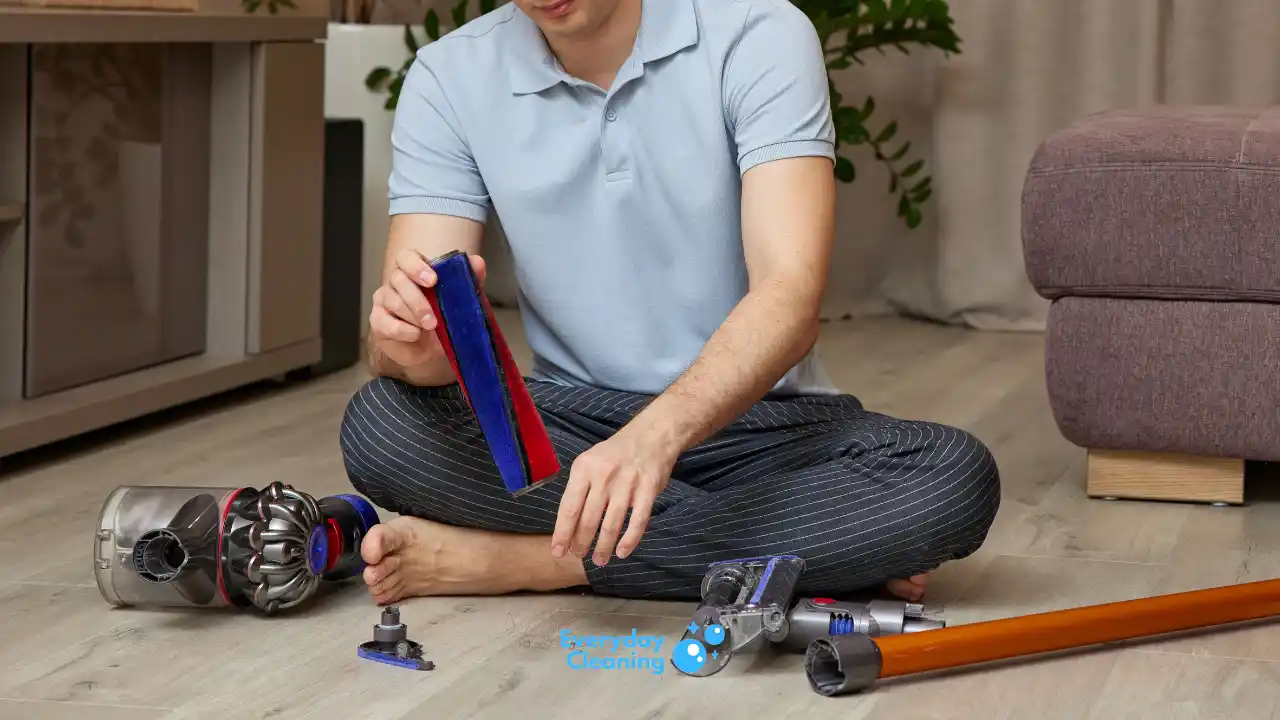
A tangled brush roll is one of the most common reasons a vacuum loses performance. Hair, thread, and debris wrap around the roller until it can barely spin. Cleaning it takes ten minutes and makes a bigger difference than most people expect.
Why the Brush Roll Gets Clogged
The brush roll sits at the base of the vacuum head and spins at high speed to agitate carpet fibers and push debris toward the suction inlet. Every time it spins, it also picks up whatever is on the floor.
Hair is the main problem. Long hair, pet fur, and thread wrap around the roller with every pass. Over weeks of use, this builds into a thick layer that slows the spin, reduces agitation, and eventually stops the roller from turning at all. A brush roll that cannot spin properly leaves debris behind instead of picking it up.
Most vacuums have a brush roll indicator light that turns red or shuts off if the roller is blocked. If you see this warning, the brush roll is the first thing to check.
What You Need
- Scissors or a seam ripper
- Flathead screwdriver or coin (for the base plate)
- Old toothbrush or stiff-bristled brush
- Warm water and a small amount of dish soap
- Dry cloth or paper towels
No special tools required. A pair of scissors and five minutes handles most routine cleanings.
How to Clean a Vacuum Brush Roll: Step by Step
Step 1: Unplug the Vacuum
Always unplug before working on the brush roll. The roller spins fast and the bristles are stiff. A vacuum that powers on accidentally while your hands are near the brush roll is a real hazard.
Step 2: Remove the Base Plate or Access Cover
Flip the vacuum head over. Most models have a removable plate held in place by one or two screws, a coin-slot fastener, or a simple clip. Remove it to expose the brush roll.
Check your vacuum manual if you are not sure how the plate comes off. On some stick vacuums, the entire floor head detaches and opens from the side. On robot vacuums, the brush roll typically lifts out of two end caps without any tools.
Step 3: Remove the Brush Roll
Once the plate is off, the brush roll usually lifts straight out. Note which end faces which direction before removing it. Most brush rolls are symmetrical but some have a specific orientation.
Check the end caps or bearings where the roller sits in the housing. Hair wraps around these too and is often missed. If the end caps are removable, pull them off and clean the axle underneath.
Step 4: Cut Through the Wrapped Hair
This is the most time-consuming part. Hair wraps tightly around the roller and does not pull off by hand.
Use scissors to cut through the hair in one or two places along the length of the roller. Make shallow cuts so you do not damage the bristles underneath. After cutting, the hair peels off in sections. Pull it off by hand and dispose of it.
A seam ripper works better than scissors for tight, compacted hair. The hook-shaped blade slides under the hair layer and cuts without risk of clipping the bristles.
Work from both ends of the roller toward the center. Hair packed near the end caps is the most difficult to remove and is often what is slowing the spin even when the main roller surface looks clean.
Step 5: Clean the Bristles
Once the hair is removed, the bristles usually have embedded debris, dust, and grit packed into their base.
Use an old toothbrush or stiff brush to scrub along the length of the bristles. Work from the base of each bristle outward to push debris out rather than packing it in further.
For light debris, this dry brushing is enough. For heavy buildup or if the bristles feel stiff and matted, wash the roller.
Step 6: Wash the Brush Roll (If Needed)
Many brush rolls can be rinsed with warm water and a small amount of dish soap. Check the manual first. Some rollers have internal components or foam sections that should not be submerged.
For washable rollers, rinse under warm running water while scrubbing the bristles with a toothbrush. Work along the length of the roller in both directions. Rinse until the water runs clear.
Shake off excess water and leave the roller to air dry completely before reinstalling. This is the same rule as HEPA filters: a damp brush roll reinstalled into the vacuum can promote mold and cause odor. Allow at least 24 hours.
Step 7: Clean the Brush Roll Housing
While the roller is out, clean the channel it sits in. Debris, hair, and fine dust pack into the housing and restrict the roller from spinning freely even after the roller itself is clean.
Use the toothbrush or a damp cloth to wipe out the housing. Check the suction inlet at the back of the head for any blockage while you have access.
Step 8: Reinstall and Test
Reinsert the brush roll in the correct orientation. Replace the end caps if you removed them. Reattach the base plate.
Plug the vacuum in and run it briefly on a carpeted surface. The brush roll should spin freely and the indicator light (if any) should show green. If the roller still struggles, check the belt.
Checking the Belt While You Are In There
Most brush rolls are driven by a rubber belt connecting the roller to the motor. A stretched or broken belt is the other common cause of a brush roll that does not spin.
With the base plate off, look at the belt. It should be taut with no visible cracks, fraying, or slack. A belt that slips off the roller when you spin it by hand needs replacement.
Belts are inexpensive and model-specific. Search your vacuum model number plus “belt” to find the right replacement. Swapping a belt takes five minutes once you have the right part and is worth doing any time you do a deep brush roll clean.
How Often to Clean the Brush Roll
| Household Type | Cleaning Frequency |
|---|---|
| No pets, short hair | Every 2–3 months |
| One pet or long hair | Monthly |
| Multiple pets or heavy shedding | Every 2–3 weeks |
The fastest way to tell if cleaning is overdue: flip the vacuum over and look at the brush roll. If you can see a visible layer of wrapped hair, it needs cleaning. A clean brush roll should show bristles clearly with minimal wrapping.
For pet hair specifically, the brush roll clogs faster than in any other household type. A vacuum with an anti-tangle brush roll or a self-cleaning roller reduces this significantly. Our guide to the best vacuum cleaners for pet hair covers which models handle pet hair with less frequent manual cleaning.
When to Replace the Brush Roll
Cleaning restores performance when the issue is hair and debris. Replacement is needed when:
- The bristles are visibly worn down and no longer make proper contact with the carpet
- The roller is cracked, bent, or damaged
- The brush roll spins freely but performance does not improve after cleaning
- The bristles have become permanently matted and do not spring back after washing
Replacement brush rolls are available for most popular vacuum models. Use the vacuum model number to find the correct part. Third-party rollers often fit and work well, typically at lower cost than OEM parts.
If the vacuum is older and replacement parts are hard to find, a full vacuum replacement may make more sense than hunting for parts. Our best vacuum cleaners roundup is a useful starting point if you are at that stage.
Frequently Asked Questions
How do I know if my brush roll needs cleaning?
Flip the vacuum over and look at it. Visible hair wrapped around the roller, a red brush roll warning light, reduced pickup on carpet, or a burning rubber smell during use are all signs the brush roll needs attention.
Can I cut the hair off without removing the brush roll?
You can trim the surface hair with scissors while the roller is still in the vacuum, but you will not reach the packed hair near the end caps. Full removal gives you access to the entire roller and the housing underneath.
Why does my brush roll keep getting tangled?
High-shedding pets and long human hair are the main causes. Vacuuming more frequently reduces how much hair accumulates per session. Anti-tangle brush rolls found on some premium vacuums cut hair before it can wrap, which is a hardware solution to the problem.
Is it safe to wash a brush roll?
For most solid plastic or rubber rollers, yes. Avoid submerging rollers with foam or fabric sections unless the manual says it is safe. Always air dry completely before reinstalling.
Does a dirty brush roll damage carpet?
A brush roll packed with hair drags across carpet rather than agitating it properly. Over time this can matt carpet fibers in high-traffic areas. Keeping the brush roll clean is part of good carpet cleaning maintenance.