How to Clean Mold Off a Teak Shower Bench (3 Simple Steps)
Black or green specks on your teak shower bench are mold, and wiping them away usually isn’t enough. The spots creep back because the roots sit deep in the grain. This guide shows you how to clean mold off a teak shower bench safely, restore the warm color, and keep it from coming back.
What You’ll Need
- A soft nylon brush or a fine to medium scrub pad
- A stainless steel teak scrubber
- A two part teak cleaner and brightener, such as Star brite Teak Cleaner/Brightener
- White vinegar and warm water for light mold
- A clean sponge, a foam brush, and a soft polishing cloth
- Teak oil (optional, see Step 3)
Is It Mold or Just Gray Teak?
Teak turns silver gray with age. That’s normal weathering from sun and water, and it isn’t harmful.
Mold looks different. You’ll see black, green, or dark brown specks stuck in the grain and in the joints between slats.
Surface dirt wipes off. Mold stays put, and it often smells musty.
Here’s the thing about showers. There’s very little sunlight, so gray wood in a shower is usually soap film, body oils, and mildew, not natural patina.
Teak’s natural oils help it resist moisture and rot. They don’t stop mold from growing on a damp, dirty surface.
How to Clean Mold Off Teak Shower Bench in 3 Steps
Take the bench out of the shower if you can. A tub, a patio, or a garage floor works. You’ll get better access to the underside and the joints, where mold likes to hide.
Step 1: Clean the Mold Off the Wood
Put on your gloves, mask, and eye protection. Mold spores get airborne when you scrub.
Start by judging how much mold you’re dealing with. That decides which cleaner you need.
If the mold is light, vinegar is enough. Mix equal parts white vinegar and warm water, spray it on, and let it sit for an hour. Then scrub with a soft nylon brush in the direction of the grain and rinse well.
If there’s a lot of mold, skip the vinegar and go straight to a teak cleaner. That means dark patches spread across several slats, stains deep in the grain. How you apply the cleaner depends on the wood:
- Heavily weathered or gray, solid teak: Apply the cleaner to dry wood. Let it sit for the time on the label, then scrub.
- Lightly weathered teak or veneer: Wet the surface first, then apply the cleaner. Use a fine to medium scrub pad and let the cleaner do the work.
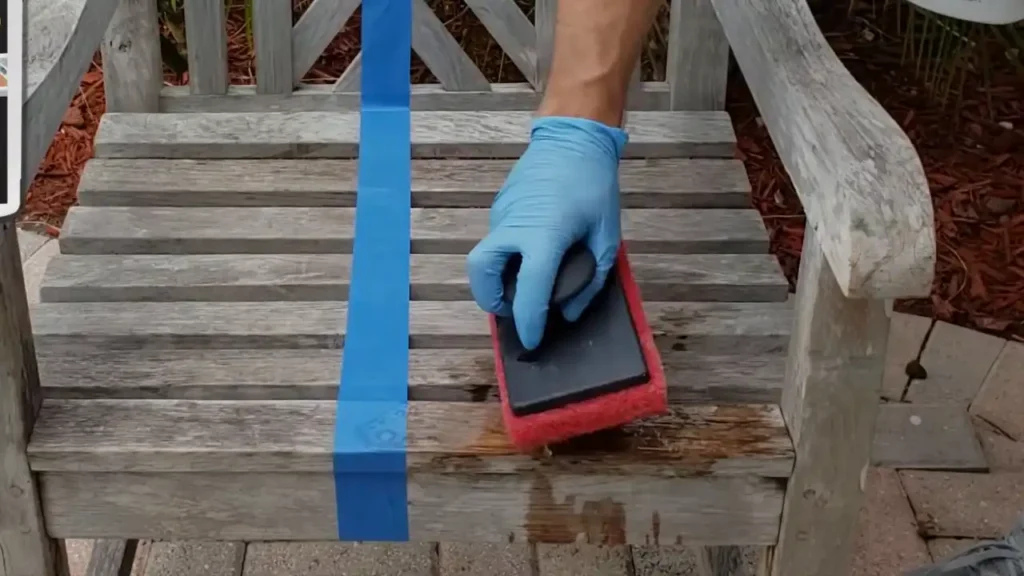
Always scrub in the direction of the grain. Scrubbing across it can scuff the soft wood fibers and leave scratches.
For rough, stubborn spots on solid teak, a stainless steel teak scrubber helps. Go easy, because pressing hard just roughens the wood.
Rinse the bench well when you’re done. If dark spots are still there, repeat the cleaning once before moving on.

- This total teak care kit includes three easy to use products to restore and protect teak or other fine woods
- Teak Cleaner easily removes weathering and gray black stains without hard scrubbing or sanding

Step 2: Brighten the Teak
Cleaning removes the mold and dirt. Brightening brings the color back. Wood often looks dull and uneven right after scrubbing, and this step fixes that.
Apply the brightener with a sponge, cloth, or brush. Work in the direction of the grain, and cover the whole bench so the color stays even. Let it sit for about 5 minutes.
Then rinse thoroughly with fresh water. Don’t skip this part. Leftover product can leave a film that holds onto moisture, which is the last thing a shower bench needs.
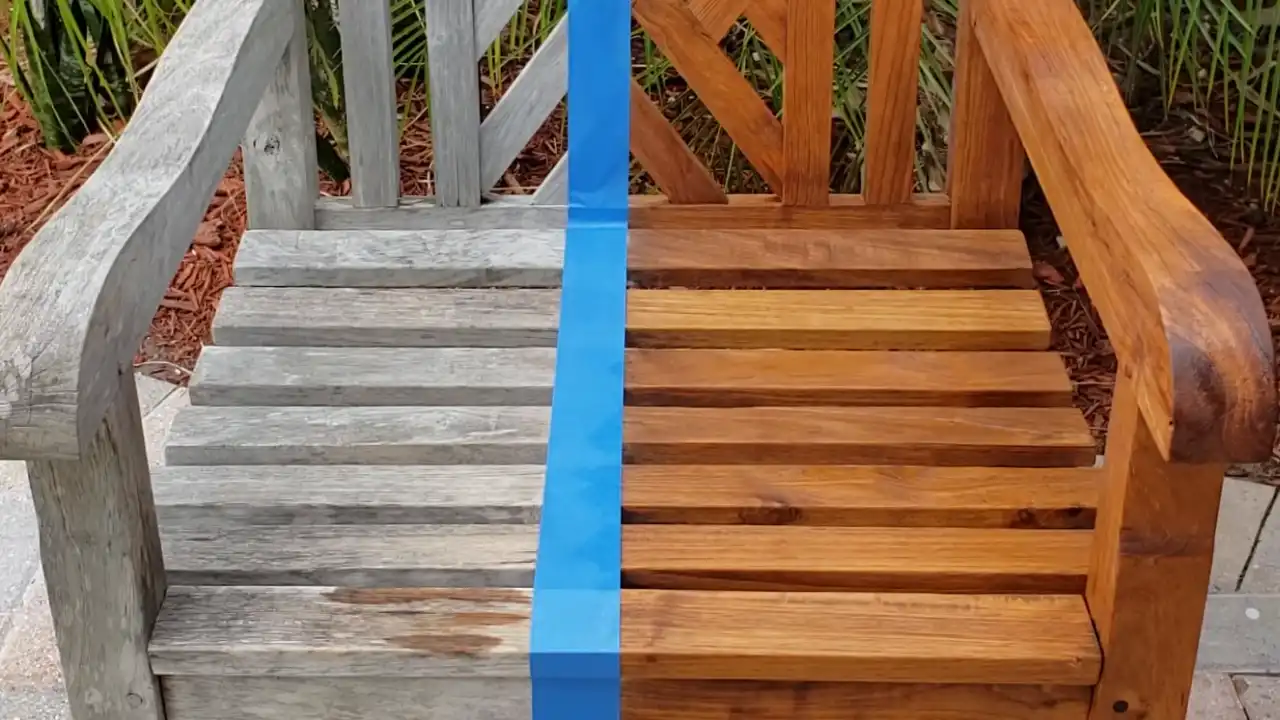
You should see the grain stand out and the wood take on a warmer tone. If you cleaned only one section, the difference will be obvious.
Step 3: Dry Fully, Then Decide on Oil

Drying matters more than most people think. Wipe the bench down with towels, then set it in a ventilated spot with a fan on it. Give it a full 24 hours before you put it back or oil it.
Teak oil seals the wood, protects it, and deepens the color. Apply it with a foam brush in the direction of the grain, then wipe off the excess with a clean, soft polishing cloth. Reapply as needed between cleanings.
If you want that golden color, use a thin coat and wipe off every bit of the excess. Expect to reapply more often. A bench in a steamy shower will need touch ups sooner than one on a covered porch.
Solid Teak or Veneer? Check First
Most shower benches are solid teak, but some wall mounted and folding seats use veneer. Veneer is a thin layer of teak glued onto a board. It needs a lighter touch.
A solid piece feels heavier and you can feel the grain under your fingers. Banding along the edges to cover raw board is a sign of veneer. Check the underside and the edges before you start.
You can clean and refinish veneer. Just scrub gently, wet the surface first, and skip the teak scrubber and any harsh abrasive pad. A good teak cleaner doesn’t need heavy scrubbing anyway.
Common Mistakes to Avoid
- Using chlorine bleach. It can break down the wood fibers and bleach the color unevenly. It also doesn’t reach mold roots in porous wood.
- Mixing products. Never combine vinegar with bleach or other cleaners. Use one product at a time and rinse in between.
- Pressure washing. It strips soft grain and leaves a fuzzy, rough surface that traps more dirt.
- Scrubbing across the grain. Always follow the lines of the wood.
- Oiling damp wood. Moisture trapped under oil can bring mold right back.
- Skipping the rinse. Leftover cleaner or brightener attracts dirt and moisture.
If you do use a new product, test it on a hidden spot first, such as the underside of a slat.
How to Keep Mold From Coming Back
Mold needs moisture, warmth, and something to eat. You can’t remove the first two from a shower, but you can take away the third.
Rinse the bench with clean water after each shower to wash off soap and shampoo. Then lift it or tilt it so the slats can drain. A quick wipe with a towel takes ten seconds and helps a lot.
Run the exhaust fan during and for about 20 minutes after your shower. Leave the door or curtain open so the air moves. If your bathroom stays damp, a small dehumidifier can help.
Check the area around the bench too. Mold on the wood often means mold nearby, so our guide on how to clean shower tiles covers the grout and corners where it starts. If you have hard water spots on the glass, this limescale guide is worth a look.
Thinking about steam for the walls and floor? Read what a steam cleaner actually does to mold first. And keep the steam nozzle away from the teak itself, since heat and moisture can raise the grain.
A light wipe down once a month works better than a deep clean every year. Fast and boring, but it keeps the spots from taking hold.
Frequently Asked Questions
Can I use bleach on a teak shower bench?
It’s best to skip it. Chlorine bleach can damage the wood fibers and lighten the color in patches. A teak cleaner or a vinegar solution does the job without the harsh side effects.
Does vinegar kill mold on teak?
It works well on light surface mold. White vinegar is mildly acidic, and it’s gentler on wood than bleach. For deep, dark staining, a teak cleaner and brightener is the better choice.
How often should I clean a teak shower bench?
Wipe it down monthly, and do the full three step clean when you see spots return, usually once or twice a year. Rinsing after each shower makes the deeper cleanings much less frequent.
Why did the mold come back after I cleaned the bench?
Usually the wood was still damp, or soap residue was left behind. Mold also comes back when the bathroom has poor airflow. Dry the bench fully, and run your exhaust fan after every shower.
Can I use this method on outdoor teak furniture?
Yes. The same clean, brighten, and oil steps work on teak chairs, tables, and benches that have turned gray from years outside. For more outdoor ideas, see our guide on how to clean patio furniture.