How to Clean Synthetic Carpet: A Complete Step-by-Step Guide

Table of Contents
Synthetic carpets are everywhere in our homes. Made from materials like nylon, polyester, and olefin, these carpets are durable, affordable, and perfect for busy households. But here’s the thing: they need the right cleaning approach to stay looking their best.
If you’ve been wondering how to clean synthetic carpet properly, you’re in the right place. This guide will walk you through everything from quick spot cleaning to deep cleaning methods that’ll have your carpet looking like new again.
What Is a Synthetic Carpet?
Synthetic carpets are made from man-made fibers rather than natural materials like wool. The three most common types you’ll find in homes are nylon, polyester, and olefin. Each has its own personality when it comes to cleaning.
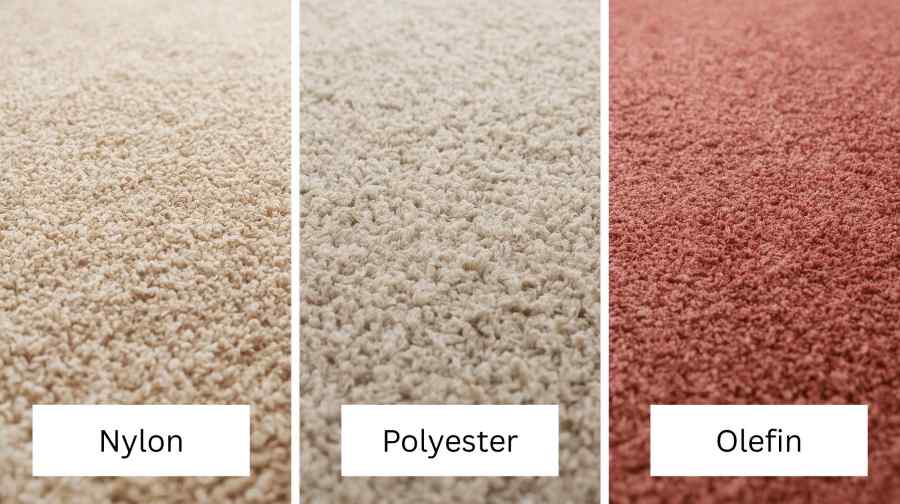
| Fiber Type | Stain Resistance | Cleaning guide |
| Nylon | Good with treatment | Cleaning of nylon carpet > |
| Polyester | Very good | Cleaning of polyester carpet > |
| Olefin | Excellent | Cleaning of olefin carpet |
Synthetic carpets can hold onto odors if not cleaned properly, and some can fade if you use harsh chemicals. But don’t worry – with the right approach, they’re actually pretty forgiving to clean.
See more: How to Clean Different Types of Carpets
Regular Maintenance Tips
Here’s something most people don’t realize: synthetic carpets can look brand new for years if you just stay on top of basic maintenance. I’ve seen 10-year-old nylon carpets that still look amazing, and I’ve seen 2-year-old ones that look worn out. The difference? A solid maintenance routine.
Master the Art of Proper Vacuuming
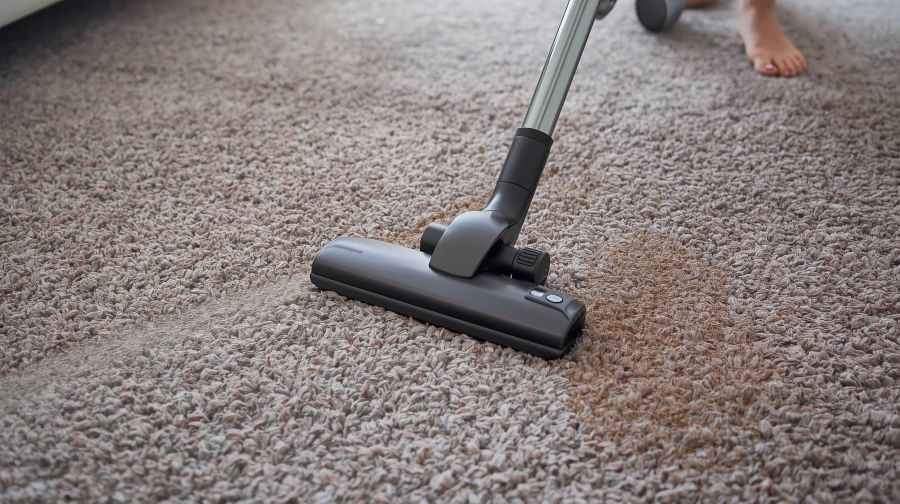
Vacuuming isn’t just running a machine over your carpet – it’s an art form that can add years to your carpet’s life. Here’s what really works:
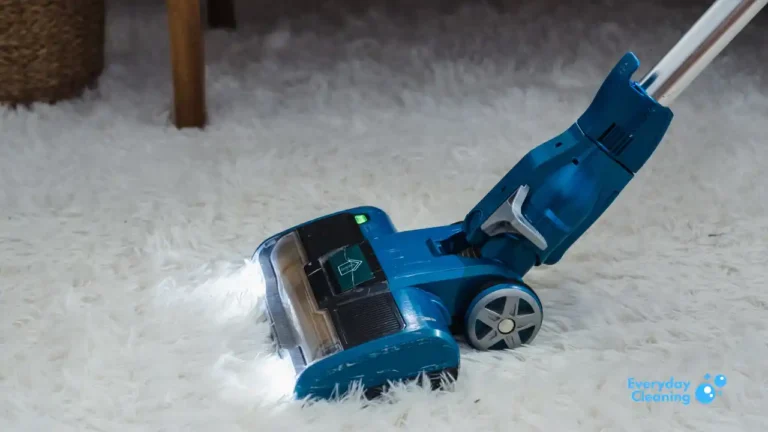
Vacuum twice a week minimum. I know it sounds like a lot, but here’s why it matters: every day you wait, dirt particles grind deeper into the fibers like tiny pieces of sandpaper. That’s what causes that worn, dull look that makes people think their carpet is “old.”
Go slow and deliberate. Most people rush through vacuuming, but your carpet needs time. Move your vacuum at about one foot per second – yes, that slow. Make two passes over high-traffic areas like hallways and the area in front of your couch. Trust me, you’ll see more dirt come up on that second pass than you’d expect.
Change directions. Vacuum north to south one day, east to west the next. Carpet fibers have a natural lay, and changing directions helps lift dirt that’s hiding underneath.
Don’t forget the edges. Use your vacuum’s crevice tool along baseboards and under furniture edges. About 80% of carpet soil accumulates in these spots because regular vacuuming doesn’t reach them.
The 24-Hour Rule for Spills
This isn’t just a suggestion, it’s carpet law. After 24 hours, most spills change from “easy cleanup” to “permanent stain.” Here’s why this matters so much with synthetic carpets:
Synthetic fibers, especially polyester, can actually bond with certain substances if given enough time. That innocent coffee spill becomes a chemical relationship between the carpet and the stain. But catch it early? Most spills wipe away with just water.
Keep a “spill kit” handy: white cloths, spray bottle with water, and mild dish soap. When something spills, resist the urge to scrub. Instead, blot from the outside of the spill toward the center. This prevents the stain from spreading outward and becoming bigger than it needs to be.
Strategic Entry Mat Placement
This one tip alone can cut your carpet cleaning time in half. But not all entry mats are created equal, and placement matters more than you think.
Inside and outside every door. Yes, you need mats on both sides. The outside mat catches the big stuff, the inside mat gets what the outside one missed. Make sure your inside mats are at least 6 feet long – that’s about how many steps it takes for people to wipe their feet naturally.
Choose the right material. Rubber-backed mats with nylon fibers work best. They grab dirt and moisture without sliding around. Those decorative mats might look nice, but they’re not doing the heavy lifting your carpet needs.
Wash them regularly. A dirty mat just redistributes dirt around your house. Shake out or vacuum your entry mats weekly, and wash them monthly.
How to remove stains from synthetic carpet
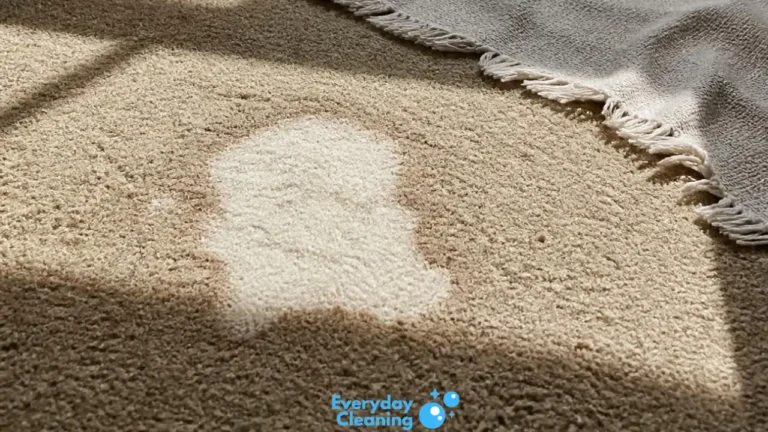
When life happens on your carpet, don’t panic. Synthetic carpets are actually quite forgiving if you know the right approach for each type of stain. Here’s your arsenal of solutions for the most common household accidents.
Essential Spot Cleaning Kit
Keep these supplies handy in a cleaning caddy:
- Clean white cloths or paper towels
- Several spray bottles labeled for different solutions
- Mild dish soap (Dawn or similar grease-cutting formula)
- White vinegar
- Baking soda
- 3% hydrogen peroxide
- Rubbing alcohol
- Soft-bristled brush or old toothbrush
- Small bowl for mixing solutions
Food and Beverage Stains
Coffee and Tea Spills

These are probably the most common stains, and thankfully, they’re usually the easiest to handle on synthetic carpet.
- Immediate action: Blot up as much liquid as possible with paper towels
- Mix solution: 1 tablespoon white vinegar + 1 tablespoon dish soap + 2 cups cool water
- Apply: Spray lightly on the stain, don’t soak
- Work the stain: Blot from outside edges toward center, never rub
- Rinse: Spray with clean water and blot dry
- For set-in coffee stains: Mix 1 part white vinegar with 2 parts water, let sit for 5 minutes, then blot
Red Wine
- Salt trick: If the spill just happened, cover immediately with table salt – it absorbs the wine before it sets
- After 10 minutes: Vacuum up the salt
- Club soda method: Pour a small amount of club soda on the remaining stain
- Blot repeatedly: Use clean sections of cloth each time
- Final treatment: Mix 1 part dish soap with 3 parts hydrogen peroxide, apply sparingly, let sit 30 seconds, then blot
- Rinse thoroughly with clean water
Grease and Oil Stains
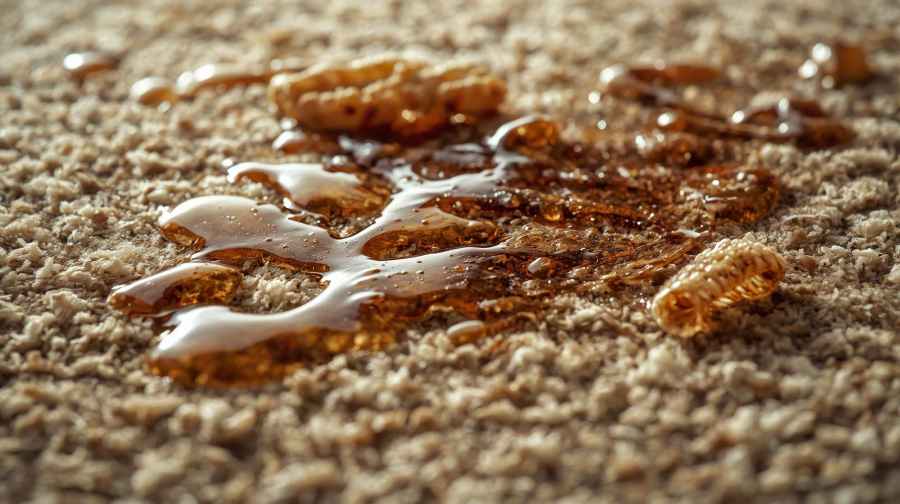
These are trickier because oil and synthetic fibers can bond, but here’s what works:
Kitchen Grease, Butter, or Cooking Oil:
- Remove excess: Scrape up any solid material with a spoon, don’t press down
- Absorb oil: Sprinkle cornstarch or baking soda generously over the stain
- Wait: Let it sit for 15-20 minutes to absorb the oil
- Vacuum: Remove the powder completely
- Dish soap treatment: Mix 1 tablespoon dish soap with 2 cups warm water
- Apply and blot: Work from outside in, use fresh cloths frequently
- Stubborn grease: Add 1 tablespoon white vinegar to your soap solution
Pet-Related Accidents
Pet stains need special attention because they involve both staining and odor issues.

Fresh Pet Urine
- Absorb immediately: Use thick paper towels, press down firmly to absorb as much as possible
- Rinse area: Spray with clean water to dilute remaining urine
- Enzyme treatment: Mix 1 cup white vinegar + 1 cup water + 2 tablespoons baking soda
- Let it work: Allow solution to sit for 10-15 minutes
- Blot thoroughly: Use clean cloths until no more moisture comes up
- Neutralize odor: Sprinkle baking soda over the area when completely dry, let sit overnight, then vacuum
Set-in Pet Odors
- Locate the exact spot: Use a blacklight if needed – old urine stains will glow
- Heavy vinegar treatment: Mix equal parts white vinegar and water, saturate the area
- Wait time: Let sit for 30 minutes
- Baking soda paste: Mix baking soda with a little water to make a paste, spread over area
- Overnight treatment: Let the paste dry completely overnight
- Vacuum and assess: Remove paste, check for remaining odor
Mud and Dirt Stains
The secret with mud? Patience. Never tackle wet mud – you’ll just spread it around.
Fresh Mud:
- Let it dry completely – this might take 2-4 hours, but it’s crucial
- Vacuum thoroughly: Remove as much dried mud as possible
- Remaining residue: Mix 1 tablespoon dish soap with 2 cups cool water
- Gentle scrubbing: Use a soft brush in circular motions
- Rinse and blot: Spray with clean water and blot until no soap remains
Blood Stains
The key with blood is cold water – hot water will set the protein permanently.
Fresh Blood:
- Cold water only: Spray with cold water immediately
- Blot repeatedly: Use clean cloths, work from outside in
- Hydrogen peroxide: If stain remains, apply 3% hydrogen peroxide directly
- Watch it foam: The bubbling action breaks down the blood proteins
- Blot and rinse: After foaming stops, blot with cold water
Ink and Marker Stains

Different inks need different approaches:
Ballpoint Pen Ink:
- Rubbing alcohol: Dab (don’t pour) rubbing alcohol on the stain
- Blot immediately: Ink should transfer to your cloth
- Work quickly: Alcohol evaporates fast, so work in small sections
- Rinse: Follow with clean water to remove alcohol residue
Permanent Marker:
- Hairspray method: Spray aerosol hairspray (the cheaper, the better) directly on stain
- Let sit: Wait 30 seconds
- Blot: Use clean cloth to absorb dissolved marker
- Repeat: May need 2-3 treatments for complete removal
Wax and Gum
Candle Wax:
- Ice method: Put ice cubes in a plastic bag, place on wax until brittle
- Scrape carefully: Use a butter knife to chip away hardened wax
- Heat method: Place paper towels over remaining wax, use warm iron for 10 seconds
- Wax transfers: Keep moving to clean sections of paper towel
- Final cleanup: Use dish soap solution to remove any remaining residue
Chewing Gum:
- Freeze it: Ice cubes in plastic bag until gum is rock hard
- Scrape off: Use butter knife or credit card to remove chunks
- Peanut butter trick: For stubborn residue, rub small amount of peanut butter on remaining gum
- Dish soap cleanup: Remove peanut butter and gum with dish soap solution
Critical Reminders for All Stain Types:
- Test first: Always test your cleaning solution in an inconspicuous area
- Blot, never rub: Rubbing pushes stains deeper and can damage fibers
- Work from outside in: This prevents stains from spreading
- Use white cloths only: Colored cloths can transfer dye to your carpet
- Dry completely: Damp carpet can develop mold and mildew
- Know when to call professionals: If a stain covers more than 2 square feet or keeps returning after cleaning
Common Stain Solutions Comparison
| Stain Type | DIY Solution | Ease of Use | Time Required | Effectiveness |
|---|---|---|---|---|
| Food spills | Dish soap + water | Very easy | 5-10 minutes | High |
| Pet accidents | Vinegar + baking soda | Easy | 15-20 minutes | High |
| Grease/oil | Dish soap (concentrated) | Moderate | 10-15 minutes | Medium |
| Red wine | Salt + club soda | Easy | 10-20 minutes | High if fresh |
| Mud | Let dry, vacuum, then soap solution | Easy | 15-30 minutes | High |
Deep Cleaning Your Synthetic Carpet
Even with perfect daily maintenance, your synthetic carpet needs a thorough deep clean every 6-12 months. Think of it like getting a dental cleaning – brushing daily is great, but sometimes you need the professional-level treatment to get what regular care can’t reach.

Why Deep Cleaning Matters for Synthetic Carpets
Synthetic fibers have a unique structure that traps soil differently than natural fibers. Over time, even with regular vacuuming, microscopic dirt particles work their way down to the base of the fibers where your vacuum can’t reach them. This deep-down dirt does three things:
- Dulls the appearance – making your carpet look older than it is
- Creates odor problems – trapped particles start to smell, especially in humid conditions
- Shortens carpet life – dirt acts like sandpaper, wearing down fibers from within
Preparation
Proper preparation makes the difference between mediocre results and “wow, this looks like new carpet” results.
Clear and Prep the Space (Day Before):
- Remove all furniture possible – if you can’t move it, place aluminum foil or plastic wrap under furniture legs
- Vacuum thoroughly, including baseboards and corners
- Pre-treat any visible stains using the spot cleaning methods we covered earlier
- Open windows or set up fans for ventilation
- Gather all your supplies so you’re not stopping mid-process
Test Your Cleaning Solution: This step is absolutely critical. Mix your cleaning solution and test it in the most inconspicuous corner you can find – maybe inside a closet or behind a door. Apply the solution, let it sit for 10 minutes, then blot dry. Check for color changes, fiber damage, or any adverse reactions. If everything looks good after 24 hours, you’re ready to proceed.
DIY Deep Cleaning Method
Solution Recipe for Synthetic Carpets:
- 1/4 cup white vinegar (breaks down soap residue and neutralizes odors)
- 1 tablespoon liquid dish soap (cuts through grease and grime)
- 2 cups warm water (warm, not hot – heat can set stains)
- Optional: 2 tablespoons baking soda for extra odor control
Equipment You’ll Need:
- Large spray bottles (at least 2)
- Soft-bristled scrub brush or clean broom
- Plenty of clean white towels
- Wet/dry vacuum (if available)
- Fans or dehumidifier for drying
- Knee pads (trust me on this one)
Step-by-Step Deep Cleaning Process:
Phase 1: Application (Working in 3×3 foot sections)
- Start in the far corner of the room so you don’t walk on wet carpet
- Spray your cleaning solution evenly across your first section – don’t oversaturate
- Let it dwell for 3-5 minutes to break down embedded dirt
- Gentle agitation with your brush using circular motions – think massage, not scrubbing
- Work the solution in until you see it lifting dirt to the surface
Phase 2: Extraction
6. Blot extensively with clean towels – you’ll be amazed how much dirt comes up
7. Rinse with clean water – spray lightly and blot again to remove soap residue
8. Final extraction – if you have a wet/dry vacuum, now’s the time to use it
Phase 3: Moving Forward
9. Overlap slightly with your next section to avoid cleaning lines
10. Keep towels moving – use clean sections frequently
11. Monitor your solution – if it’s getting very dirty, mix a fresh batch
Steam Cleaning at Home
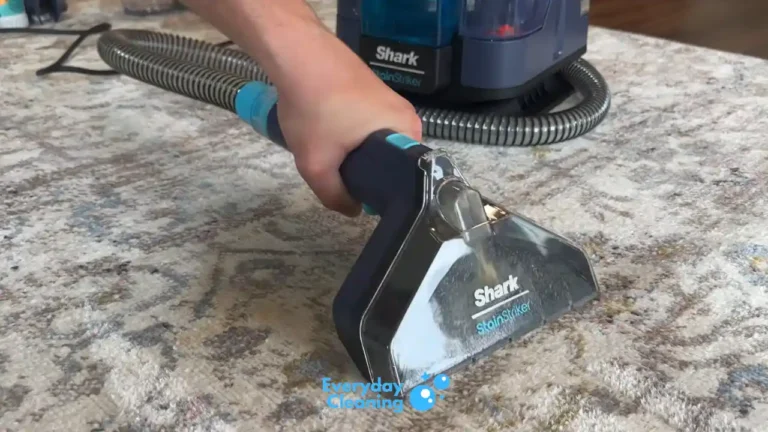
If you want to rent a carpet cleaner, here’s how to get professional-level results:
Before using the machine, pre-treat heavy traffic areas:
- Mix a stronger solution – double the dish soap in your recipe
- Apply 15 minutes before machine cleaning
- Work it in gently with a brush
- Don’t rinse – let the machine extract it
Machine Technique:
- Two passes minimum – first pass applies solution and agitates, second extracts
- Overlap your strokes by about 2 inches
- Go slow – about 1 foot every 3 seconds on the cleaning stroke
- Make a final pass with just water to remove all cleaning residue
Drying: The Make-or-Break Phase
This is where many people go wrong. Proper drying prevents mold, mildew, and that musty smell that ruins all your hard work.
Speed Up Drying:
- Run fans continuously – air movement is more important than heat
- Use a dehumidifier if you have one
- Open windows if weather permits
- Raise the temperature slightly, but don’t overdo it
Drying Timeline:
- Light cleaning: 4-8 hours
- Deep cleaning: 8-24 hours
- Steam cleaning: 12-24 hours
Test for Dryness: Press a clean white towel firmly against the carpet. If any moisture transfers, keep drying. The carpet should feel completely dry to the touch and spring back when pressed.
Post-Cleaning Care
First 24 Hours:
- Avoid heavy foot traffic – use alternate routes when possible
- Replace furniture carefully – use furniture pads to prevent new indentations
- Vacuum lightly after 24 hours to lift any remaining loosened dirt
Your carpet might look slightly different immediately after cleaning – this is normal. The fibers need time to settle back into their natural position. Within 48-72 hours, you should see:
- Brighter, more vibrant colors
- Elimination of most odors
- Softer, more resilient feel underfoot
- Extended time before next cleaning is needed
Frequently Asked Questions
Can I use vinegar on synthetic carpet?
Yes, white vinegar is safe for most synthetic carpets and works great for odor removal and stain cleaning. Always dilute it with equal parts water and test first. However, avoid using vinegar on natural fiber carpets like wool, as it can damage those fibers.
How often should I deep clean synthetic carpet?
Most synthetic carpets need deep cleaning every 6-12 months. High-traffic areas might need attention every 3-6 months, while bedrooms can often go a full year. If you have pets or small children, lean toward the more frequent end of that range.
Is steam cleaning safe for nylon or polyester carpets?
Steam cleaning is generally safe for nylon carpets and can be very effective. Be more cautious with polyester – the heat can cause matting and fiber damage. Always check your carpet’s care label first, and when in doubt, use cooler water temperatures.
What’s the best DIY solution for synthetic carpet stains?
For most stains, a mixture of 1 teaspoon dish soap in 1 cup warm water works wonderfully. For odors and tougher stains, add equal parts white vinegar to this mixture. This combination handles about 80% of household carpet stains effectively.
Can I use bleach on synthetic carpet?
Never use chlorine bleach on synthetic carpet. It can permanently damage the fibers and cause discoloration. If you need a whitening agent, try hydrogen peroxide (3% solution) on white or very light carpets, but always test in an inconspicuous area first.
Why does my carpet smell worse after cleaning?
This usually happens for two reasons: either soap residue was left behind (which attracts dirt and bacteria), or the carpet didn’t dry completely (leading to mold and mildew growth). Always rinse thoroughly after cleaning and ensure complete drying with fans and good ventilation.
How long should I wait before walking on cleaned carpet?
For spot cleaning, wait until the area is completely dry – usually 2-4 hours. For deep cleaning, avoid heavy foot traffic for at least 6-8 hours, and ideally 24 hours. Walking on damp carpet can resoil it quickly and undo all your hard work.
Can I clean synthetic carpet with just water?
Water alone removes more stains than most people realize – probably about 60% of fresh spills. It’s always worth trying plain water first before moving to cleaning solutions. Cold water works best for protein-based stains like blood, while warm water is better for general soil.
What should I do if stains keep coming back after cleaning?
Recurring stains usually mean one of three things: there’s soap residue attracting new dirt, the stain wasn’t completely removed initially, or there’s contamination in the carpet padding underneath. Try rinsing the area thoroughly with clean water, and if that doesn’t work, the padding may need professional attention.
Is it normal for my synthetic carpet to shed after cleaning?
Some light shedding after deep cleaning is normal, especially with newer synthetic carpets. The cleaning process can loosen fibers that were already ready to shed. This should stop within a week. Excessive shedding might indicate over-aggressive cleaning or fiber damage