
Best Pressure Washer for Driveways: 6 Picks Tested on Concrete
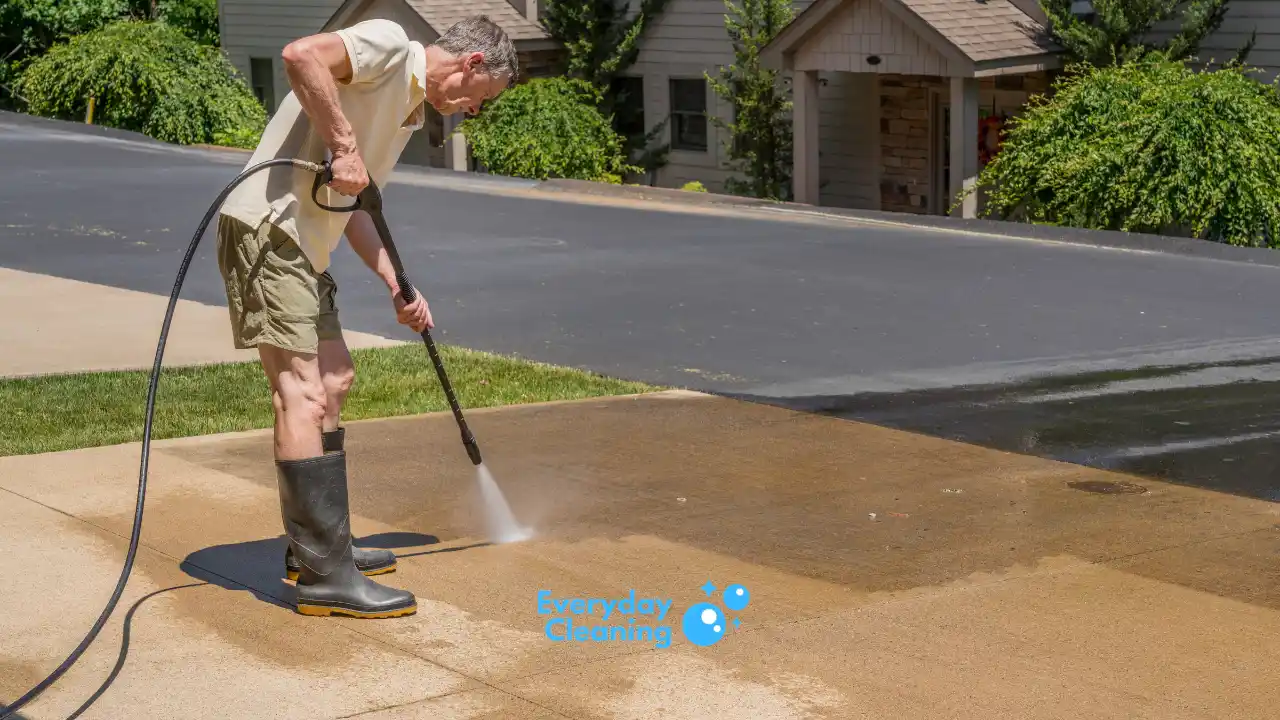
Driveways take more abuse than any other surface outside your home. Oil stains, mildew, tire marks, and years of embedded grime don’t come off with a garden hose. You need a pressure washer with enough PSI and GPM to actually move the dirt. We tested six models on concrete and ranked the ones worth your money.
Our Top Picks
| Recommendation | Product | Reason |
|---|---|---|
| Best Overall | Westinghouse ePX3500 | Anti-tip 4-wheel design, 2500 PSI, and 5 nozzles in a compact 19 lb package — Reviews ↓ |
| Best Budget | Sun Joe SPX3000 | 20,000+ reviews, dual soap tanks, PWMA certified — Reviews ↓ |
| Best Value Kit | AIVOLT 4800PSI | Most complete accessory kit at the price including foam cannon — Reviews ↓ |
| Best Brushless Electric | RYOBI RY142300 | Brushless induction motor for longer life and quieter operation — Reviews ↓ |
| Best High-Power Electric | Greenworks Pro GPW3001 | PWMA-certified 3000 PSI with 10-year motor warranty — Reviews ↓ |
| Best Gas | Westinghouse WPX3400 | 3400 PSI and 2.6 GPM crushes tough driveway stains — Reviews ↓ |
Best Overall: Westinghouse ePX3500
The ePX3500 is the easiest all-around pick for most homeowners. It’s lightweight, maneuverable, and delivers enough PSI to handle routine driveway cleaning without being overkill.
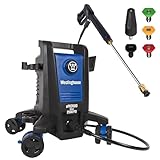
- Delivers 2500 max PSI and 1.76 max GPM (at lowest pressure), and 2000 rated PSI and 1.2 rated GPM of water flow; Pro-style steel extendable 17.5” wand with quick-connect nozzles (0°, 15°, 25°, turbo and soap applicator)
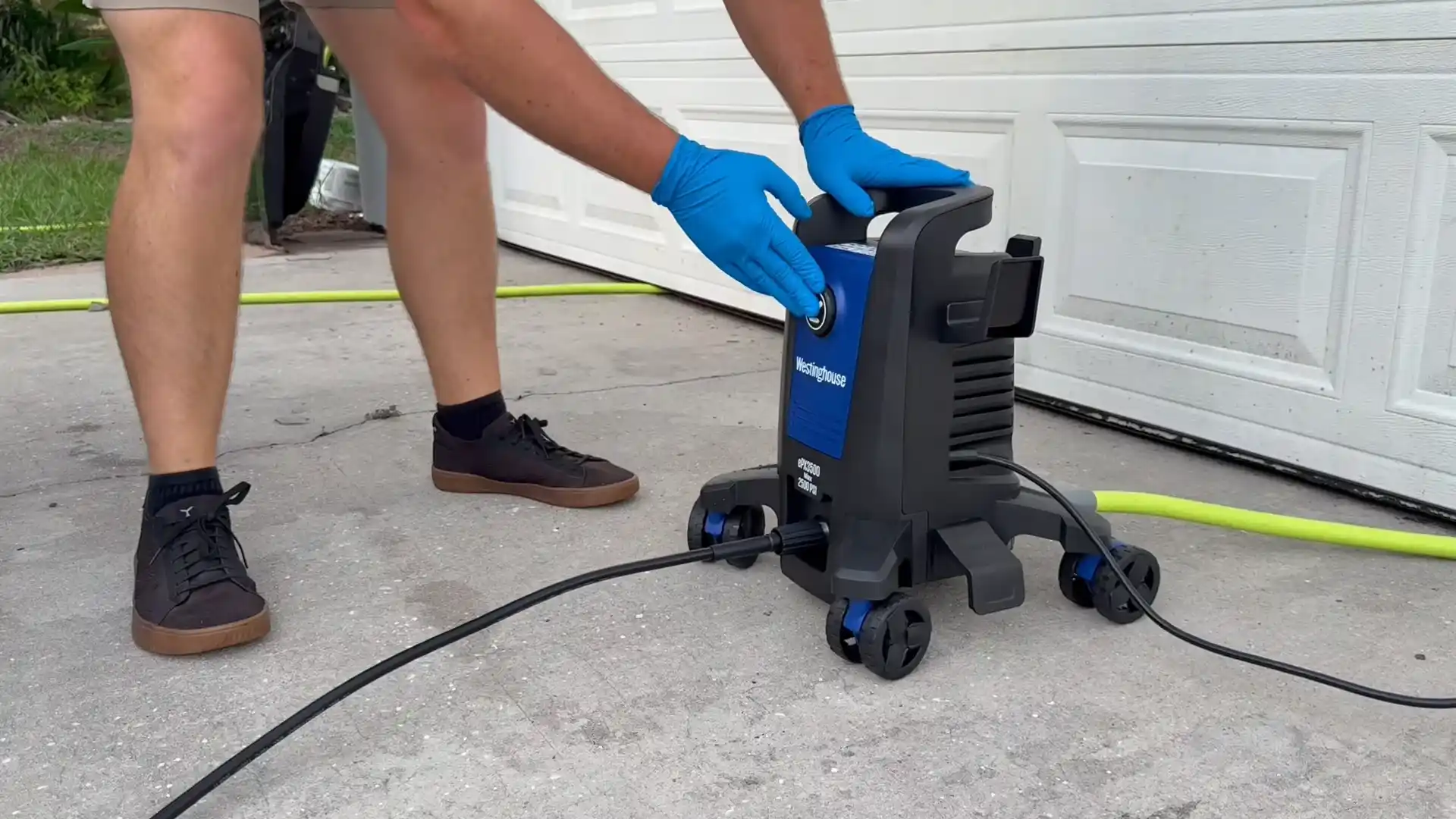
- Super compact and lightweight at 16.5” tall and 19 pounds for convenient storage and portability; Four quick-lock wheels with 360° steering design and low center of gravity engineered for anti-tipping design

Pros and Cons
| Pros | Cons |
|---|---|
| Anti-tipping 4-wheel 360-degree steering design | Soap tank is just 20oz (refills frequently) |
| Only 19 lbs, easy to carry and reposition | |
| 5 nozzles including 0 degree | |
| 25 ft hose and 35 ft cord | |
| 3-year limited warranty | |
| TSS pump protection | |
| CSA tested |
Testing Results
Concrete / Driveway: Yes. Handles medium-duty driveway cleaning well. Gets through surface grime, mildew, and light oil staining without issue.
Heavy Stains: Light to medium only. Deep oil stains embedded in concrete will need a gas model or the Westinghouse WPX3000e for better results.
PSI and GPM: 2500 PSI peak, 2000 PSI rated, 1.2 GPM rated. The lower GPM means slower rinsing on large driveways, but for a single-car driveway it’s fine.
Nozzle Versatility: Five quick-connect nozzles including the 0 degree for stubborn spots and a soap nozzle for detergent application. Good set for the price.
Ease of Setup: Plugs in, connects the hose, done. The 360-degree steering makes it easy to move around without tipping, which is the main design win over older wheeled models.
Noise Level: Moderate. Comparable to other electric models in this class.
Real-world Usage
This one shines on weekly or monthly driveway maintenance. If you’re knocking down surface dirt, mildew tracks, and pollen accumulation after spring storms, the ePX3500 does it fast and without drama. The anti-tip frame matters more than it sounds. Older two-wheel designs fall over constantly on uneven driveways. This one stays put.
For a single-car or two-car driveway with typical suburban grime, this is the machine you use and forget about. Not ideal for deeply stained concrete or oil spills that have soaked in over years.
Best Use Case
Homeowners with small to medium driveways doing seasonal cleaning. Great if you also want to do siding, patio furniture, and car washing with the same machine. Skip it if your main problem is heavy oil stains or thick concrete buildup.
Verdict
The ePX3500 earns the best overall spot because it fits most homeowners’ actual needs. The 19 lb weight and four-wheel design make it genuinely easy to use, which matters more than raw PSI numbers for routine cleaning. The 3-year warranty adds confidence. If you want to clean your driveway a few times a year without a lot of fuss, this is the one.
Rating: 4.6 / 5
View on Amazon: Westinghouse ePX3500
Best Budget: Sun Joe SPX3000
The SPX3000 has been the best-selling electric pressure washer on Amazon for years. Over 20,000 reviews at 4.8 stars. That kind of longevity means something.

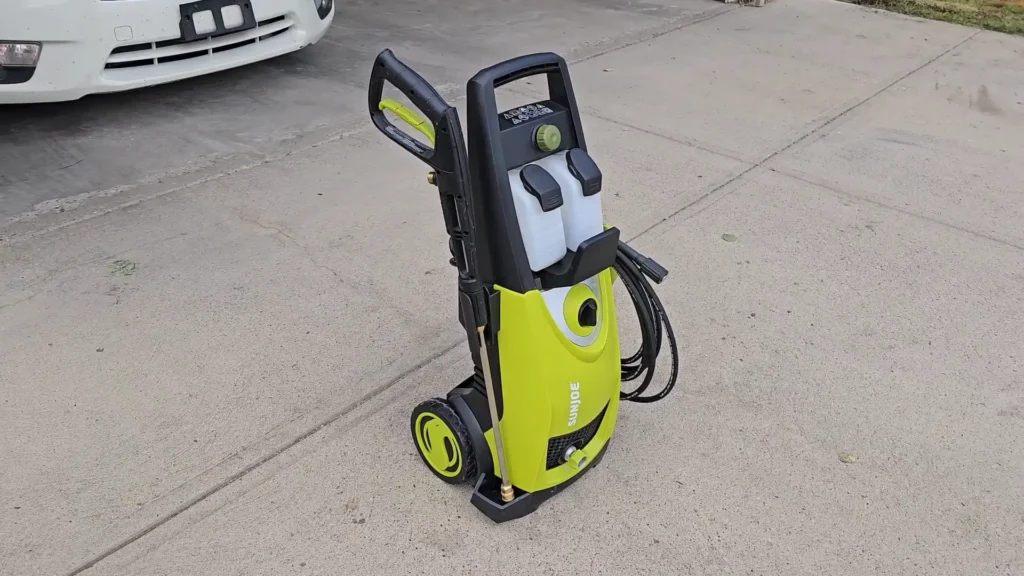
- High-Pressure Cleaning: This electric pressure washer delivers up to 2030 PSI working pressure and 1.2 GPM water flow to help remove dirt, grime, and buildup from homes, driveways, vehicles, RVs, and outdoor equipment
- Multiple Spray Options: This water pressure washer includes five quick-connect spray tips (0°, 15°, 25°, 40°, and soap) to switch between narrow jet streams and wider fan patterns, plus a soap applicator for detergent use
Pros and Cons
| Pros | Cons |
|---|---|
| 20,000+ Amazon reviews at 4.8 stars | 1.2 GPM is lower than newer competitors at same price |
| Unique dual 0.9L detergent tank system | 20 ft hose feels short on larger driveways |
| PWMA certified for accurate PSI ratings | |
| 5 quick-connect nozzles including 0 degree | |
| Solid brass fittings and metal connections | |
| TSS pump protection | |
| 2-year limited warranty |
Testing Results
Concrete / Driveway: Yes (medium duty). Cleans standard residential driveway grime, mildew, and light staining without issue.
Heavy Stains: Light to medium only. Not the pick for deeply embedded oil or years of neglect.
PSI and GPM: 2030 PSI rated and PWMA certified. That matters. Competitors may claim higher numbers that aren’t independently verified. The SPX3000 delivers what it advertises.
Dual Soap Tank System: The dual detergent tanks are the standout feature. You load two different soaps and switch between them. Useful if you’re doing driveway degreaser followed by a general rinse.
Hose Length: 20 ft is shorter than most competitors now offering 25 ft. This limits range. You’ll reposition more on a long driveway.
Motor and Pump: 14.5-amp universal motor with PWMA-certified axial wobble plate pump. The metal connections and brass fittings are more durable than all-plastic competitors.
Real-world Usage
The SPX3000 is a workhorse at the budget end. It’s been around long enough that there are years of user feedback confirming it holds up with regular use. The dual soap tank is genuinely useful for driveway work. Load a concrete degreaser in one tank and switch to it first before rinsing.
The short hose is the main frustration. On a double-wide driveway, you’ll need to move the machine or use a hose extension.
Best Use Case
Budget-conscious buyers who want a proven, certified machine. Good for single-car driveways, patios, and regular seasonal cleaning. The dual soap tank adds real versatility. Skip it if you need more hose reach or want higher GPM.
Verdict
Nothing fancy here, just a reliable machine with a massive track record. The PWMA certification means the PSI is real. Dual detergent tanks are genuinely useful for driveway work. For the price, it’s hard to beat. If you’re buying your first pressure washer and don’t want to overthink it, the SPX3000 is a safe call. You can read more about how it compares across categories in our best electric pressure washer roundup.
Rating: 4.4 / 5
View on Amazon: Sun Joe SPX3000
Best Value Kit: AIVOLT 4800PSI
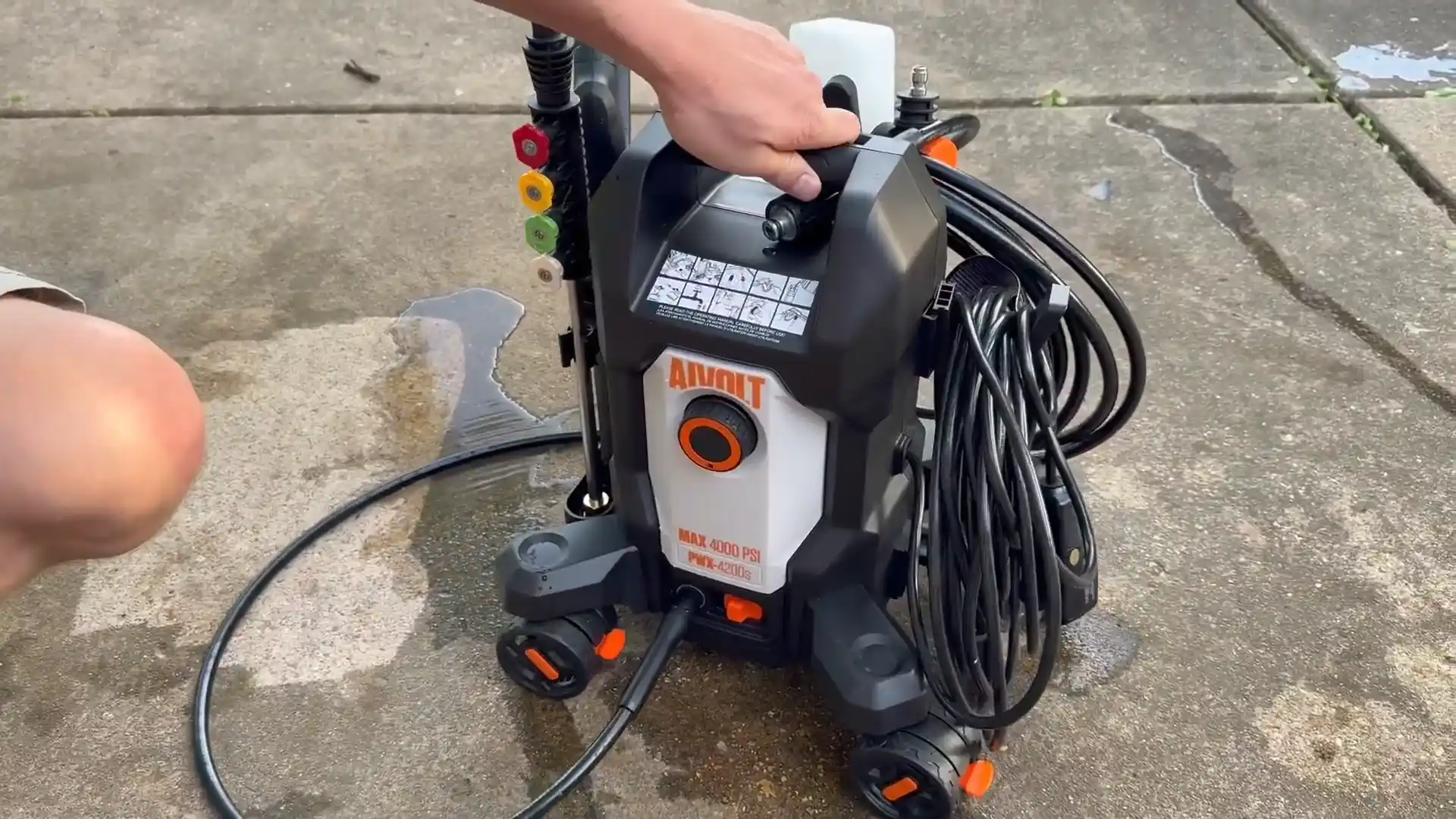
Ignore the 4800 PSI headline. That’s a marketing figure. The real working PSI is around 2400. But the accessory kit this machine ships with is better than almost anything else at this price.
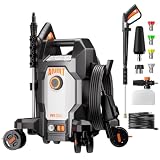
- 【POWERFUL & SAFE PRESSURE WASHER】 Delivers exceptional cleaning power to blast away dirt, mud, and grime from cars, driveways, patios, and fences. Engineered for deep cleaning that saves water and energy without sacrificing performance. UL & CSA certified for safe, reliable operation – so you can clean with confidence
- 【ANTI-TIPPING 4-WHEEL DESIGN – STABLE ON ANY SURFACE】Low center of gravity and square-frame design keep the washer steady on uneven driveways and patios. Smooth 360° swivel wheels glide effortlessly, while the 25ft hose and 36ft power cord give you plenty of reach – clean around your car or across your yard without moving the unit
Pros and Cons
| Pros | Cons |
|---|---|
| Most complete kit at this price (foam cannon + brush + 4 nozzles) | Brand is unknown with limited review history |
| 36 ft cord and 25 ft hose, longer than most competitors | |
| 360-degree pivoting wheels (anti-tip) | |
| GFCI protection included | |
| IPX5 waterproof body | |
| 3-year warranty with US warehouse replacement |
Testing Results
Concrete / Driveway: Yes (medium duty). At 2400 PSI working pressure, it cleans standard residential driveways and patios. Don’t expect it to blast out deep oil stains.
Heavy Stains: Light to medium only.
PSI and GPM: 1.76 GPM max, which is higher flow than the Sun Joe and Westinghouse ePX3500 at comparable pressure. More flow helps with rinsing speed.
Foam Cannon: Included in the kit. Works well for applying driveway degreasers or car soap before pressure washing. A foam cannon is usually a $30-50 add-on separately.
Cord and Hose Length: 36 ft cord and 25 ft hose is a generous combo. Reaches farther before you have to reposition or add an extension.
Wheels: Four 360-degree pivoting wheels with anti-tipping design. Similar concept to the Westinghouse ePX3500, easy to move around.
Real-world Usage
The AIVOLT’s main selling point is what’s in the box. You get everything to start washing immediately: four nozzles, foam cannon, cleaning brush, and a full-length cord. Most competitors make you buy the foam cannon separately.
The PSI marketing is misleading and worth knowing upfront. Don’t let the 4800 number drive your expectations. At real-world pressure, it performs similarly to other 2400 PSI electrics. It’s a good machine if you go in with that understanding.
Brand support is the weak spot. This is a newer Chinese brand. If something goes wrong after the first year, getting help may be frustrating.
Best Use Case
Value shoppers who want a complete ready-to-use kit without extra spending. Good for driveways, cars, and patios. Not for buyers who need certified performance claims or reliable long-term brand support.
Verdict
The AIVOLT punches above its price on accessories, hose length, and cord length. The real PSI is fine for driveway cleaning. Just go in knowing the headline number is inflated. For a first pressure washer where you want everything included, this is a solid pick.
Rating: 4.0 / 5
View on Amazon: AIVOLT 4800PSI
Best Brushless Electric: RYOBI RY142300
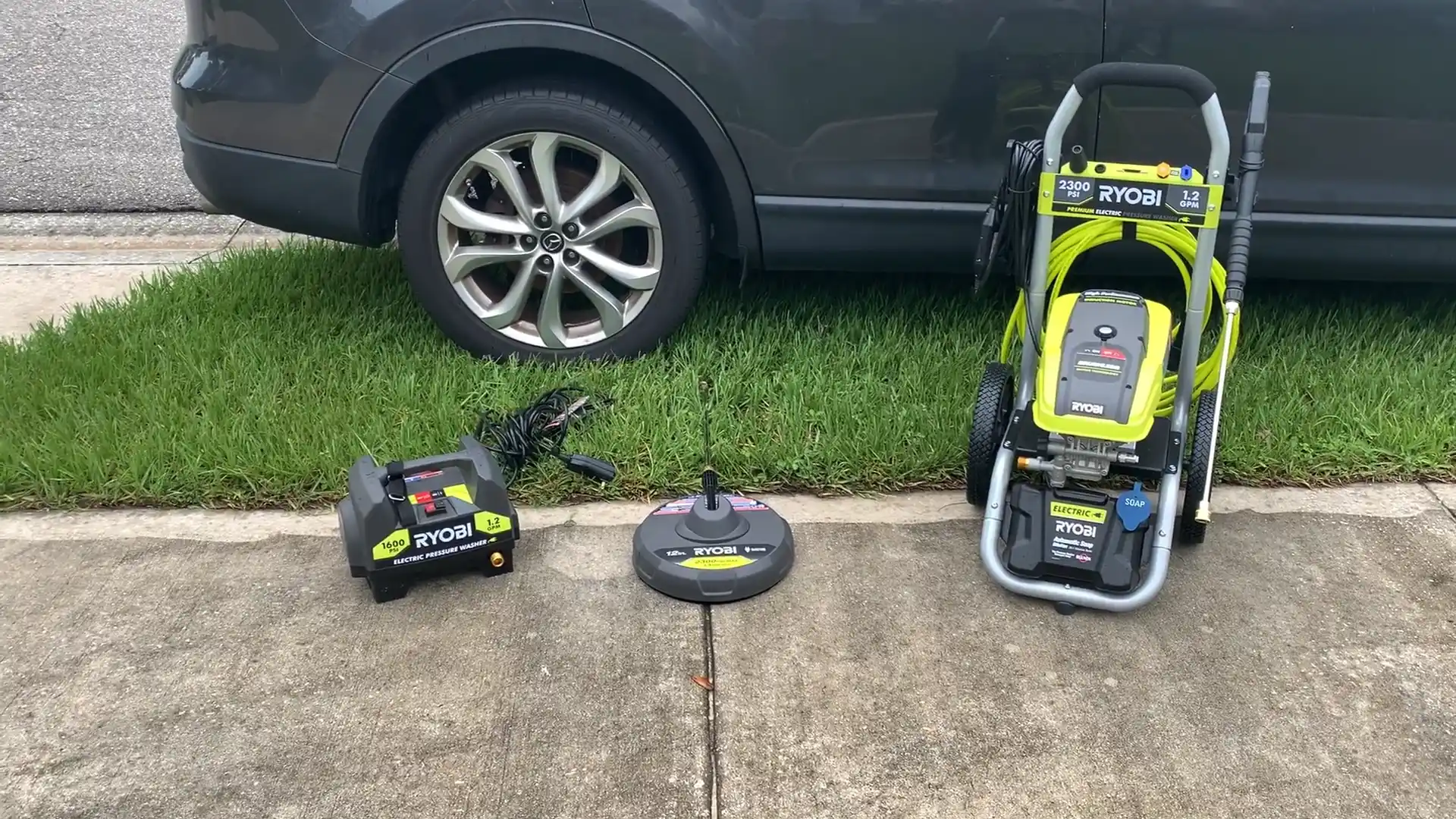
Most electric pressure washers use universal motors. The RYOBI RY142300 uses a brushless induction motor. That difference matters for longevity and noise.

- AUTOMOTIVE CLEANING POWER: Ryobi pressure washer delivers strong, consistent water pressure to tackle tough dirt, grime, and grease on vehicles.
- VERSATILE USE: Ideal for washing cars, trucks, motorcycles, and other vehicles, as well as driveways and outdoor surfaces.
Pros and Cons
| Pros | Cons |
|---|---|
| Brushless induction motor runs quieter and lasts longer | Heavier than compact models at 27 lbs |
| 2300 PSI rated (not a marketing figure) | |
| 12-inch large wheels handle uneven terrain | |
| Onboard storage for all accessories | |
| 3-year RYOBI warranty | |
| 25 ft hose and 35 ft cord | |
| TSS pump protection |
Testing Results
Concrete / Driveway: Yes (medium duty). 2300 PSI is solid for residential driveways. Gets through mildew, surface grime, and most light staining without issue.
Heavy Stains: Light to medium only. Not enough for embedded oil or years of neglect.
Motor: The 13-amp brushless induction motor is the standout spec. It runs quieter than universal motor equivalents and is rated for a longer service life. Less heat buildup means less wear over time.
Wheels: 12-inch diameter wheels are noticeably larger than the typical 6-8 inch wheels on competing electrics. On a cracked or uneven driveway, these roll over obstacles instead of catching on them.
Noise Level: The induction motor is meaningfully quieter than universal motor pressure washers. Early morning driveway cleaning without disturbing neighbors is realistic.
Storage: Onboard hose and accessory storage is a nice practical feature. Everything stores on the machine when not in use.
Real-world Usage
The RY142300 is built for repeat use. If you’re the kind of person who cleans the driveway a few times a year, every year, for the next decade, the brushless motor is worth the slight premium. Universal motor competitors in this price range start degrading faster with regular use.
The 12-inch wheels matter on older driveways with cracks and surface irregularities. Smaller wheeled machines tip and catch. This one rolls through without drama.
Best Use Case
Homeowners who do regular seasonal cleaning and want a machine that holds up over years, not just months. Also good for anyone with an uneven or rough driveway surface. Not the pick if you need maximum PSI or GPM for heavy stains.
Verdict
The brushless induction motor is the reason to buy this over a similarly priced universal motor model. You’ll notice the quieter operation immediately. The longevity payoff happens over time. For a homeowner thinking about a 5-10 year purchase, the RYOBI RY142300 makes more sense than a cheaper machine you replace in 2 years. Compare it against other solid mid-range options in our best pressure washer for home use guide.
Rating: 4.4 / 5
View on Amazon: RYOBI RY142300
Best High-Power Electric: Greenworks Pro GPW3001
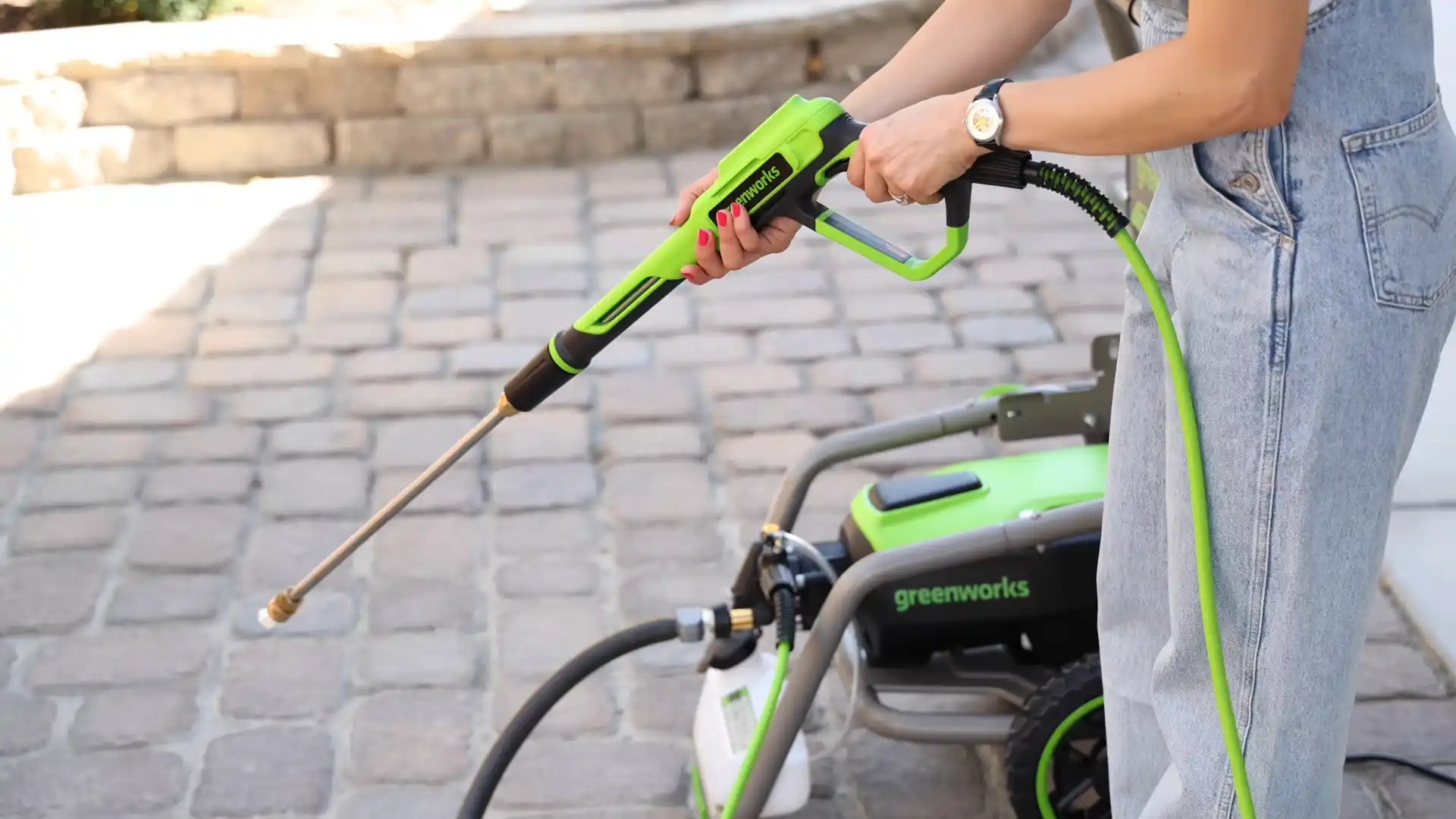
The GPW3001 is what you buy when you want gas-level driveway cleaning power but don’t want to deal with gas. The PWMA-certified 3000 PSI is real, independently verified pressure.

- TRUBRUSHLESS MOTOR : Powerful 14 Amp TruBrushless motor generates 3000 PSI and 2.0 GPM for maximum cleaning power.Cleaning Units 3300 C.U. Maximum Inlet Water Temperature 104°F (40°C).Frequency : 60 hz
- PWMA CERTIFIED (Pressure Washer Manufacturers‘ Association) : All water pressure (PSI) and flow rate (GPM) claims for this product were tested and verified by an independent lab, ensuring you’ll take home the power you were promised
Pros and Cons
| Pros | Cons |
|---|---|
| PWMA certified, 3000 PSI is independently verified | Heaviest electric on the list at 49 lbs |
| 10-year motor warranty (industry-best) | Expensive at $374-499 |
| TruBrushless motor auto-adjusts pressure per nozzle | |
| 1 gallon soap tank (fill and forget) | |
| 25 ft kink-resistant Uberflex hose | |
| Wheelbarrow steel frame, vertically stored | |
| Inline GFCI with waterproof plug |
Testing Results
Concrete / Driveway: Yes (heavy duty). This machine handles the toughest residential driveway work. Embedded grime, mildew, and medium oil stains come off at 3000 certified PSI.
Heavy Stains: Yes. One of two electric models on this list rated for heavy stains. Deep oil staining still benefits from degreasers, but the power is there.
PSI and GPM: 3000 PSI certified, 2.0 GPM max. The PWMA certification is the key differentiator. Many competitors claiming 3000 PSI are quoting peak/surge numbers. This one’s certified for it.
Motor: TruBrushless smart-sensing motor automatically adjusts pressure based on the nozzle attached. Switch from the 0 degree to the 40 degree and it adapts. Less manual adjusting.
Soap Tank: 1 gallon capacity. The biggest soap tank on this list by far. Fill it once and do the whole driveway without stopping.
Frame and Storage: Wheelbarrow-style steel frame stores vertically and takes up 50% less garage space than traditional horizontal frames.
Real-world Usage
This is the electric option for homeowners with a large two-car driveway or heavily stained concrete. At 3000 certified PSI, it bridges the gap between standard electric pressure washers and gas models. You get the heavy cleaning power without the noise, exhaust fumes, or maintenance schedule of a gas engine.
At 49 lbs, it’s not light. The wheelbarrow frame helps with rolling but you’ll feel it moving it in and out of storage. Budget buyers should look elsewhere. This machine is priced and built for people who want the best electric option available.
Best Use Case
Homeowners with large driveways, heavily stained concrete, or two-story exteriors to clean. Also ideal for buyers who want to replace a gas pressure washer with something quieter and lower maintenance. Skip it if you have a small single-car driveway with light cleaning needs.
Verdict
The 10-year motor warranty is genuinely unusual in this category. Most electric pressure washers come with 2-3 year warranties. The PWMA certification removes any doubt about the PSI claims. If you want the most capable electric pressure washer for driveways without going gas, the GPW3001 is it. See how it stacks up against other powerful options in our best heavy duty pressure washer roundup.
Rating: 4.7 / 5
View on Amazon: Greenworks Pro GPW3001
Best Gas: Westinghouse WPX3400
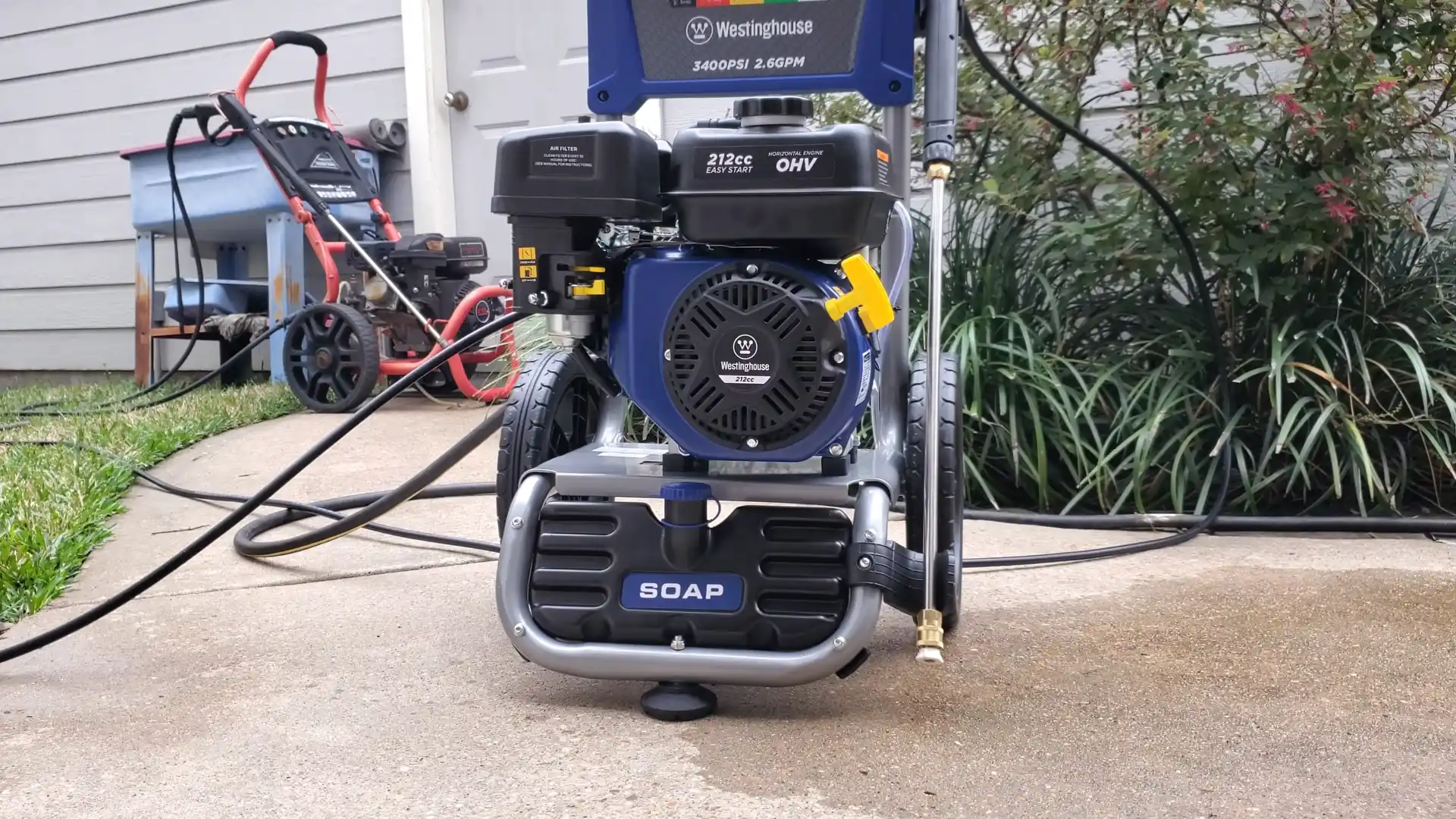
If your driveway has serious stains and nothing else has worked, this is the machine. 3400 PSI and 2.6 GPM is a different category of cleaning power compared to any electric model.

- 3400 PSI and 2.6 GPM of Powerful, Deep-Cleaning Water Pressure Perfect for Decks, Sidewalks, Siding, Fences, Railings, Garage Floors, Exterior Walls, Cars and Patio Furniture – Easy to Fill 1 Gallon Gas Tank and Half Gallon Onboard Soap Tank
- 25′ Foot Abrasion Resistant Super-Flex Hose With Lightweight High Pressure Spray Gun and 5 Quick Connect Nozzles (0°, 15°, 25°, 40° & Soap) - Compatible with Pressure Washer Accessories such as Surface Cleaners, Undercarriage Cleaners, and Foam Cannons with M22 fittings
Pros and Cons
| Pros | Cons |
|---|---|
| 3400 PSI and 2.6 GPM, most powerful on this list | 67 lbs, heaviest machine here |
| 24,000+ Amazon reviews at 4.6 stars | Gas requires oil changes and winterization |
| 12-inch never-flat wheels handle rough terrain | |
| 1.6L onboard soap tank | |
| Steel frame construction | |
| 3-year limited warranty | |
| Easy-start engine, consistent first or second pull |
Testing Results
Concrete / Driveway: Yes (heavy duty). This is the machine for driveways with years of embedded stains. The 2.6 GPM flow rate means faster rinsing too, not just more pressure.
Heavy Stains: Yes. Old oil stains, tire marks, and thick mildew come off with this. Pair it with a concrete degreaser for best results on the toughest jobs.
PSI and GPM: 3400 PSI and 2.6 GPM rated. Cleaning units (PSI x GPM) put this at 8,840. Compare that to the Westinghouse ePX3500 at around 2,400. That gap is real and you feel it.
Startup Reliability: 212cc Westinghouse OHV engine pulls first or second pull consistently. Gas cold-start issues are common complaints with budget gas models. Not here.
Wheels: 12-inch never-flat wheels. On a cracked concrete driveway or across gravel, these handle it. Smaller wheeled gas models struggle on rough terrain.
Noise Level: Loud. This is a gas engine. If your neighborhood has noise ordinances or close neighbors, factor that in. Early morning use will get attention.
Real-world Usage
The WPX3400 is what contractors and serious homeowners reach for when the job is too big for an electric. Large two-car driveways, thick concrete buildup, and stains that have been there for years are where this earns its place. You connect it to a garden hose for water supply and go. No outlet hunting, no cord management on a long driveway.
The trade-off is maintenance and noise. Gas pressure washers need oil checked before each season, proper winterization to prevent pump damage, and you can’t run them in the garage. That’s the deal. For most homeowners who own a lawn mower, this is familiar territory.
Best Use Case
Homeowners with large driveways and serious staining who are comfortable with gas equipment maintenance. Also the right pick if you’re far from an outdoor outlet. Not for apartment dwellers, noise-sensitive neighborhoods, or anyone who wants zero-maintenance equipment. For more gas options, our best gas pressure washer guide covers the full category.
Verdict
3400 PSI at 2.6 GPM is a lot of machine. The 24,000 Amazon reviews tell you this one holds up. For a driveway that hasn’t had a proper clean in years, nothing on this list beats it. Know what you’re getting into with gas: more maintenance, more noise, more power.
Rating: 4.6 / 5
View on Amazon: Westinghouse WPX3400
What Makes the Best Pressure Washer for Driveways?
PSI and GPM: The Numbers That Actually Matter
PSI measures pressure. GPM measures flow. Both matter for driveways, but not equally. For concrete, you want at least 2000 PSI to break up surface grime and mildew. Anything under that is a light-duty machine for cars and furniture, not concrete.
GPM determines how fast you can rinse. A machine with 2000 PSI and 1.2 GPM will clean at the same contact point but take longer to clear the whole driveway compared to a 2.6 GPM gas model. If you’re cleaning a large driveway regularly, GPM is the spec that controls your time.
Multiply PSI x GPM to get cleaning units. A 3400 PSI / 2.6 GPM gas model produces 8,840 cleaning units. A 2000 PSI / 1.2 GPM electric produces 2,400. That’s not a small difference on a heavily stained concrete surface.
Electric vs Gas for Driveways
Electric pressure washers top out around 2000-3000 PSI for residential models. Most work between 1.1-1.76 GPM. That’s enough for routine driveway cleaning and medium staining. Setup is fast, maintenance is minimal, and they work anywhere there’s an outlet.
Gas models start at 3000 PSI and commonly reach 3400+ PSI with 2.5+ GPM. That higher GPM is what cleans large surfaces faster. If your driveway hasn’t been cleaned in years or you have oil stains that scrubbing won’t touch, gas is worth the trade-off on noise and maintenance.
Most suburban homeowners with moderate cleaning needs don’t actually need gas. If you’re unsure, start with a strong electric like the Greenworks GPW3001 or the Westinghouse WPX3000e. If you try it and still can’t get the results you need, then upgrade to gas. Our best pressure washer guide covers both categories side by side.
Motor Type: Universal vs Brushless Induction
Most electric pressure washers use universal motors. They’re inexpensive but generate more heat and wear faster under regular use. Fine for occasional use, but they have a shorter lifespan if you’re cleaning frequently.
Brushless induction motors run cooler, quieter, and last significantly longer. The RYOBI RY142300 and Greenworks GPW3001 both use brushless motors. The Karcher K5 Premium uses a water-cooled induction motor, which is the most durable electric motor setup available. If you’re buying a machine to last 10+ years, the motor type matters more than the brand name.
Pump Type: Axial vs Triplex
Nearly every residential pressure washer uses an axial cam pump. They’re maintenance-free under normal use. Triplex pumps show up in commercial and contractor-grade machines. For driveway cleaning at home, axial cam is fine.
What does matter is whether the pump has thermal protection. If the trigger is held closed for too long with the engine running, heat builds up and can damage the pump. Total Stop System (TSS) on electric models cuts the motor when you release the trigger. Gas models need thermal relief valves for the same reason. The Simpson CM61456-S includes one. Check this before buying any pressure washer.
Hose Length and Cord Management
A 20 ft hose feels short on a standard driveway. Most newer models have moved to 25 ft. Still, on a 30-40 ft driveway you’ll need to reposition the machine or use a hose extension. Factor this in against where your outdoor spigot and outlet are located.
For electric models, cord management adds another layer. A 35-36 ft cord gives you reasonable range but you’ll likely need an extension cord for a long driveway. Use a heavy-gauge outdoor extension rated for the amperage. A 14-gauge or lower cord will restrict power to the motor.
Nozzle Selection for Concrete
For driveway work, the 15-degree nozzle does most of the heavy cleaning. It concentrates the spray enough to break up grime but is wide enough to cover ground without excessive passes. The 0-degree nozzle is for stuck-on stains in a specific spot. Never use it sweeping across a surface.
A turbo nozzle spins the 0-degree stream in a rotating pattern, effectively combining spot-cleaning concentration with broader coverage. Several models on this list include one. It’s worth having for older concrete with deep staining.
How to Pressure Wash a Driveway Effectively
Apply a concrete degreaser or detergent first using the soap nozzle. Let it sit 5-10 minutes without drying. This breaks down oil and grime before you add pressure.
Switch to the 25-degree nozzle and rinse from the highest point of the driveway down toward the street. Work in overlapping passes moving with the slope so dirty water runs away from cleaned areas.
For tough spots, switch to the 15-degree nozzle and work those areas at consistent distance, about 6-8 inches from the surface. Hold that distance steady. Moving closer or farther mid-pass leaves streaks.
Rinse the entire surface with the 25-degree or 40-degree nozzle to clear detergent and loosened debris. Do this completely before the soap dries, especially in direct sun.
Let the driveway dry fully before applying any concrete sealer or treatment. Usually 24-48 hours depending on temperature and sun exposure.
Frequently Asked Questions
What PSI do I need for a concrete driveway?
For most residential concrete driveways, 2000-2500 PSI is enough for routine cleaning and moderate staining. Deep oil stains, mildew that’s been building for years, or large driveways where speed matters will benefit from 3000+ PSI. A gas model at 3400 PSI is the top of what you need for residential work. Anything higher starts entering commercial territory.
Is an electric or gas pressure washer better for driveways?
It depends on your staining level and driveway size. For routine seasonal cleaning on a typical suburban driveway, a strong electric like the Westinghouse ePX3500 or Greenworks GPW3001 handles the job without the noise or gas maintenance. For serious embedded stains or a large driveway you want cleaned fast, gas pressure washers at 3400 PSI and 2.5+ GPM will outperform any electric. You can also learn about alternatives for paver surfaces in our guide on how to clean pavers without power washing.
Can I use a pressure washer on a sealed or painted driveway?
Use caution on sealed or painted concrete. High PSI can strip sealant and etch paint. Start with the 40-degree nozzle at a distance of 12 inches or more and test a small area first. Once you know how the surface responds, you can adjust. A standard concrete driveway without sealant has much more tolerance for direct pressure.
Do I need a surface cleaner attachment for driveways?
Not required, but it makes large driveway cleaning significantly faster. A surface cleaner attachment spins two spray bars in a rotating pattern under a circular shroud. It covers about a 12-15 inch path per pass instead of the 2-3 inch wand path. For a big driveway, the time savings add up. They connect to any standard quick-connect pressure washer wand.


One Comment
Comments are closed.