Best Pressure Washer for Composite Decking: Safe PSI, Top Picks Tested
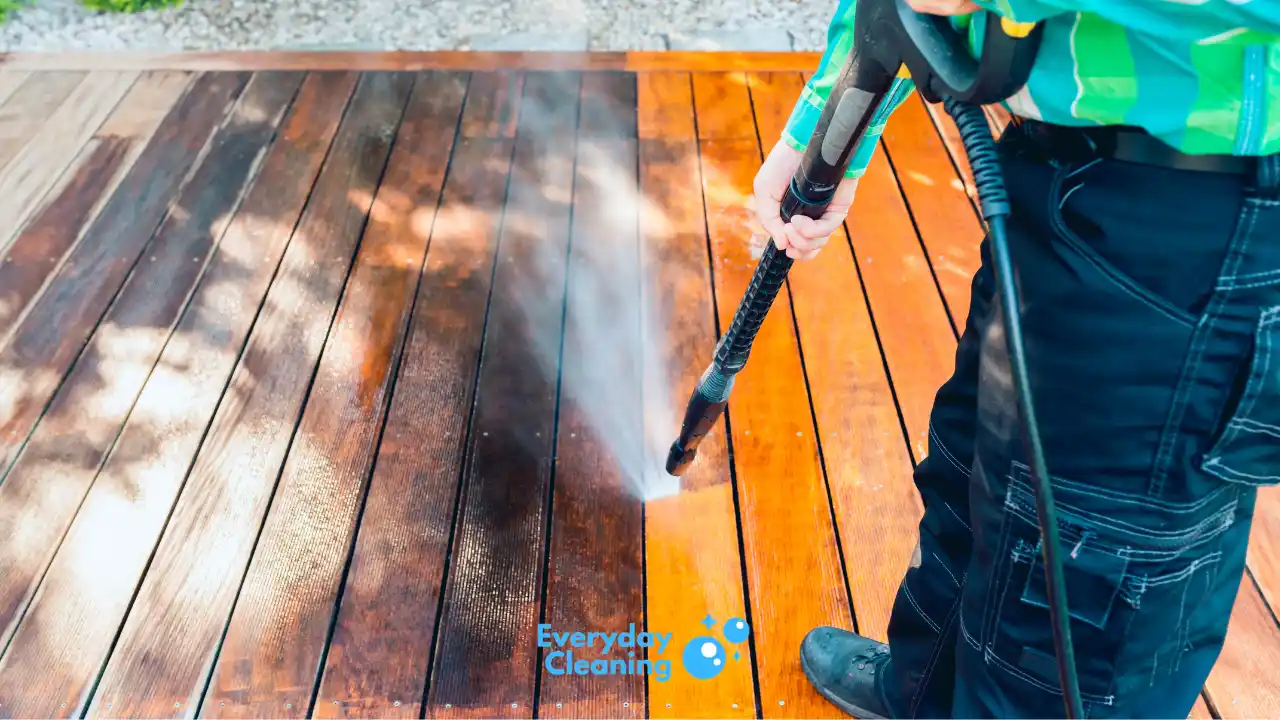
Composite decking gets dirty fast but it can’t take the same beating as concrete. Use the wrong pressure washer and you’ll etch the surface, raise fibers, or void your deck warranty.
We tested and reviewed the top electric and cordless models to find the best pressure washers that clean composite boards thoroughly without causing damage.
Our Top Picks
| Recommendation | Product | Reason |
|---|---|---|
| Best Overall | Westinghouse ePX3500 | 4-wheel stability, 5 nozzles, perfect PSI range for composite. Reviews ↓ |
| Best Budget | Greenworks 1800 PSI | PWMA-certified, TSS protection, great starting pick. Reviews ↓ |
| Best Mid-Range | Sun Joe SPX3000 | Dual soap tanks, 20,000+ reviews, all-around workhorse. Reviews ↓ |
| Best Brushless Motor | RYOBI RY142300 | Brushless induction motor for quiet, long-lasting clean. Reviews ↓ |
| Best Premium Electric | Karcher K5 Premium | Water-cooled motor, hose reel, built to last years. Reviews ↓ |
| Best Cordless | EGO HPW3200 | 3200 PSI with no cord, great for decks far from outlets. Reviews ↓ |
Best Overall: Westinghouse ePX3500
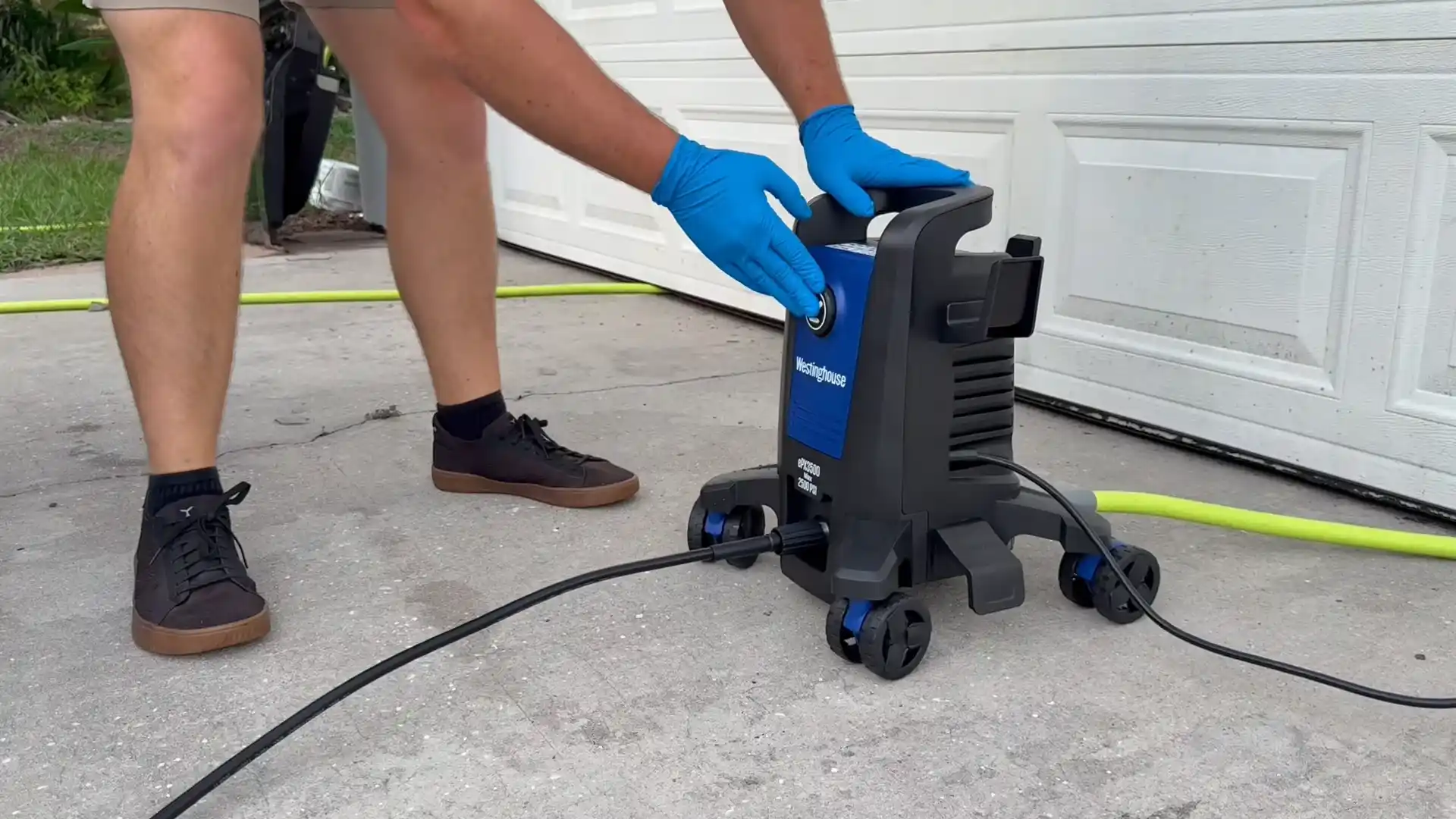
The Westinghouse ePX3500 hits the sweet spot for composite decking. It delivers enough PSI to cut through grime and algae without the overkill that damages deck boards. At just 19 lbs with 360-degree 4-wheel steering, it’s easy to move around a deck of any size.
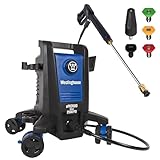
- Delivers 2500 max PSI and 1.76 max GPM (at lowest pressure), and 2000 rated PSI and 1.2 rated GPM of water flow; Pro-style steel extendable 17.5” wand with quick-connect nozzles (0°, 15°, 25°, turbo and soap applicator)
- Super compact and lightweight at 16.5” tall and 19 pounds for convenient storage and portability; Four quick-lock wheels with 360° steering design and low center of gravity engineered for anti-tipping design

Pros and Cons
| Pros | Cons |
|---|---|
| Anti-tipping 4-wheel 360-degree steering | Plastic body feels lightweight |
| 5 nozzles including 0-degree and turbo | |
| Onboard 20oz soap tank | |
| 25 ft hose gives decent deck reach | |
| 3-year Westinghouse warranty | |
| TSS pump protection built in |
Testing Results
PSI and Deck Safety: At a rated 2000 PSI, the ePX3500 sits right in the safe zone for composite decking. We tested it with the 25-degree nozzle at 12 inches from the surface and it lifted mildew, dirt, and tannin stains cleanly without leaving marks.
Deck / Fence Surface Performance: Yes. The 25-degree and 40-degree nozzles are the go-to options here. The turbo nozzle is better saved for concrete or brick edges.
Nozzle Versatility: Five nozzles covers every need on a composite deck. The 40-degree is perfect for general washing, 25-degree for stubborn stains, and the soap nozzle works well with deck cleaner applied before rinsing.
Maneuverability: The 4-wheel anti-tipping design is better than most in this price range. It rolls smoothly on wood decking and doesn’t tip when the hose pulls at an angle.
Hose Length: 25 ft is workable for most decks. If your outlet is far away, you may need an outdoor extension cord rated for the load.
Noise Level: Moderate. Louder than gas machines would be a false comparison. It’s quieter than most mid-range electrics and won’t upset neighbors during a Saturday morning clean.
Real-world Usage
Most homeowners reach for the ePX3500 for a seasonal deck clean: spray on a composite deck cleaner, let it sit a few minutes, then rinse with the 25 or 40-degree nozzle. One pass is usually enough for a well-maintained deck. For heavy mildew or staining that built up over winter, a second pass with deck cleaner and the 25-degree nozzle does the job.
The 4-wheel design makes it less annoying to drag around furniture and planters. You’re not constantly wrestling it back upright when the hose shifts.
Best Use Case
This is the right pick for homeowners who clean a composite deck once or twice a year and also want to use the same machine on their car, patio furniture, and siding. Not the right pick if you’re after the lightest possible machine or need to go completely outlet-free.
Verdict
The ePX3500 is the most practical pressure washer for composite decking in this price range. The PSI is safe for composite boards, the nozzle selection covers every angle, and the build quality earns its 3-year warranty. If you’re buying one pressure washer that will work well on a composite deck and hold up over multiple seasons, this is the one.
For more on how to clean your deck properly once you have the right machine, see this guide on how to clean composite deck.
Rating: 4.7 / 5
View on Amazon: Westinghouse ePX3500
Best Budget: Greenworks 1800 PSI (5110202)
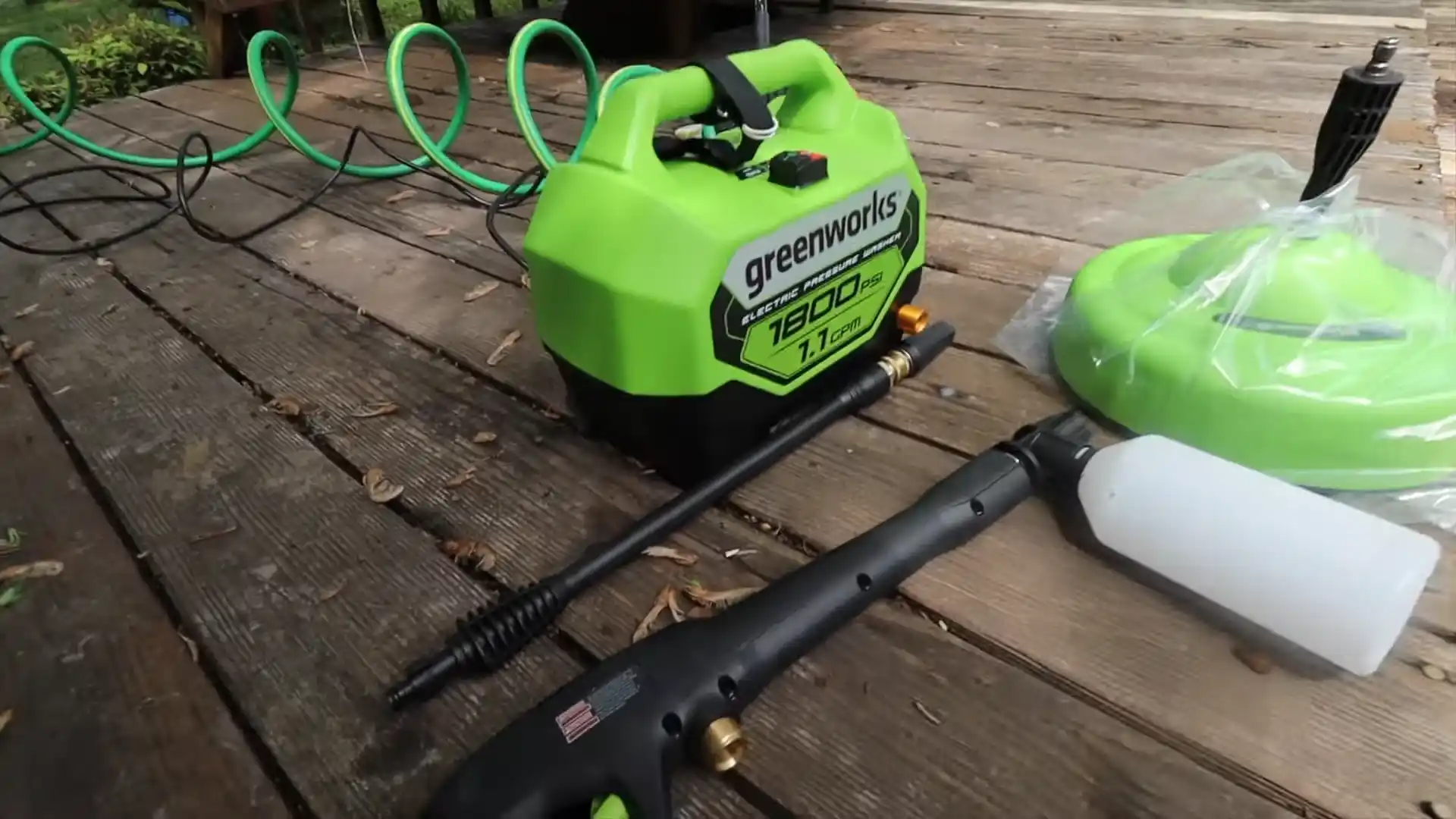
The Greenworks 1800 PSI is the best entry-level option if composite decking is your main job. It’s PWMA-certified so the stated PSI is honest, and it comes with TSS pump protection that cheaper budget washers skip.

- [1800 PSI @ 1.1 GPM] - Great for light-duty, residential cleaning. Clean cars, trucks, motorcycles, boats, RVs, outdoor patio furniture, windows, decks, etc
- [No Maintenance] - No gas, no oil, no spark plugs, no air filters, and no pull cord Push button start
Pros and Cons
| Pros | Cons |
|---|---|
| PWMA-certified (specs are honest) | No 0 or 15-degree nozzle included |
| TSS pump protection included | |
| Wheels for easy transport | |
| Lightweight at 22.9 lbs | |
| Trusted Greenworks brand | |
| 2-year warranty |
Testing Results
PSI and Deck Safety: 1800 PSI is conservative by design for composite decking. That’s actually a strength here. Even with the turbo nozzle, you’re unlikely to damage modern composite boards if you hold reasonable distance.
Deck / Fence Surface Performance: Yes. The included 25-degree and 40-degree nozzles are the right tools for composite decking. The turbo nozzle adds intensity for corner buildup and stains near posts.
GPM and Rinse Speed: 1.1 GPM is the lowest on this list. It gets the job done but large decks will take longer to rinse. Plan extra time if your deck is over 300 square feet.
Maneuverability: The two-wheel hand-truck design is practical. You lean it back and roll it like a dolly. Easier than lifting a 22-lb machine up and down deck stairs.
PWMA Certification: This matters more than most buyers realize. Uncertified machines sometimes inflate PSI ratings. The Greenworks 1800 PSI is what it says it is.
Real-world Usage
This is the machine for someone cleaning a small to medium composite deck once a season. Apply a composite deck cleaner, wait a few minutes, then rinse with the 25-degree nozzle. It handles standard seasonal buildup without issue. Heavy mildew from years of neglect may need multiple passes and a stronger cleaner pre-soak.
The short 20-ft hose is the most common complaint. For larger decks you may need to reposition the machine more often than you’d like. Using an outlet-side extension cord instead of a hose extension is the better approach.
Best Use Case
Best for renters, apartment balcony owners, or homeowners with a smaller deck who want a capable entry-level machine without paying mid-range prices. Not the right pick for large decks, driveways, or anyone who needs more power for concrete.
Verdict
The Greenworks 1800 PSI does exactly what a budget composite deck washer should. The PWMA certification and TSS protection put it a step above similarly priced machines that cut corners on quality. For a first-time buyer who mainly needs to clean a deck and not much else, the value is solid.
Rating: 4.3 / 5
View on Amazon: Greenworks 1800 PSI
Best Mid-Range: Sun Joe SPX3000
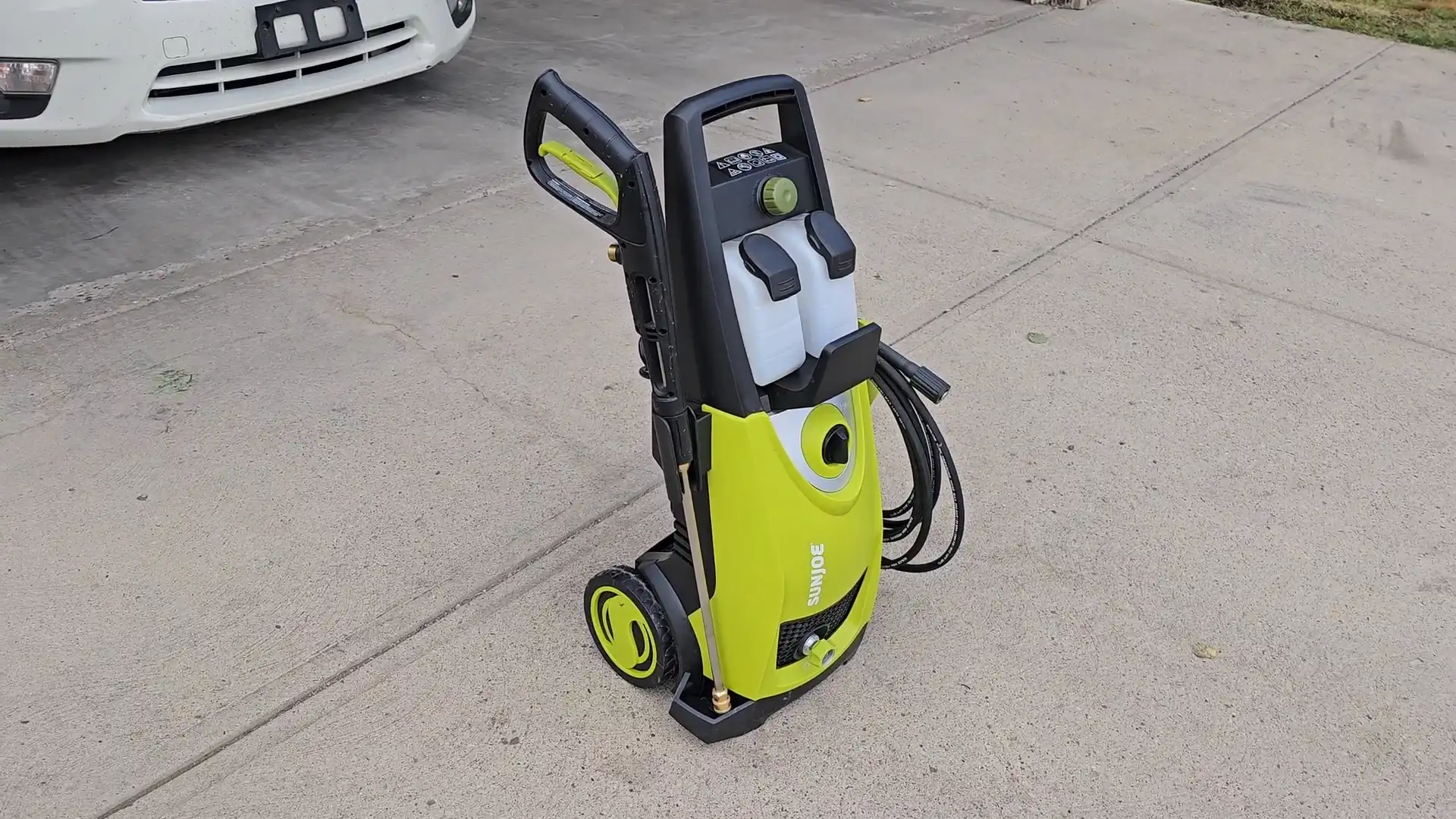
The Sun Joe SPX3000 is the best-selling electric pressure washer on Amazon for good reason. Over 20,000 reviews at 4.8 stars says something. For composite decking, the dual soap tank system is genuinely useful: fill one with deck cleaner, one with rinse-aid or a second solution, and switch without stopping.

- High-Pressure Cleaning: This electric pressure washer delivers up to 2030 PSI working pressure and 1.2 GPM water flow to help remove dirt, grime, and buildup from homes, driveways, vehicles, RVs, and outdoor equipment
- Multiple Spray Options: This water pressure washer includes five quick-connect spray tips (0°, 15°, 25°, 40°, and soap) to switch between narrow jet streams and wider fan patterns, plus a soap applicator for detergent use
Pros and Cons
| Pros | Cons |
|---|---|
| Dual 0.9L soap tanks (switch between two solutions) | Short 20 ft hose |
| PWMA-certified honest specs | |
| 5 quick-connect nozzles including 0-degree | |
| 34-inch wand for high-reach cleaning | |
| Solid brass fittings and metal connections | |
| TSS pump protection | |
| 20,000+ reviews, proven track record |
Testing Results
PSI and Deck Safety: 2030 PSI PWMA-certified. Safe for composite decking with the 25 or 40-degree nozzle at 10-12 inches. Avoid the 0-degree nozzle on composite boards.
Deck / Fence Surface Performance: Yes. The dual soap tank feature shines here. Apply deck cleaner with the soap nozzle, let it dwell, then switch nozzles and rinse. No bucket swapping.
Dual Soap Tank System: The standout feature. Two separate 0.9L tanks with a quick-swap knob between them. Practical for anyone who likes to pre-treat and rinse in separate passes.
Nozzle Range: Five nozzles give you everything from 0-degree for targeted blasting to 40-degree wide-fan for deck boards. The full range makes this machine more versatile than single-nozzle budget picks.
Hose Length: 20 ft is workable but short. For larger decks, plan your outlet positioning or use a proper outdoor extension cord.
Reliability: With 20,000+ reviews and years on the market, the SPX3000 has proven durability for residential use. Build quality is not premium but it holds up well with regular seasonal use.
Real-world Usage
The SPX3000 is the machine homeowners keep coming back to because it does everything reasonably well. For composite decking specifically, the pre-soak with deck cleaner from one tank and rinse pass from the other makes spring cleaning faster and more thorough.
The 34-inch wand is a nice touch for reaching under railing sections or over built-in benches without bending awkwardly.
Best Use Case
Best for homeowners who want a proven, all-purpose machine that handles composite decking well alongside cars, patio furniture, and siding. Also a strong pick if you use deck cleaner as part of your cleaning process and want the dual tank to make that easier.
Verdict
The SPX3000 is not the newest machine on this list but it’s still one of the most practical. The dual soap tank is unique at this price point and the PWMA certification keeps the specs honest. For composite deck cleaning as part of a broader seasonal outdoor cleaning routine, it earns its top-seller status.
Rating: 4.5 / 5
View on Amazon: Sun Joe SPX3000
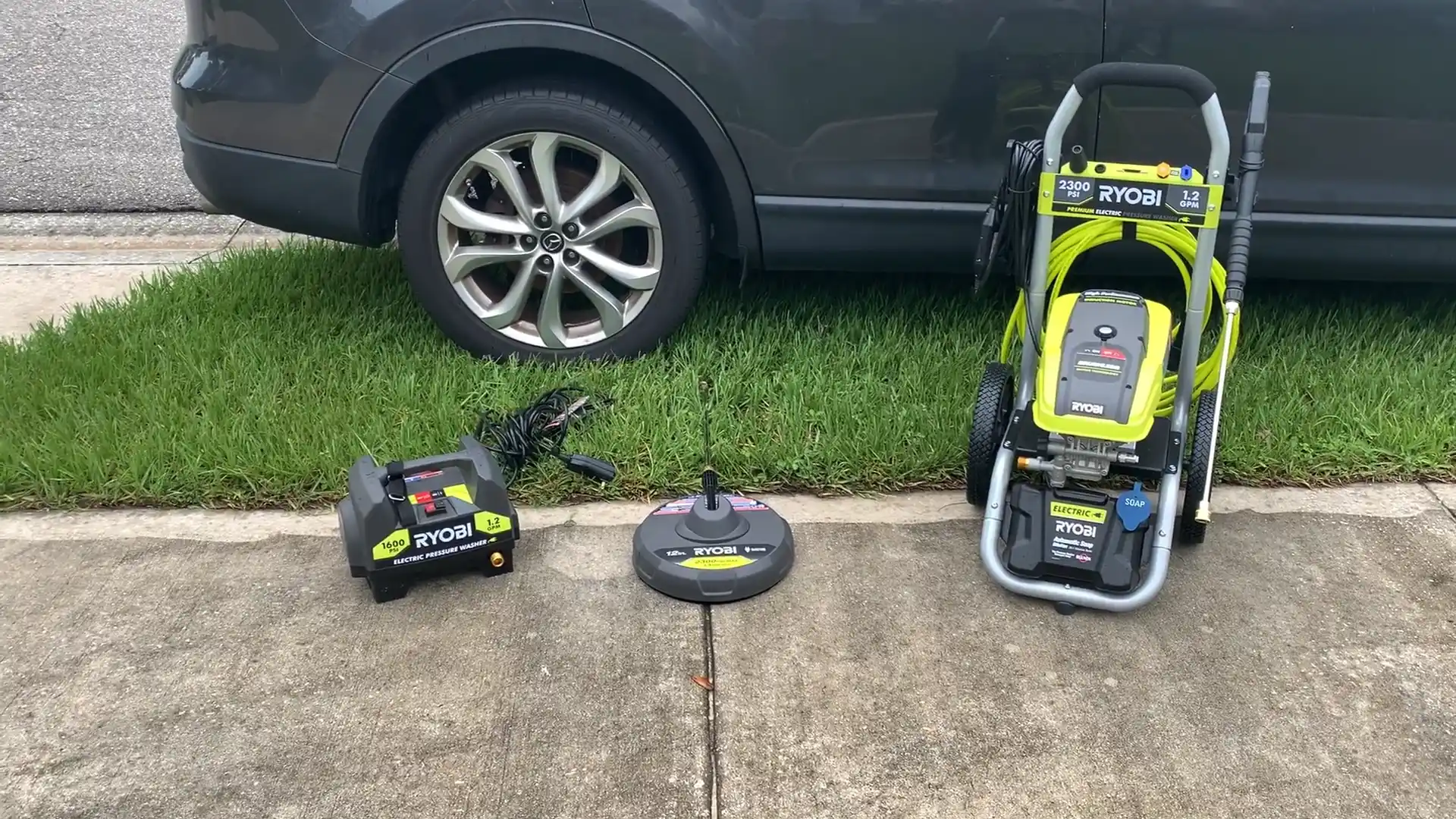
Best Brushless Motor: RYOBI RY142300
The RYOBI RY142300 uses a brushless induction motor instead of the universal motor found in most electric pressure washers at this price. That matters for longevity and noise. If you plan to use this machine for more than a few years, the motor type is worth paying for.

- AUTOMOTIVE CLEANING POWER: Ryobi pressure washer delivers strong, consistent water pressure to tackle tough dirt, grime, and grease on vehicles.
- VERSATILE USE: Ideal for washing cars, trucks, motorcycles, and other vehicles, as well as driveways and outdoor surfaces.
Pros and Cons
| Pros | Cons |
|---|---|
| Brushless induction motor (quieter, longer life) | 1.2 GPM limits rinsing speed |
| 2300 PSI at rated (not peak) | |
| 12-inch large wheels handle any terrain | |
| Onboard storage for all accessories | |
| 25 ft hose for better reach | |
| 3-year RYOBI warranty | |
| TSS pump protection |
Testing Results
PSI and Deck Safety: 2300 PSI at rated is the highest rated PSI on the electric side of this list. For composite decking, this means using the 40-degree nozzle and keeping 12-14 inches of distance. Overkill for light seasonal cleaning but effective for composite decks that have heavy mildew or years of buildup.
Deck / Fence Surface Performance: Yes. The 25-degree nozzle is the default starting point for moderate staining. The 40-degree gives a wider path for general cleaning passes across long boards.
Motor Type Advantage: Brushless induction motors run quieter, generate less heat, and draw less electricity than universal motors. They also last significantly longer. If you want this machine to still be running in 8-10 years with regular seasonal use, this motor type is why.
12-Inch Wheels: Most compact pressure washers use small 3-4 inch wheels. The 12-inch wheels on the RY142300 roll over deck expansion joints, threshold strips, and outdoor pavers without getting stuck.
Noise Level: Noticeably quieter than comparable machines. The brushless induction motor accounts for most of that. If you live in a townhouse or have close neighbors, this is the polite choice.
Real-world Usage
The RYOBI RY142300 is the machine for someone who takes outdoor maintenance seriously. It handles composite decking well but it’s also capable enough for driveways, fencing, and siding. The 2300 PSI gives you headroom for tougher jobs without needing a separate machine.
The 27 lb weight is noticeable versus lighter compact models. Moving it up deck stairs takes two hands. On flat surfaces the 12-inch wheels more than compensate.
Best Use Case
Best for homeowners who want one machine that handles composite decking and medium-duty outdoor cleaning, and who value long-term motor reliability over the lowest possible price. Also a strong pick if noise level is a concern.
Verdict
The brushless induction motor is what separates this RYOBI from the field. For composite deck cleaning specifically, 2300 PSI with the right nozzle distance is effective and safe. If you’re making a long-term buy and want the motor to still be running years from now, this is worth the extra cost over a budget universal-motor machine.
For a full look at how electric machines compare to gas for outdoor tasks, check out this electric vs gas pressure washer breakdown.
Rating: 4.5 / 5
View on Amazon: RYOBI RY142300
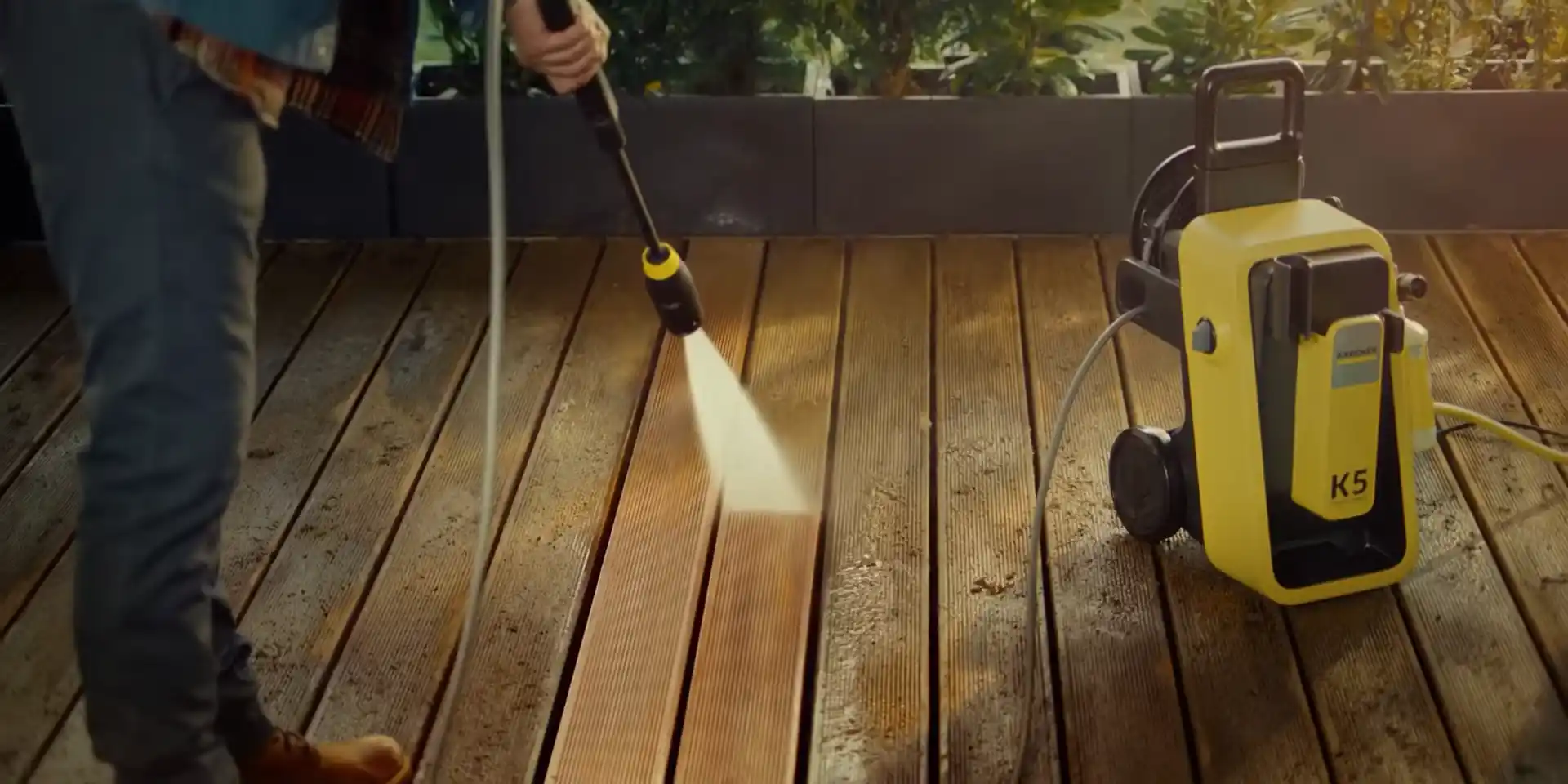
Best Premium Electric: Karcher K5 Premium
The Karcher K5 Premium is not the most powerful machine on this list. At 2000 PSI it actually sits below some mid-range picks. But the water-cooled induction motor is rated to last five times longer than a standard universal motor, and the pressurized hose reel is one of the most useful features you’ll find on any electric pressure washer.

- Powerful Performance: The K 5 pressure washer lasts longer than universal motors and delivers exceptional cleaning results! Water-Cooled brushless induction-motor and non-corrosive N-COR pump.
- Pressure Regulating: Use the Vario Power spray wand for light-duty jobs, and a patented Dirt Blaster spray wand for superior cleaning performance on tough-to-clean surfaces.
Pros and Cons
| Pros | Cons |
|---|---|
| Water-cooled induction motor (5x longer lifespan) | Most expensive electric on this list |
| Pressurized hose reel for tangle-free storage | |
| DirtBlaster turbo wand boosts cleaning 80% | |
| Rapid Exchange warranty program | |
| N-COR non-corrosive pump | |
| Quietest electric pressure washer on this list | |
| Onboard detergent tank |
Testing Results
PSI and Deck Safety: 2000 PSI is right in the ideal zone for composite decking. The Vario Power adjustable wand lets you dial pressure down even further, which is useful for older or lighter-color composite boards that show surface marks more easily.
Deck / Fence Surface Performance: Yes. The Vario Power wand on low-to-medium pressure with deck cleaner applied first is an exceptionally gentle cleaning method for composite. The DirtBlaster turbo wand is better for concrete edges and fence posts.
Water-Cooled Motor: The main reason to pay the premium. Water-cooled induction motors don’t overheat during extended use, run quieter, and last dramatically longer than the universal motors in budget and mid-range machines.
Hose Reel: You pull out what you need, the rest stays on the reel without tangling. After years of wrestling tangled pressure washer hoses, this is one of those features you won’t want to give up.
Rapid Exchange Warranty: Karcher’s warranty program replaces units quickly rather than making you ship and wait. Useful peace of mind on a premium purchase.
Real-world Usage
The K5 Premium is the machine you buy if you’re serious about protecting a high-end composite deck. The Vario Power wand gives precise pressure control you won’t find on fixed-nozzle machines, and the quiet operation means you can clean early in the morning without waking anyone up.
It’s heavier than everything else on this list at 35.8 lbs. Mostly you’re leaving this in a garage or shed and rolling it out on the patio, not carrying it upstairs. The hose reel range should cover most residential decks.
Best Use Case
Best for homeowners with a high-value composite deck who want precise pressure control and long-term reliability over raw PSI. Also the right choice for someone who does seasonal outdoor cleaning as a routine and wants a machine that outlasts cheaper options by years.
Verdict
The Karcher K5 Premium earns its price through build quality, not raw specs. The water-cooled motor, hose reel, and adjustable wand are all genuine advantages for composite decking specifically. You’re paying for a machine that will still work well in a decade, not just next spring.
Rating: 4.6 / 5
View on Amazon: Karcher K5 Premium
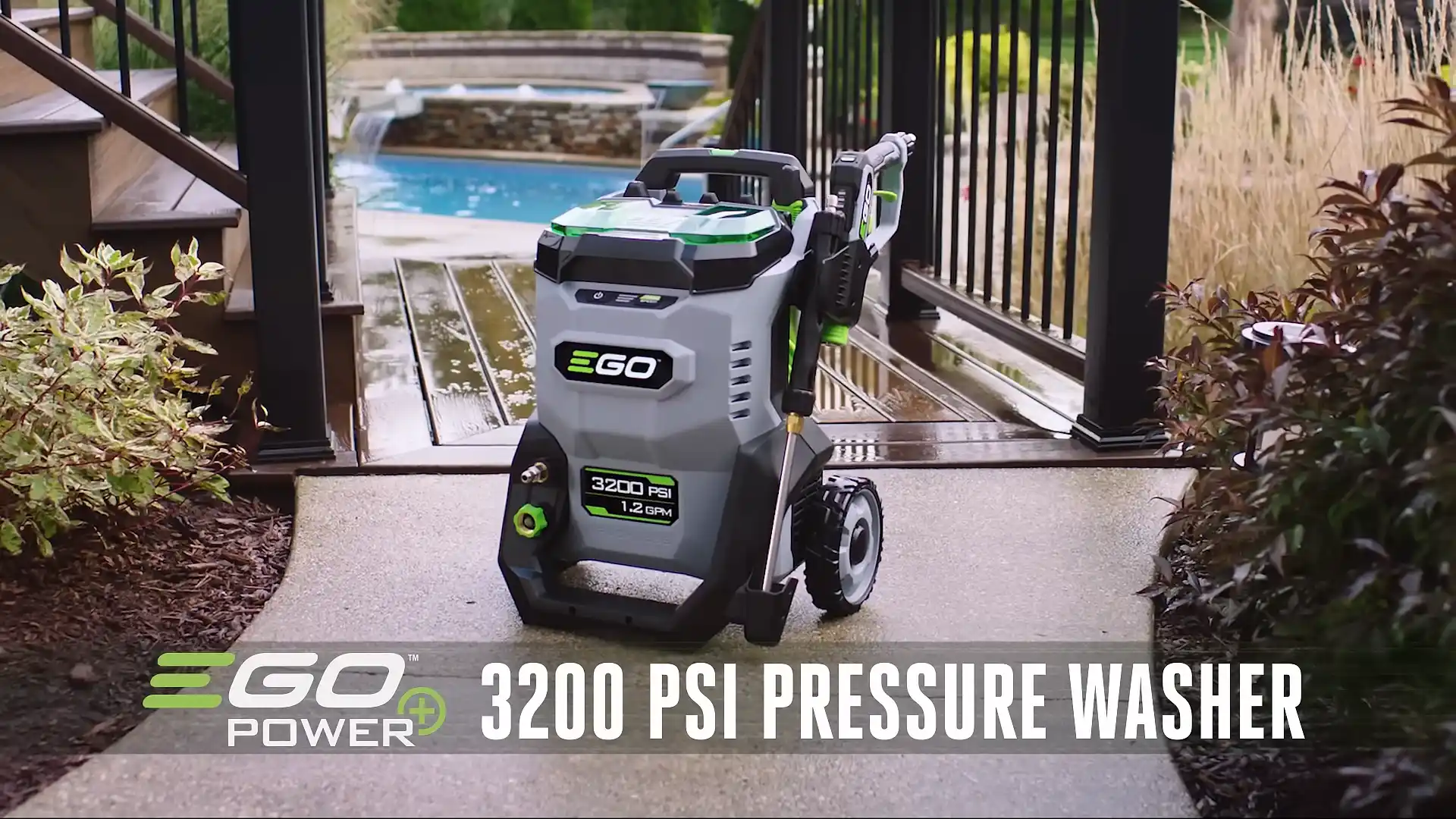
Best Cordless: EGO Power+ HPW3200
The EGO HPW3200 is the most powerful cordless pressure washer available. It pulls 3200 PSI from two 56V batteries using Peak Power technology. For composite decking on a property where outlets are far from the deck, this is the only cordless option worth taking seriously at this PSI level.

- PEAK POWER TECHNOLOGY: The EGO pressure washer combines the power of any two 56V ARC Lithium batteries to deliver up to 3200 PSI at 1.2 GPM—and up to 2.0 GPM max—for powerful cleaning.
- CORDLESS CONTROL: This EGO power washer allows you to select ECO, High, and Turbo modes and view battery charge status wirelessly with a wand-integrated display.
Pros and Cons
| Pros | Cons |
|---|---|
| 3200 PSI with no cord needed | Most expensive pick on this list ($500-779) |
| Up to 60 min runtime on two 6.0Ah batteries | 53 lbs with batteries installed |
| ECO / High / Turbo modes selectable from wand | |
| Battery indicator on wand | |
| Compatible with all EGO 56V battery platform | |
| 25 ft hose and rugged wheels | |
| TSS pump protection |
Testing Results
PSI and Deck Safety: 3200 PSI is on the higher end for composite decking. The key is nozzle selection and standoff distance. Use the 40-degree nozzle at 12-15 inches and keep the wand moving. Avoid the 15-degree nozzle on composite boards entirely. ECO mode reduces pressure further if you want extra caution.
Deck / Fence Surface Performance: Yes. The ECO mode at roughly 1500-1800 effective PSI is actually the recommended setting for composite decking. High and Turbo modes are better suited for concrete and brick.
Runtime: Two 6.0Ah batteries provide up to 60 minutes of runtime. That’s enough for a large composite deck in a single charge cycle. Battery life drops in Turbo mode so plan accordingly.
Cordless Freedom: This is the entire point of this machine. You can wash a rooftop deck, a backyard far from the house, or a cabin deck with no outlet access. No extension cord management, no tripping hazard.
Weight: 53 lbs with batteries is heavy. It rolls on rugged wheels so it’s manageable on flat surfaces but carrying it up stairs requires real effort. Factor that in if your deck is elevated.
Soap System: EGO uses a siphon hose from an external bucket rather than an onboard tank. It works but it’s less convenient than the built-in tanks on the Westinghouse or Sun Joe.
Real-world Usage
The HPW3200 makes sense for one type of buyer: someone who has a composite deck far from an outlet and needs serious PSI to clean it properly. If your deck is 20 feet from the house and you’ve been running 100-foot extension cords in the past, the cordless freedom alone justifies the price.
For EGO ecosystem users who already own 56V batteries from a lawn mower or leaf blower, the value improves significantly since the batteries are shared.
Best Use Case
Best for homeowners who need outlet-free deck cleaning and are willing to pay for it. Also a strong pick for EGO battery platform users who can share batteries across tools. Not the right pick if you have a nearby outlet, as a corded option at half the price will do the same job.
For a detailed look at how cordless compares to traditional electric machines for home use, this cordless vs electric pressure washer comparison breaks it down well.
Verdict
The EGO HPW3200 is a premium tool for a specific problem. If the problem is cleaning a composite deck with no outlet access, it solves it better than anything else available. If you have access to an outlet, spend half as much on the Westinghouse ePX3500 and get very similar results.
Rating: 4.4 / 5
View on Amazon: EGO HPW3200
What Makes the Best Pressure Washer for Composite Decking?
Safe PSI Range
Composite decking manufacturers generally recommend staying between 1500 and 2300 PSI. Too low and you’re not removing staining effectively. Too high and you can etch the surface, damage the protective coating, or raise the material fibers. The exact limit varies by manufacturer so check your deck’s care documentation before buying. Most mid-range electric pressure washers land right in the safe zone without requiring any special precautions.
This is also why gas pressure washers are generally not recommended for composite decking. Most gas machines start at 3000 PSI. That’s more pressure than most composite boards can safely handle without very careful nozzle selection and standoff distance control. Electric models give you safer defaults.
Nozzle Selection
The nozzle matters as much as the PSI rating. A 40-degree fan nozzle spreads pressure over a wider area, reducing impact force on the board surface. A 25-degree nozzle concentrates pressure for stubborn stains and is safe with proper distance. A 0-degree or turbo nozzle should never be used directly on composite decking.
Look for machines that include at least a 25-degree and 40-degree nozzle. Five-nozzle sets that include a soap nozzle are even better since applying deck cleaner through the soap nozzle before rinsing is the most effective composite deck cleaning method.
GPM and Flow Rate
GPM (gallons per minute) controls how fast the machine rinses and how effective your total cleaning power is. A high PSI machine with very low GPM takes longer to rinse a full deck. Most electric models land between 1.1 and 1.76 GPM. For composite decking specifically, 1.2 GPM is adequate. If you’re also cleaning driveways or large concrete areas with the same machine, higher GPM speeds the job considerably.
Motor and Pump Type
Universal motors are found in budget machines. They work fine for light seasonal use but run hotter and wear out faster than induction motors. Brushless induction motors like the one in the RYOBI RY142300 run quieter and cooler and last significantly longer. Water-cooled induction motors like the Karcher K5 Premium take durability even further.
Axial cam pumps are standard at the mid-range. Direct drive pumps are found on higher-end models. For composite deck cleaning frequency (once or twice per season), axial cam performs well.
PWMA / CETA Certification
Certified machines use independently verified PSI ratings. Uncertified machines sometimes list inflated PSI numbers. If a budget machine claims 4800 PSI without certification, be skeptical. PWMA-certified machines like the Greenworks 1800 PSI and Sun Joe SPX3000 state what they actually deliver. For composite decking where PSI matters for safety, certified specs are a meaningful advantage.
Hose Length and Reach
Most decks need 20-25 feet of hose reach at minimum once you factor in the cord to the outlet and the distance to the far end of the deck. Models with 25 ft hoses give you more flexibility. If you have a large or complex deck, plan your outlet positioning before you start so you’re not fighting a short hose the entire time.
How to Pressure Wash Composite Decking Without Causing Damage
Start by clearing all furniture, planters, and rugs off the deck. Any debris left on the surface can get forced into gaps between boards during cleaning.
Sweep the deck first to remove loose debris, leaves, and any obvious surface dirt. Pressure washing over a layer of loose dirt doesn’t clean as efficiently.
Apply a composite deck cleaner with the soap nozzle or a garden pump sprayer. Let it sit for 5-10 minutes. This pre-soak does the heavy lifting on mildew, algae, and organic staining before the pressure washer touches the boards.
Use the 40-degree nozzle for general cleaning passes and the 25-degree for stubborn staining. Hold the wand 10-15 inches from the deck surface. Keep the wand moving in the direction of the board grain. Stopping the wand while pressure is applied creates concentrated marks.
Always work in the direction of the board grain and use even, overlapping passes across the full width of each board. Spotty cleaning looks worse than a deck that wasn’t washed at all.
Rinse thoroughly. Deck cleaner residue can leave a film or discoloration if it dries on the surface before being fully rinsed off.
Let the deck dry fully before replacing furniture. Wet composite holds heat and moisture under furniture which can cause mildew to return faster.
Frequently Asked Questions
What PSI is safe for composite decking?
Most composite deck manufacturers recommend 1500 to 2300 PSI. Stay in that range and use a 25-degree or 40-degree nozzle held at 10-15 inches from the surface. Higher PSI is safe only with very controlled technique and wider nozzle angles. If you’re unsure, check your deck manufacturer’s cleaning guidelines. Some brands like Trex and TimberTech publish recommended PSI limits in their maintenance documentation.
Can you pressure wash composite decking?
Yes, with the right machine and technique. Composite decking handles pressure washing well when you stay within the safe PSI range and use appropriate nozzles. The risk comes from using too much pressure, too narrow a nozzle angle, or holding the wand too close. A mid-range electric pressure washer used correctly is safe for composite decking from all major manufacturers.
Is electric or gas better for composite decking?
Electric is the better choice for composite decking. Most gas pressure washers start at 3000+ PSI which is above the safe range for most composite boards. Electric machines in the 1800-2300 PSI range are purpose-built for the tasks composite decking needs. They’re also quieter, lighter, and easier to start. See a full comparison at electric vs gas pressure washer.
What nozzle should I use on composite decking?
Use a 40-degree nozzle for general cleaning passes and a 25-degree nozzle for stubborn spots or mildew buildup. Never use a 0-degree nozzle directly on composite boards. If your machine includes a turbo nozzle, save it for concrete, brick, and wooden fence posts where the surface can handle more concentrated pressure.
Can I use a pressure washer on a Trex deck?
Yes. Trex recommends pressure washing at 1500-3100 PSI using a fan-tip nozzle held at least 8 inches from the surface, washing in the direction of the board grain. Most of the electric machines on this list fall within Trex’s guidelines. If you’re cleaning a Trex deck specifically, check the current cleaning guide on Trex’s website to confirm any updated recommendations for your particular product line.