6 Best Ryobi Pressure Washers: Tested for Every Budget
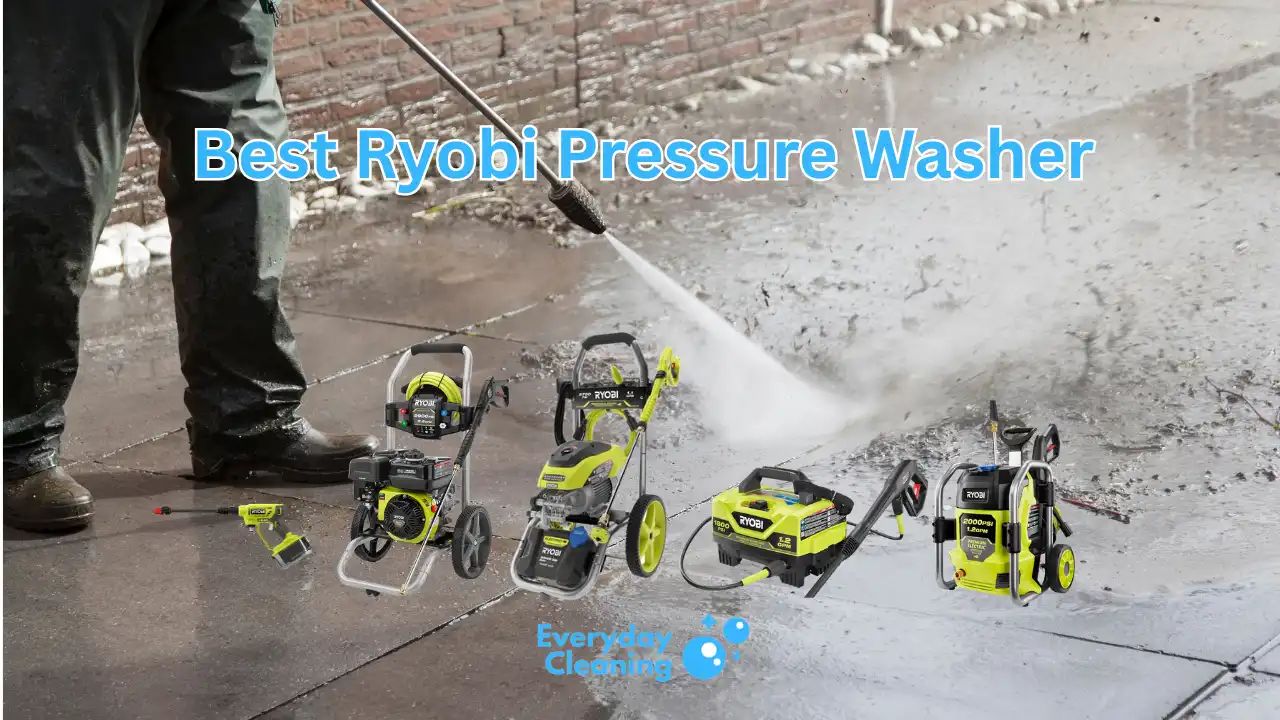
Ryobi makes pressure washers at nearly every power level, from a cordless wand you can carry with one hand to a 2900 PSI gas unit that handles driveways and heavy concrete. We tested six models to show you exactly which one fits your job.
Our Top Picks
| Recommendation | Product | Reason |
|---|---|---|
| Best Overall | RYOBI RY142300 | Brushless motor, 2300 PSI, best long-term value in the lineup — Reviews ↓ |
| Best Budget | RYOBI RY141802 | 1800 PSI, lightest corded pick at 16 lbs — Reviews ↓ |
| Best Mid-Range Electric | RYOBI RY142022VNM | 2000 PSI with wheels, solid all-rounder for most homeowners — Reviews ↓ |
| Best Cordless | RYOBI RY18PW22A-0 | 18V ONE+ compatible, no cord needed, great for cars and bikes — Reviews ↓ |
| Best Entry-Level | RYOBI RY141612 | Ultra-portable at 16.4 lbs, ideal for light occasional cleaning — Reviews ↓ |
| Best for Heavy Duty | RYOBI RY802925VNM | 2900 PSI gas power for driveways, decks, and stubborn stains — Reviews ↓ |
Best Overall: RYOBI RY142300
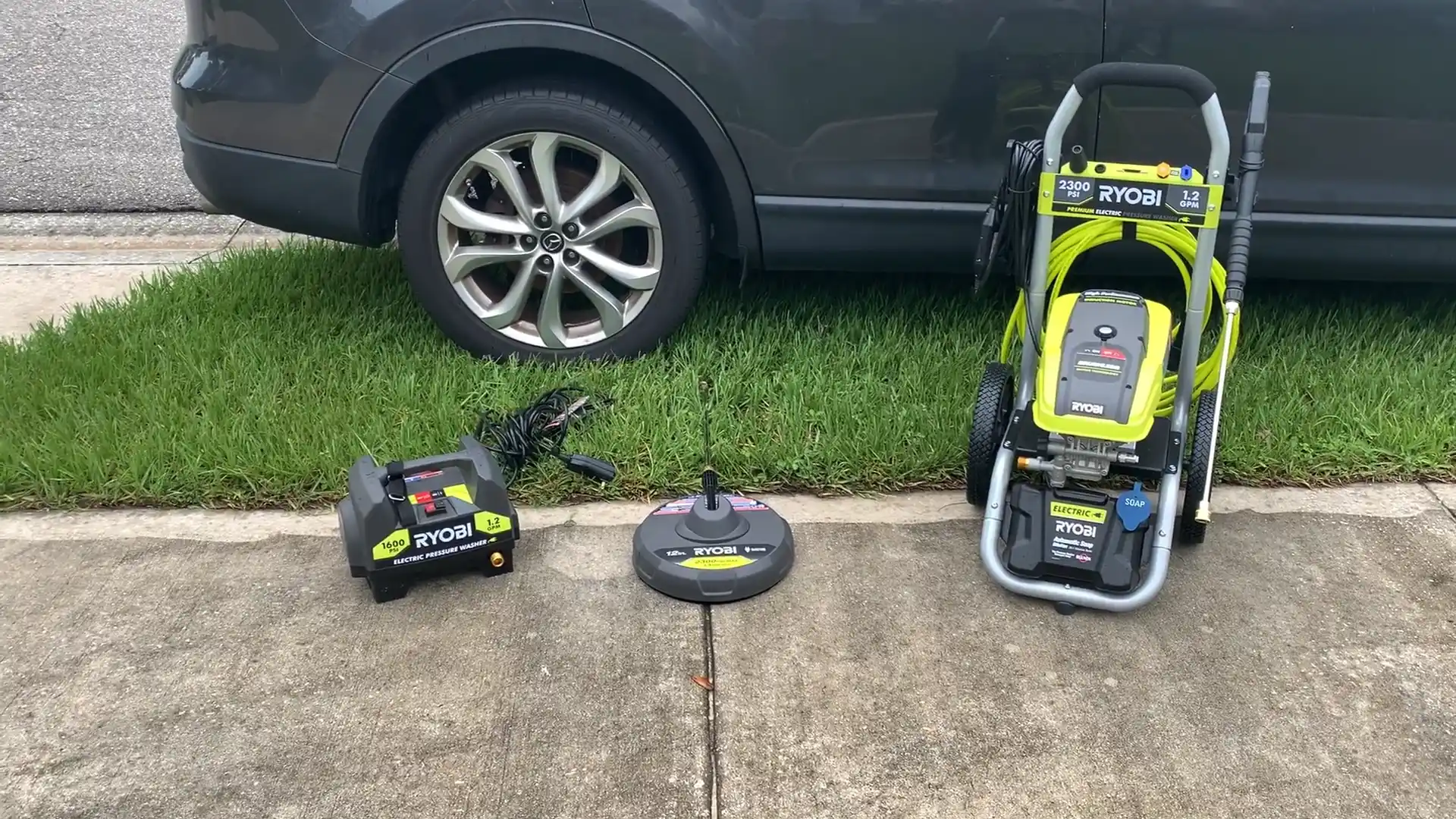
The RY142300 is the strongest corded electric in the Ryobi lineup and the one most homeowners should start with. A brushless induction motor at this price is rare, and it makes a real difference in noise, heat output, and lifespan.

- AUTOMOTIVE CLEANING POWER: Ryobi pressure washer delivers strong, consistent water pressure to tackle tough dirt, grime, and grease on vehicles.
- VERSATILE USE: Ideal for washing cars, trucks, motorcycles, and other vehicles, as well as driveways and outdoor surfaces.
Pros and Cons
| Pros | Cons |
|---|---|
| Brushless induction motor runs quieter and lasts longer | 1.2 GPM limits rinsing speed on large surfaces |
| 2300 PSI handles driveways and decks without struggling | |
| 12-inch large wheels roll easily on uneven terrain | |
| Onboard storage for all accessories | |
| 25 ft hose gives solid reach | |
| 3-year Ryobi warranty |
Testing Results
PSI and Cleaning Power: 2300 PSI is enough for medium-duty concrete, siding, decks, and cars. It handled light driveway staining and moss with no issues. Deep set-in oil stains needed extra dwell time with detergent.
Motor: The brushless induction motor is the main reason to pick this over the RY141802 or RY142022VNM. It runs noticeably quieter and generates less heat during extended sessions. Axial cam pump is standard for this class.
Hose and Reach: 25 ft hose with a 35 ft cord gives you a total working radius most homeowners need for perimeter cleaning without repositioning the machine constantly.
Maneuverability: 12-inch wheels handle grass, gravel, and driveway transitions well. Better than the smaller 6-inch wheels on mid-range models.
Surface Performance: Concrete and driveways (medium duty), siding, decks, fences, cars, and patio furniture all come back clean. Not for heavy stains or large commercial-scale jobs.
Real-world Usage
For a typical homeowner who cleans the driveway, deck, and siding a few times a year, this is the one to own for the long run. The brushless motor means you are not replacing it after a few seasons of moderate use like you might with a universal motor machine. Setup is quick and the accessory storage keeps you organized.
Best Use Case
Best for homeowners who want a capable corded electric that will last more than two or three seasons. Skip it if you only clean your car twice a year and don’t need 2300 PSI.
Verdict
The RY142300 earns its spot at the top of the Ryobi electric lineup. The brushless motor is the feature that separates it from every other Ryobi corded model. At under $200, it delivers better long-term value than cheaper universal motor alternatives. If you want something you can use for years without worrying about motor burnout, this is it. For more on what to look for in a corded electric, see our best electric pressure washer guide.
Rating: 4.4 / 5
View on Amazon: RYOBI RY142300
Best Budget: RYOBI RY141802
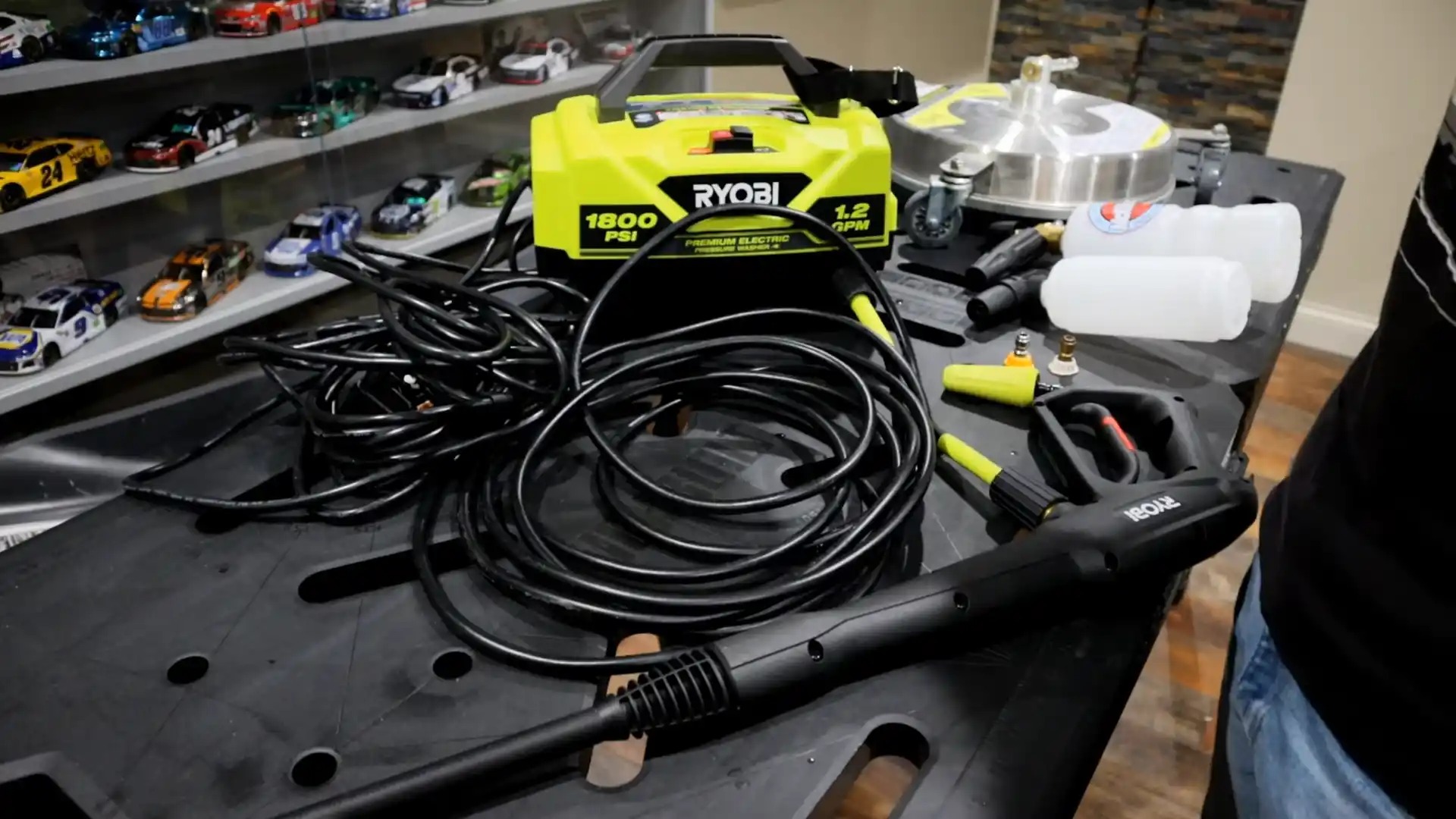
The RY141802 is Ryobi’s lightest corded pressure washer at 16 lbs. It is built for people who want to carry the unit around rather than roll it, and it covers the basics without a heavy price tag.

Pros and Cons
| Pros | Cons |
|---|---|
| 16 lbs, easiest to carry on this list | Only 3 nozzles included |
| Onboard detergent tank | 1800 PSI not enough for tough concrete stains |
| Turbo nozzle included | |
| Compact roll-cage design | |
| 3-year Ryobi warranty |
Testing Results
PSI and Cleaning Power: 1800 PSI at 1.2 GPM. Handles cars, windows, patio furniture, and light siding well. Driveways with embedded stains are a stretch. Turbo nozzle adds a meaningful boost for small stubborn spots.
Portability: At 16 lbs with a roll-cage frame and integrated handle, this is the most carry-friendly electric Ryobi makes. Great if you need to bring it in and out of a garage or storage closet frequently.
Detergent Tank: Onboard soap tank is convenient. Real-world mixing consistency has drawn some complaints from users, but it works adequately for general cleaning tasks.
Surface Performance: Cars, siding, decks, fences, and patio furniture all in range. Light concrete cleaning is possible. Heavy driveway stains and two-story siding are not realistic with this unit.
Real-world Usage
This is the pick for someone who washes the car on weekends, hoses down patio furniture before a gathering, or does seasonal deck touch-ups. The lightweight build means you actually grab it when needed rather than leaving it on the shelf because setup feels like too much effort.
Best Use Case
Best for light-duty, occasional use on cars, bikes, patios, and furniture. Not a good fit for anyone who wants to tackle a concrete driveway regularly or strip years of grime off a wood deck.
Verdict
At the budget end of the Ryobi lineup, the RY141802 delivers on portability. The weight is the story here. You trade raw cleaning power for a machine you can carry anywhere without thinking twice about it. Honest trade-off. For buyers who want to understand when to use each nozzle type, our guide on how to pressure wash a car has practical tips that apply to this model.
Rating: 4.0 / 5
View on Amazon: RYOBI RY141802
Best Mid-Range Electric: RYOBI RY142022VNM
The RY142022VNM is a well-rounded 2000 PSI corded model that sits between the lightweight RY141802 and the brushless RY142300. It has wheels, a 25 ft hose, and enough power for most homeowner cleaning tasks.

- 2000 psi and 1.2 GPM for efficient cleaning of residential areas
- 13 Amp electric motor effectively cleans a wide range of surfaces
Pros and Cons
| Pros | Cons |
|---|---|
| 2000 PSI covers most household cleaning tasks | Universal motor, not brushless |
| Flat-free wheels make it easy to roll around | |
| 25 ft hose and 35 ft cord give solid reach | |
| 3 nozzles included (15°, turbo, soap) | |
| Telescoping handle for storage | |
| 3-year Ryobi warranty |
Testing Results
PSI and Cleaning Power: 2000 PSI handles driveways (medium duty), decks, siding, cars, and patio furniture without issues. Not the machine for heavy concrete staining, but covers the typical homeowner’s list.
Mobility: Flat-free wheels and telescoping handle make it easy to move between tasks. More convenient than the no-wheel compact models when cleaning larger areas.
Cord and Hose: 35 ft power cord and 25 ft high-pressure hose. Enough reach for most single-story home exteriors without extension cords.
Noise: 13-amp universal motor is louder than the brushless RY142300. Fine for regular use. Noticeable if you are sensitive to motor noise.
Surface Performance: Concrete (medium duty), siding, decks, fences, car wash, patio furniture. Not suited for heavy-set stains or commercial volumes.
Real-world Usage
This is the model most homeowners buy when they want something more capable than the lightest budget options but don’t want to spend extra on the brushless upgrade. It cleans the driveway, does the deck, washes the car. The wheels matter when you are covering the full perimeter of a house. A solid choice for someone who pressure washes three or four times a year.
Best Use Case
The RY142022VNM fits homeowners who want decent power, mobility, and value without paying for premium motor tech. Good middle ground. For deck cleaning tips that work well with this power range, see our how to pressure wash a deck guide.
Verdict
A reliable mid-range pick. Not the most exciting machine, but it does the job most homeowners need it to do. If long-term motor life matters, spend up to the RY142300. If budget is the priority, the RY141802 is lighter and cheaper.
Rating: 4.1 / 5
View on Amazon: RYOBI RY142022VNM
Best Cordless: RYOBI RY18PW22A-0
The RY18PW22A-0 is Ryobi’s 18V ONE+ cordless pressure wand. It runs on any 18V ONE+ battery, pulls water from a bucket or standard hose, and gives you cleaning freedom that no corded unit can match. Battery and charger sold separately.
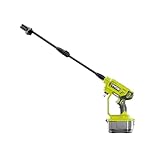
- 3-in-1 nozzle Operation modes: Turbo nozzle for severe cleaning applications, 15° sunbeam for general cleaning and shower function for rinsing
- Syphoning kit, for use to remove water from a source of fresh water, for example from a bucket
Pros and Cons
| Pros | Cons |
|---|---|
| 18V ONE+ compatible, battery shares with 300+ Ryobi tools | Max 22 bar (~320 PSI) — not a driveway cleaner |
| No cord, no plug, use it anywhere | Short runtime on a single battery charge |
| Can siphon from a bucket or water source | |
| 6-meter hose, easy to maneuver | |
| 3-in-1 nozzle (turbo, fan spray, shower) | |
| Lightweight and compact |
Testing Results
PSI and Cleaning Power: 22 bar (around 320 PSI) is roughly four times more powerful than a garden hose. That is not pressure washer territory for driveways or decks. It is excellent for bikes, cars, garden furniture, muddy boots, and quick outdoor rinse jobs. Think of it as an upgraded garden hose, not a replacement for a full-size unit.
Cordless Freedom: The biggest advantage here is mobility. You can use it on a camping trip, clean a bike at the trail, or rinse a muddy dog on the patio. No outlet needed. The siphon hose lets you pull water from a bucket when no tap is nearby.
Battery Runtime: With a 4.0Ah battery, runtime is around 20 to 25 minutes under normal use. Enough for a car wash or quick patio rinse. Not enough for extended sessions.
Nozzle Options: 3-in-1 nozzle covers turbo for stubborn spots, fan spray for general cleaning, and shower mode for rinsing. Practical and covers the use cases this unit is built for.
Real-world Usage
This is the grab-and-go pressure washer for people who already own Ryobi 18V tools. Battery already in your hand, quick rinse, done. It shines for car washes, bikes, camping gear, and outdoor furniture. Anyone expecting driveway cleaning power will be disappointed.
Best Use Case
Best for existing Ryobi ONE+ users who want a convenient cordless rinse tool. Also a good fit for apartment dwellers or anyone without easy outdoor outlet access. Not a substitute for a full-size corded or gas pressure washer. For a side-by-side breakdown of the technology tradeoffs, our cordless vs electric pressure washer comparison covers the details.
Verdict
The RY18PW22A-0 is a different product category than the rest of this list. It is not competing on PSI. It is competing on convenience. If you already own 18V Ryobi batteries, this is a genuinely useful addition. If you need real cleaning power, look at the corded or gas options below.
Rating: 3.9 / 5
View on Amazon: RYOBI RY18PW22A-0
Best Entry-Level: RYOBI RY141612
The RY141612 is Ryobi’s most compact and lightest corded model at 16.4 lbs. No wheels, no brushless motor, 1600 PSI. It is built for easy grab-and-go cleaning of bikes, furniture, grills, and campers.
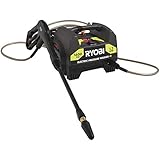
- Brand New in box; The product ships with all relevant accessories
- Brand new and boxed Product ships with all relevant accessories
Pros and Cons
| Pros | Cons |
|---|---|
| 16.4 lbs, ultra-portable, easy to carry anywhere | 1600 PSI is the weakest corded model here |
| Compact design stores in tight spaces | No onboard soap tank (uses siphon hose instead) |
| One of the quietest electric models tested | |
| 3 nozzles: 15°, soap, turbo | |
| 3-year Ryobi warranty |
Testing Results
PSI and Cleaning Power: 1600 PSI and 1.2 GPM puts this at the light-duty end of the range. Real-world testing clocks effective PSI closer to 1490 with 1.08 GPM flow. Fine for bikes, patio chairs, grills, and light siding. Concrete and driveways are outside its comfort zone.
Noise: One of the quietest electric pressure washers tested in its class, measuring around 77 decibels at close range. Lower than many competing models.
Portability: No wheels means you carry it. At 16.4 lbs, that is no problem for most users. Compact enough to store on a shelf or in a cabinet, unlike full-size machines.
Soap System: No onboard tank. Detergent is drawn through a siphon hose. Not as convenient as a built-in soap tank but it works.
Surface Performance: Cars, bikes, campers, grills, patio furniture, and light siding cleaning. Not suitable for driveways, concrete, or any surface that needs serious stain removal.
Real-world Usage
This is for the user who rarely pressure washes and wants something small, cheap, and easy to store. It is also a fair first pressure washer for renters or apartment dwellers who need something compact. The cleaning power is honest light duty, nothing more.
Best Use Case
Best for occasional light cleaning of recreational items and patio furniture. A good fit if storage space is limited and cleaning needs are modest. Skip it if you plan to tackle concrete or heavy outdoor staining.
Verdict
The RY141612 delivers exactly what it promises: a small, light, affordable pressure washer for basic tasks. It is not going to clean a driveway. It will clean your car, refresh your patio set, and make your grill look presentable again. Know what you are buying, and it will not disappoint.
Rating: 3.7 / 5
View on Amazon: RYOBI RY141612
Best for Heavy Duty: RYOBI RY802925VNM
The RY802925VNM is Ryobi’s gas-powered option and the most powerful machine on this list. A 212cc horizontal engine delivers 2900 PSI and 2.5 GPM, enough to handle driveways, concrete, heavy siding, and large deck cleaning jobs.

- Powerful 212cc horizontal engine delivers 2900 psi and 2.5 GPM. Large capacity fuel tank for longer runtime.
- 4 quick-connect nozzles (0 degree , 25 degree , 40 degree and soap) for added versatility. On-board accessory storage for convenience.
Pros and Cons
| Pros | Cons |
|---|---|
| 2900 PSI and 2.5 GPM, highest cleaning power here | Requires gasoline and routine maintenance |
| 212cc engine handles sustained heavy-duty cleaning | Louder and heavier than electric models (~65 lbs) |
| PWMA certified (tested to standard PW101) | |
| 12-inch flat-free wheels for easy transport | |
| 4 quick-connect nozzles (0°, 25°, 40°, soap) | |
| 25 ft non-marring high pressure hose | |
| 3-year Ryobi warranty |
Testing Results
PSI and Cleaning Power: 2900 PSI at 2.5 GPM gives this machine 7250 cleaning units. That is more than enough for driveways, decks, concrete siding, and heavy moss and algae removal. The higher GPM compared to electric models means faster rinsing and less time re-spraying the same area.
Engine and Startup: The 212cc horizontal engine is reliable and straightforward to start with the pull-start. Setup from box to ready takes about 15 minutes. Oil is included, which is a thoughtful touch.
Mobility: Hand truck frame design with 12-inch flat-free wheels rolls well on most terrain. At around 65 lbs, moving it around a property is manageable but not as effortless as lightweight electric models.
Nozzles: 0°, 25°, 40°, and soap quick-connect tips are stored onboard. The 0-degree tip is aggressive on concrete but requires care around softer surfaces. The 25-degree and 40-degree tips handle most general cleaning.
Surface Performance: Concrete and driveways (heavy duty), decks, fences, siding, car wash, patio furniture, and heavy staining. This is the machine to reach for when the electric options simply aren’t cutting through the grime.
Real-world Usage
This is for homeowners with large properties, heavily stained driveways, or decks that need stripping before staining. It is also the right pick for people who want the job done fast. The higher GPM means you spend less time with the wand in hand to achieve the same result. If you are only washing a car occasionally, this is overkill. For serious outdoor cleaning jobs, it earns its place. Check out our how to pressure wash concrete guide to get the most out of this power level.
Best Use Case
Best for homeowners with large outdoor cleaning jobs, heavy concrete staining, or wood surfaces that need prep before painting or staining. Not necessary for light-duty or occasional cleaning tasks.
Verdict
The RY802925VNM is the machine to reach for when electric pressure washers have left you underwhelmed. The gas engine delivers sustained power that corded units cannot match. Factor in fuel and routine maintenance if you compare it against electric long-term. For most homeowners who clean heavily once or twice a season, the performance payoff is worth it.
Rating: 4.3 / 5
View on Amazon: RYOBI RY802925VNM
What Makes the Best Ryobi Pressure Washer?
PSI and GPM: The Two Numbers That Actually Matter
PSI (pounds per square inch) measures water pressure. GPM (gallons per minute) measures flow rate. Together they determine cleaning speed and power. A machine with 2000 PSI but low GPM will clean slowly. Higher GPM rinses debris away faster and covers more area per pass. For general home use, aim for at least 1800 PSI. For driveways and concrete, 2300 PSI and above makes a noticeable difference. If you want to compare options outside the Ryobi lineup, our best pressure washer for driveways roundup covers more machines at this power range.
Motor Type: Universal vs Brushless vs Gas
Most budget electric pressure washers use universal motors. They get the job done but run hotter, wear out faster, and tend to be louder. Brushless induction motors, like the one in the RY142300, run quieter, generate less heat, and last significantly longer. Gas engines (RY802925VNM) deliver the highest sustained power but require fuel, oil changes, and more storage space. Choose the motor type based on how often you plan to use it and how long you expect it to last.
Power Source: Corded, Cordless, or Gas
Corded electric models are the most practical for most homeowners. Plug in, start cleaning. Cordless units like the RY18PW22A-0 offer location freedom but limited power. Gas models give maximum cleaning ability but require maintenance and fuel storage. If you want a deeper comparison of the tradeoffs, our electric vs gas pressure washer breakdown explains exactly where each shines.
Weight, Wheels, and Portability
A pressure washer that is hard to move does not get used. Compact carry-style units like the RY141612 and RY141802 are easy to grab and take anywhere. Wheeled models like the RY142300 and RY142022VNM are better for covering large areas without carrying the machine. Gas units are the heaviest and best suited for large properties with rough terrain.
Nozzle Variety and Soap Systems
More nozzles give you more flexibility. A 0-degree tip cuts through stubborn concrete stains. A 25-degree or 40-degree tip is better for siding and vehicles. A turbo nozzle rotates the jet for up to 50 percent more cleaning power on tough spots. Onboard soap tanks (present on the RY141802 and RY142300) are more convenient than siphon hoses. Consider what surfaces you clean most when evaluating nozzle options.
Frequently Asked Questions
What is the most powerful Ryobi pressure washer?
The RYOBI RY802925VNM delivers 2900 PSI and 2.5 GPM, making it the most powerful model Ryobi sells for residential use. It runs on a 212cc gas engine and handles concrete, driveways, decks, and heavy staining that electric units struggle with.
Are Ryobi pressure washers any good?
Ryobi pressure washers are solid mid-range machines backed by a 3-year warranty and a wide parts and service network. They are not the highest-performance option at any price point, but they offer reliable performance for typical homeowner use at competitive prices. The brushless RY142300 in particular punches above its price class on motor quality.
Can I use a Ryobi pressure washer to clean my car?
Yes. The RY141802, RY141612, RY142022VNM, and the cordless RY18PW22A-0 are all well-suited for car washing. Use a 25-degree or 40-degree nozzle and keep a safe distance of at least 12 to 18 inches. Avoid the 0-degree nozzle on vehicle paint. Our best pressure washer for cars guide covers safe technique and PSI recommendations for vehicle cleaning.
Is the Ryobi RY18PW22A-0 a real pressure washer?
It is classified as a power cleaner rather than a full-size pressure washer. At 22 bar (~320 PSI), it puts out considerably less pressure than corded electric models but delivers around four times the force of a standard garden hose. It is purpose-built for bikes, cars, outdoor furniture, and convenience cleaning rather than heavy-duty surfaces.
Does Ryobi make a gas pressure washer?
Yes. The RY802925VNM is Ryobi’s primary residential gas pressure washer, rated at 2900 PSI and 2.5 GPM with a 212cc horizontal engine. It is PWMA certified and includes 4 quick-connect nozzles and a 25 ft non-marring hose.