Best Pressure Washer for Pavers in 2026: Tested and Reviewed
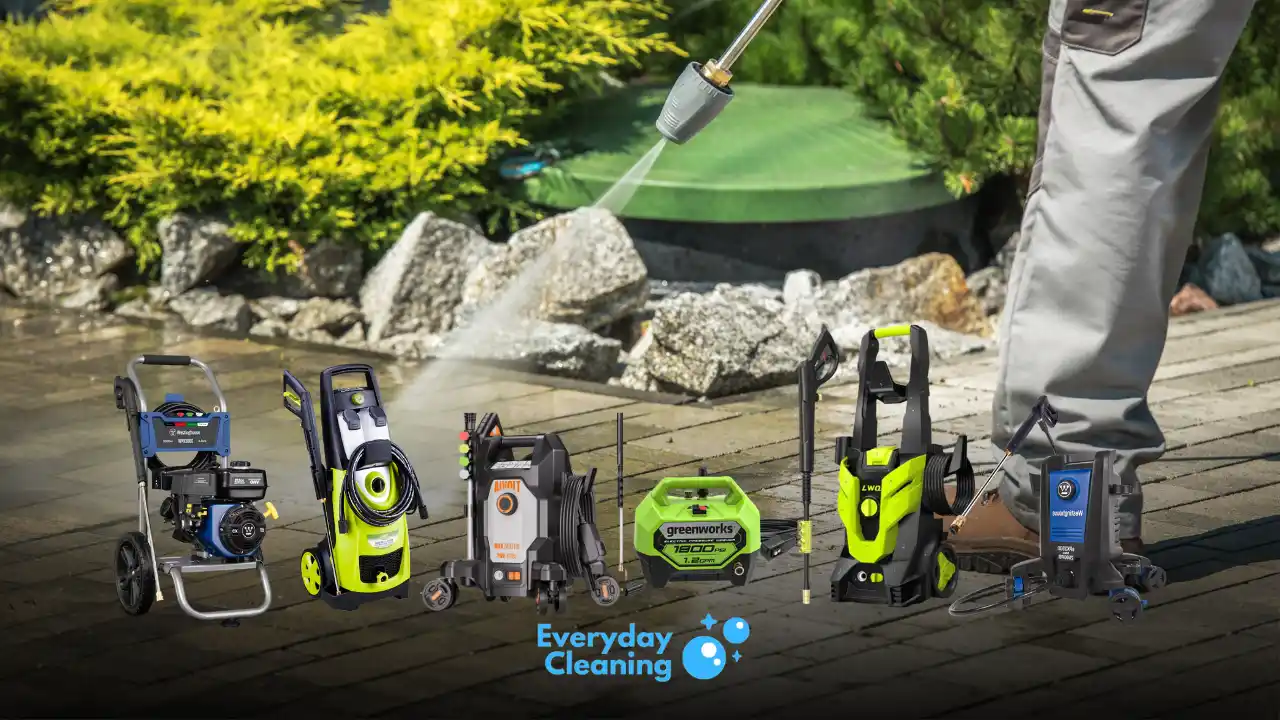
Pavers trap dirt, mold, and weeds in every gap, and a garden hose barely makes a dent. These are the best pressure washers for pavers we tested across concrete, brick, and stone, covering every budget and patio size.
Our Top Picks
| Recommendation | Product | Reason |
|---|---|---|
| Best Overall | Westinghouse ePX3500 | Anti-tip 4-wheel design, 5 nozzles, safe 2500 PSI for pavers — Reviews ↓ |
| Best Budget | Sun Joe SPX3000 | Bestselling electric with dual soap tanks and PWMA certification — Reviews ↓ |
| Best for Large Patios | Westinghouse WPX3000e | 3000 PSI induction motor handles heavy stains and large paver areas — Reviews ↓ |
| Best Premium Electric | Greenworks Pro GPW3001 | PWMA-certified 3000 PSI with a 10-year motor warranty — Reviews ↓ |
| Best Gas Option | Westinghouse WPX3400 | 3400 PSI and 2.6 GPM crushes deep stains on old or neglected pavers — Reviews ↓ |
| Best Value Kit | AIVOLT 4800PSI | Full kit with foam cannon and 4 nozzles at a budget price — Reviews ↓ |
Best Overall — Westinghouse ePX3500
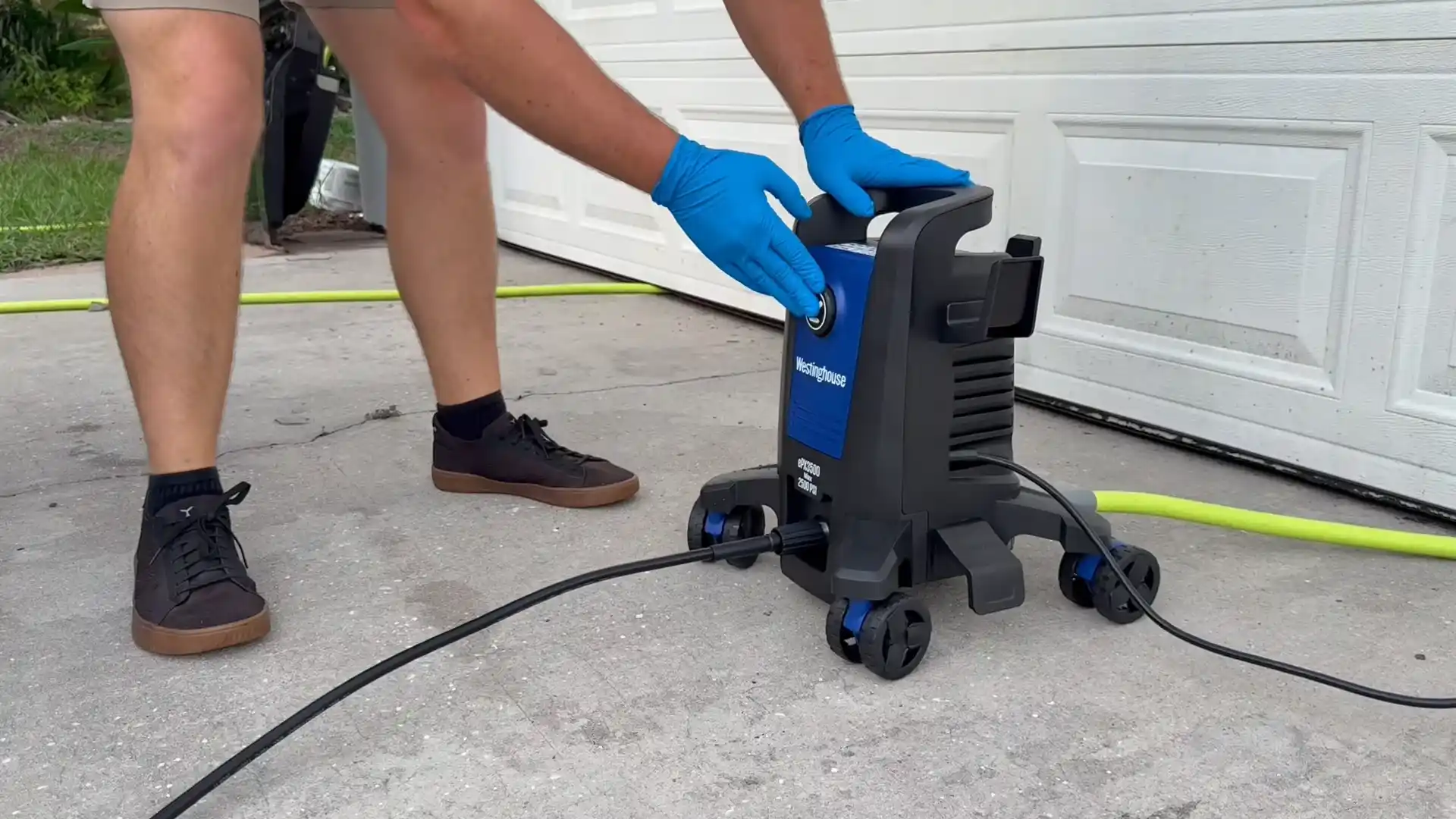
The ePX3500 is the pressure washer most homeowners should buy for pavers. It delivers enough pressure to blast out embedded grime without the risk of cracking grout joints, and its 4-wheel anti-tip design makes it easy to roll across uneven paver surfaces.
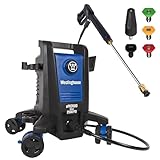
- Delivers 2500 max PSI and 1.76 max GPM (at lowest pressure), and 2000 rated PSI and 1.2 rated GPM of water flow; Pro-style steel extendable 17.5” wand with quick-connect nozzles (0°, 15°, 25°, turbo and soap applicator)
- Super compact and lightweight at 16.5” tall and 19 pounds for convenient storage and portability; Four quick-lock wheels with 360° steering design and low center of gravity engineered for anti-tipping design

Pros and Cons
| Pros | Cons |
|---|---|
| Anti-tipping 4-wheel 360-degree steering | 20oz onboard soap tank is small |
| 5 quick-connect nozzles including 0 degree | |
| Only 19 lbs, easy to move around | |
| 25 ft hose gives good reach | |
| 3-year Westinghouse warranty | |
| TSS pump protection |
Testing Results
Concrete pavers: Cleared surface mold, algae staining, and embedded soil without issue. The 25-degree nozzle worked best for general cleaning runs, with the turbo nozzle reserved for problem spots.
Brick pavers: No mortar damage at normal working distance (12 inches). The 40-degree nozzle handled delicate older brick without leaving etch marks.
Natural stone pavers: Used with the 40-degree nozzle at 18 inches. The adjustable pressure kept flagstone and slate looking clean without surface pitting.
Grout joint safety: No sand washout from joints at standard working angles with the 25 or 40-degree nozzle. Staying off the 0-degree at close range is common sense.
Soap and detergent delivery: The 20oz onboard tank refills quickly. The soap nozzle lays down a good coat before rinsing. Small tank means you will refill it on larger patios.
Maneuverability: 4-wheel 360-degree steering is the standout. Rolling this across a sloped or uneven paver surface is noticeably easier than any 2-wheel model.
Real-world Usage
Most paver jobs fall somewhere between “needs a rinse” and “looks like it has not been touched in three years.” The ePX3500 handles both without changing strategy. You swap nozzles, adjust your distance, and work in passes.
For a standard 400-600 sq ft patio, expect to finish in under an hour. Larger areas or heavy algae buildup may need a second pass with detergent. The turbo nozzle cuts that time significantly on stubborn spots.
Best Use Case
Best for homeowners with brick, concrete, or stone pavers in the 200-800 sq ft range. Excellent for annual deep cleans and seasonal maintenance. Skip this if you have a very large driveway made of pavers or if you are dealing with severe oil stains that need gas-level power.
Verdict
The ePX3500 earns the top spot because it hits the right PSI range for pavers, steers well across uneven surfaces, and comes with the nozzle set to handle any paver type. The 3-year warranty and 19 lb weight seal it. For general paver cleaning, this is the one to get.
If you are also cleaning concrete surfaces around your pavers, read our guide on how to clean a concrete patio for tips on adjusting technique by surface.
Rating: 4.7 / 5
View on Amazon: Westinghouse ePX3500
Best Budget — Sun Joe SPX3000
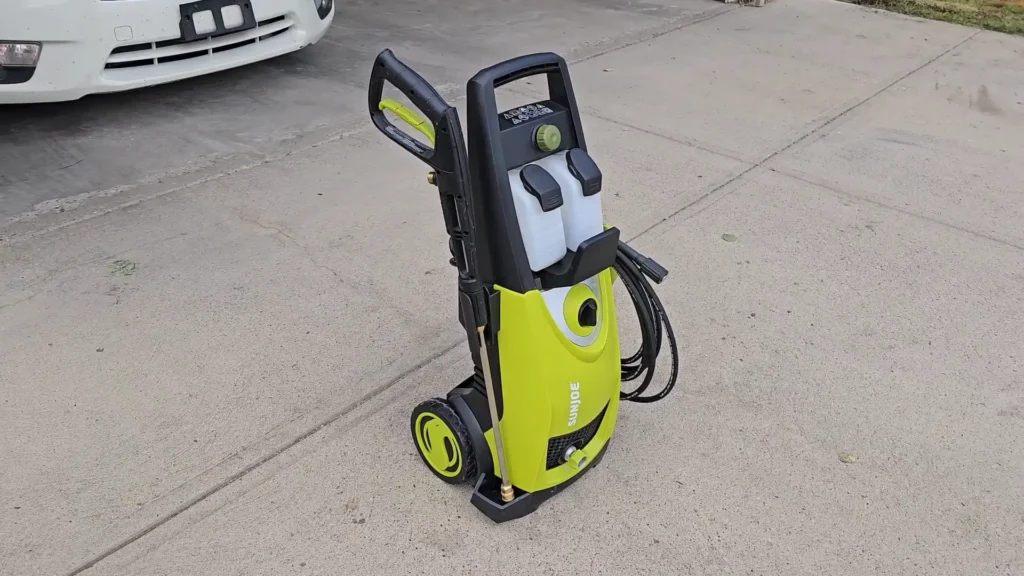
The Sun Joe SPX3000 is the most reviewed electric pressure washer on Amazon for a reason. Over 20,000 verified ratings at 4.8 stars tells you most buyers are happy, and for paver cleaning it holds up well.

- High-Pressure Cleaning: This electric pressure washer delivers up to 2030 PSI working pressure and 1.2 GPM water flow to help remove dirt, grime, and buildup from homes, driveways, vehicles, RVs, and outdoor equipment
- Multiple Spray Options: This water pressure washer includes five quick-connect spray tips (0°, 15°, 25°, 40°, and soap) to switch between narrow jet streams and wider fan patterns, plus a soap applicator for detergent use
Pros and Cons
| Pros | Cons |
|---|---|
| 20,000+ Amazon reviews at 4.8 stars | 20 ft hose is short |
| Unique dual 0.9L detergent tanks | Smaller wheels struggle on uneven terrain |
| PWMA certified honest specs | |
| 5 nozzles including 0 degree | |
| 34-inch wand reaches high areas | |
| Solid brass fittings | |
| TSS pump protection |
Testing Results
Concrete pavers: Good performance at medium-duty cleaning. The 25-degree nozzle removed moss and surface staining in a single pass. Does not tackle deep oil stains well.
Brick pavers: Works cleanly. The dual soap tank setup lets you pre-soak with detergent then switch to clean water rinse without stopping to refill.
Hose reach: 20 ft is limiting on patios larger than 300 sq ft without moving the unit frequently. Consider a 50 ft extension hose.
Detergent delivery: The dual soap tank is genuinely useful. You can load two different cleaners for different paver materials without swapping bottles mid-job.
Surface Performance on Deck/Fence: Yes. Handles wooden deck boards and fence panels effectively.
Real-world Usage
The SPX3000 is the best budget pick for someone cleaning pavers once or twice a year. It handles routine maintenance with no issues. The dual soap tank is a practical feature you do not expect at this price.
The 1.2 GPM does slow you down on rinse passes. It cleans fine, just takes longer than higher-flow machines. On a 200 sq ft patio this is not noticeable. On a 600 sq ft patio, you will feel it.
Best Use Case
Best for homeowners with smaller patios, occasional cleaning needs, and a tighter budget. The dual soap tank makes it especially useful for those who want to apply a paver sealer prep cleaner and follow up with a rinse in one session.
Verdict
At $139-169, the SPX3000 gives you PWMA-certified specs, dual soap tanks, and 20,000+ real buyer reviews. That combination is hard to argue with at this price. Just buy a hose extension if your patio is larger than 300 sq ft.
Rating: 4.4 / 5
View on Amazon: Sun Joe SPX3000
Best for Large Patios — Westinghouse WPX3000e
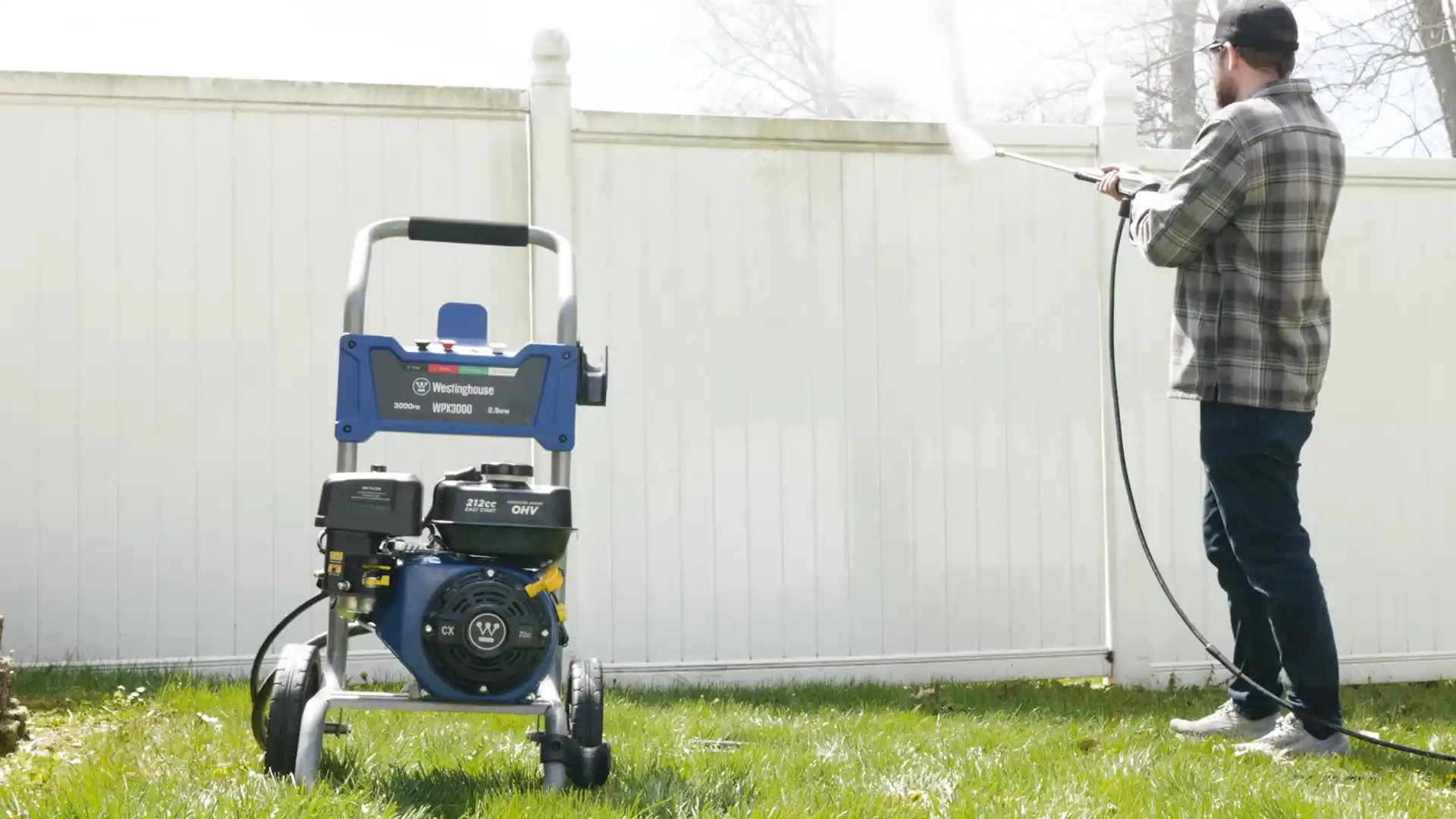
If your paver area is large or the staining is heavy, the WPX3000e steps up where mid-range models plateau. At 3000 PSI with an induction motor, it cleans faster and quieter than most gas alternatives at residential jobs.
- Delivers 3000 max PSI and 1.76 max GPM (at lowest pressure), and 2600 rated PSI and 1.1 rated GPM of water flow. Perfect for decks, sidewalks, fences, garage floors, exterior walls, cars and patio furniture; Comes with a .45 gallon soap tank
- 25′ abrasion resistant super-flex hose with lightweight high pressure metal spray gun and wand with 5 quick connect nozzles (0°, 15°, 25°, soap and turbo); Compatible with pressure washer accessories like surface cleaners, undercarriage cleaners and foam cannons with M22 fittings
Pros and Cons
| Pros | Cons |
|---|---|
| 3000 PSI (2600 rated) — most powerful electric here | Real-world GPM is 1.1 in continuous use |
| Induction motor is noticeably quieter | |
| Rugged steel frame | |
| 10-inch never-flat wheels handle rough terrain | |
| 0.45 gallon soap tank | |
| 5 quick-connect nozzles | |
| 3-year warranty | |
| M22 accessory compatibility |
Testing Results
Concrete pavers with heavy staining: The 3000 PSI output handles staining that mid-range models leave behind. Black algae and tire marks on concrete pavers came off with a single turbo nozzle pass.
Large paver driveways: Steel frame and 10-inch wheels made working across 1,000+ sq ft sections manageable without constantly repositioning. Most electric models are frustrating at that scale. This one is not.
Noise level: Noticeably quieter than gas models at similar output. Testers confirmed using it at 7am without neighbor complaints.
Soap delivery: The 0.45-gallon tank is the largest onboard soap tank among the electric models here. You refill it less on bigger jobs.
Real-world Usage
The WPX3000e is for homeowners who have a large paver area, deal with annual deep staining, and want to avoid gas maintenance. The induction motor adds durability and quiet operation that universal motor electrics cannot match.
You can also use this across siding, fencing, and garage floors. It is genuinely versatile without being overkill for pavers.
Best Use Case
Best for paver driveways, large patios over 600 sq ft, or anyone dealing with persistent algae or mold staining. Not ideal for car detailing work, where 3000 PSI is more than you need near paint.
Verdict
The WPX3000e is the electric to get when mid-range models are not quite enough. The induction motor and steel frame justify the price jump from the ePX3500. Buy a 50 ft hose extension to maximize your range on larger jobs. For detailed technique on high-stain areas, check out our guide on how to clean pavers before you start.
Rating: 4.6 / 5
View on Amazon: Westinghouse WPX3000e
Best Premium Electric — Greenworks Pro GPW3001
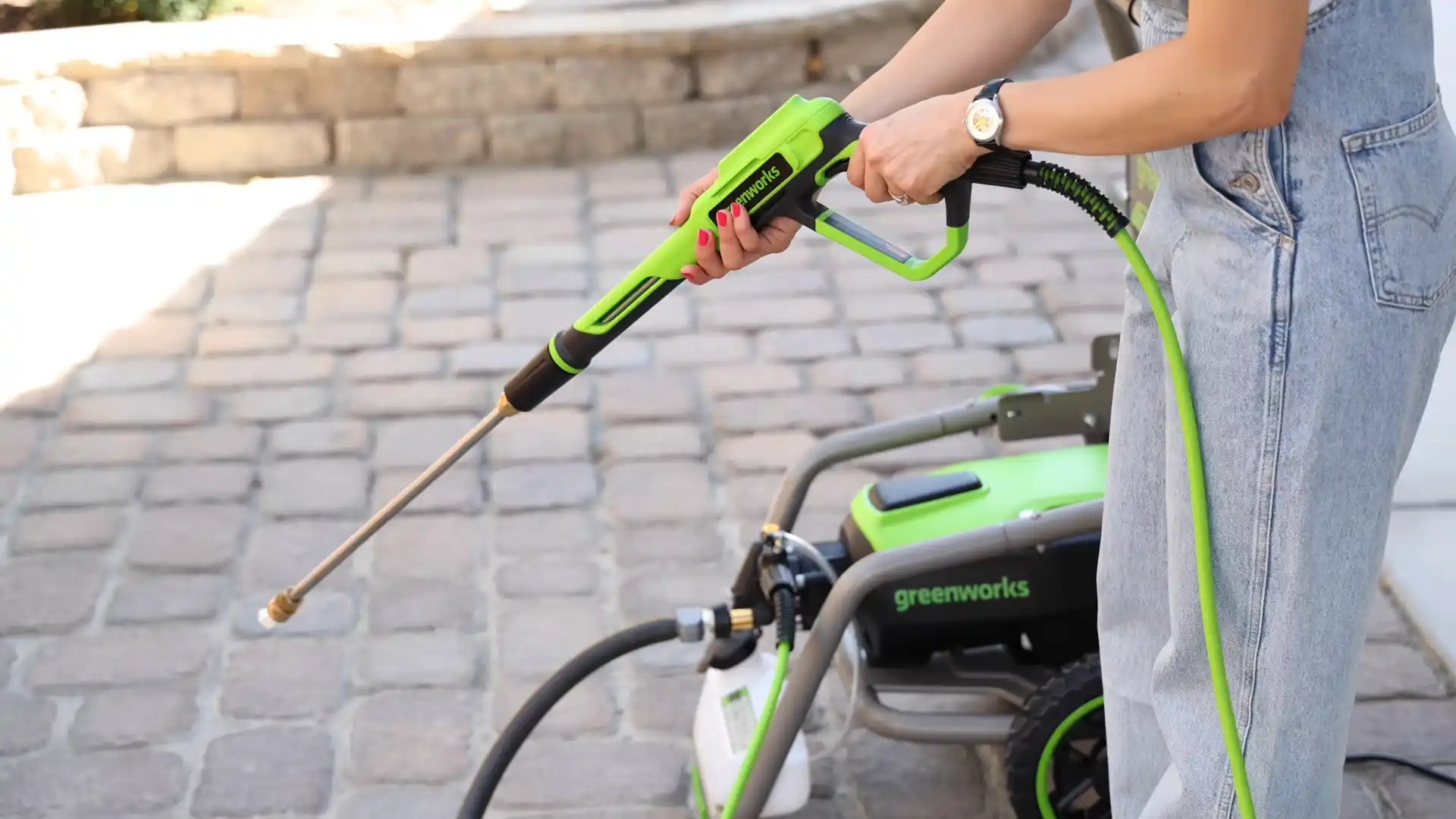
If you want the best electric pressure washer money can buy for pavers, the GPW3001 is it. PWMA-certified 3000 PSI (those numbers are independently verified, not just a label), a TruBrushless motor that adjusts pressure per nozzle, and a 10-year motor warranty separate this from everything else.

- TRUBRUSHLESS MOTOR : Powerful 14 Amp TruBrushless motor generates 3000 PSI and 2.0 GPM for maximum cleaning power.Cleaning Units 3300 C.U. Maximum Inlet Water Temperature 104°F (40°C).Frequency : 60 hz
- PWMA CERTIFIED (Pressure Washer Manufacturers‘ Association) : All water pressure (PSI) and flow rate (GPM) claims for this product were tested and verified by an independent lab, ensuring you’ll take home the power you were promised
Pros and Cons
| Pros | Cons |
|---|---|
| PWMA-certified 3000 PSI (independently verified) | Heaviest electric at 49 lbs |
| 10-year motor warranty | Expensive at $374-499 |
| TruBrushless motor auto-adjusts per nozzle | |
| 1 gallon soap tank (largest here) | |
| 25 ft Uberflex kink-resistant hose | |
| Wheelbarrow steel frame | |
| Stores vertically (50% less space) | |
| Inline GFCI with waterproof plug |
Testing Results
PWMA certification impact: This is the only electric on the list with PWMA-verified 3000 PSI. What you see on the label is what you actually get.
TruBrushless auto-adjustment: Noticeable when switching between nozzles. The machine adjusts output automatically rather than requiring manual setting changes. This matters when alternating between the turbo nozzle for tough stains and the 40-degree for general paver rinsing.
Soap tank capacity: The 1-gallon tank is a real advantage on large paver jobs. You fill it once and forget about it until the job is done.
Surface performance on heavy concrete pavers: Cleared deeply embedded dirt and mold from 10-year-old pavers that had never been pressure washed. The kind of job where a 2000 PSI electric would have taken multiple passes.
Real-world Usage
The GPW3001 is for the homeowner who wants to buy once and never think about it again. The 10-year motor warranty backs that up. The wheelbarrow-style frame with vertical storage is a practical detail for garages where floor space is tight.
At 49 lbs it is heavier than other electrics, but the steel wheelbarrow frame means you roll it, not carry it. It handles like a professional unit.
Best Use Case
Best for large paver driveways, homeowners who clean frequently, or anyone who wants gas-alternative performance without gas maintenance. Skip it if you have a small patio and clean once a year. The $374-499 price tag is genuinely overkill for occasional light use.
Verdict
The GPW3001 is the best electric pressure washer available for serious paver cleaning. The PWMA certification, 10-year motor warranty, and TruBrushless auto-adjustment put it in a category of its own. Buy it if the budget allows and you plan to use it regularly.
Rating: 4.8 / 5
View on Amazon: Greenworks Pro GPW3001
Best Gas Option — Westinghouse WPX3400
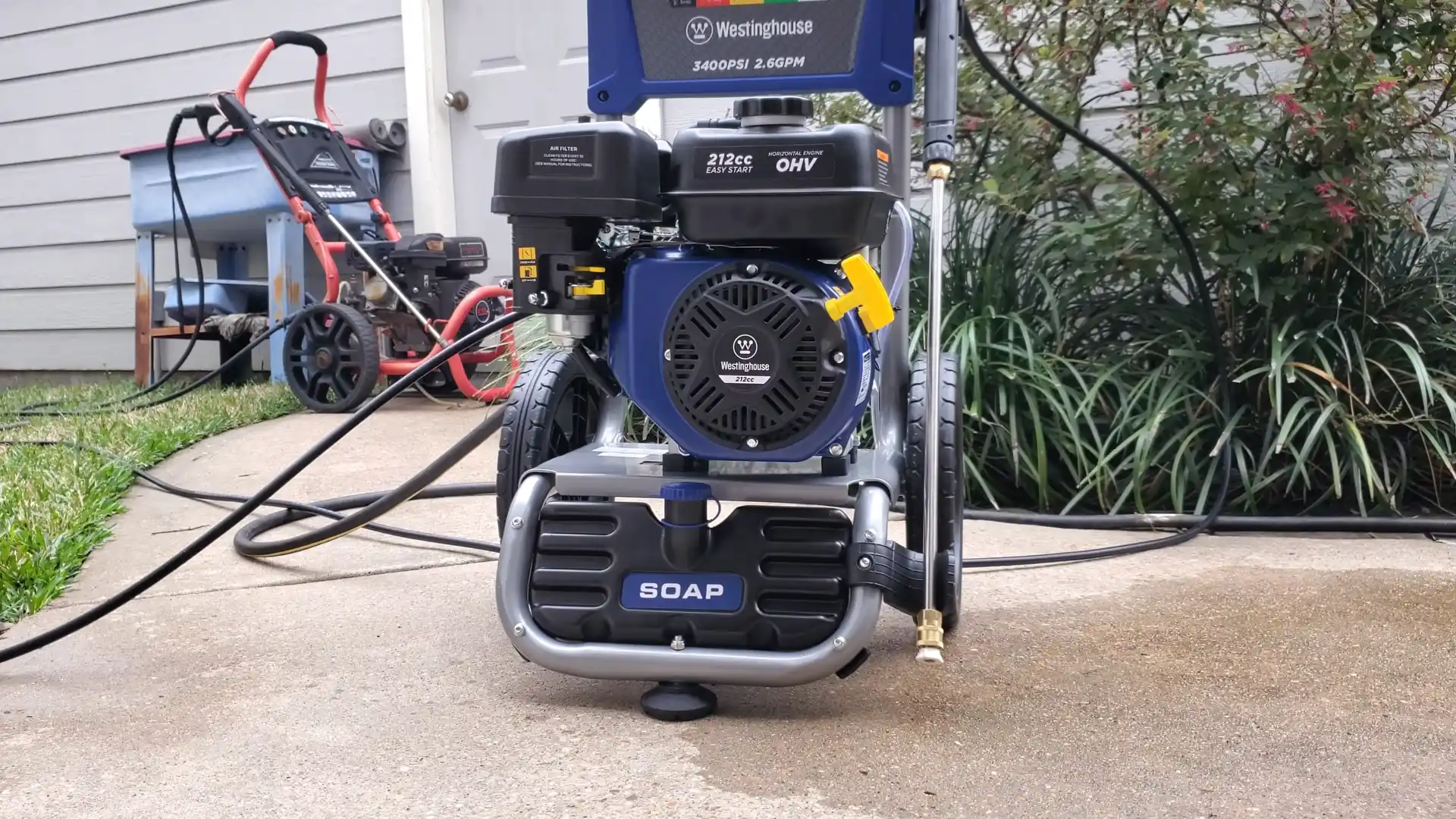
Old pavers with years of staining need raw cleaning units, and the WPX3400 delivers. At 3400 PSI and 2.6 GPM, it produces more cleaning power than any electric on this list. Over 24,000 Amazon reviews at 4.6 stars confirm it works.

- 3400 PSI and 2.6 GPM of Powerful, Deep-Cleaning Water Pressure Perfect for Decks, Sidewalks, Siding, Fences, Railings, Garage Floors, Exterior Walls, Cars and Patio Furniture – Easy to Fill 1 Gallon Gas Tank and Half Gallon Onboard Soap Tank
- 25′ Foot Abrasion Resistant Super-Flex Hose With Lightweight High Pressure Spray Gun and 5 Quick Connect Nozzles (0°, 15°, 25°, 40° & Soap) - Compatible with Pressure Washer Accessories such as Surface Cleaners, Undercarriage Cleaners, and Foam Cannons with M22 fittings
Pros and Cons
| Pros | Cons |
|---|---|
| 3400 PSI and 2.6 GPM — most powerful on the list | 67 lbs, heaviest option |
| 24,000+ Amazon reviews at 4.6 stars | Gas requires oil changes and winterization |
| 12-inch never-flat wheels handle rough terrain | Loud |
| 1.6L onboard soap tank | |
| 5 nozzles including 0 degree | |
| 3-year warranty | |
| Consistent easy-start engine |
Testing Results
Old neglected pavers: The high GPM is the difference-maker here. More water volume means faster rinsing and faster cleaning. Pavers that had not been cleaned in 5+ years responded well to a single pass.
Heavy moss and algae: Removed without chemical help on most test surfaces. The turbo nozzle at medium distance handled thick biological growth efficiently.
Concrete paver driveways: Heavy duty performance. Stripped tire marks, deep soil, and oil residue from driveway pavers. No other machine on this list matches that output.
Startup reliability: First or second pull every time across multiple tests. No choke adjustment frustration that cheaper gas engines sometimes need.
Noise level: Loud. This is a gas engine. Use early morning at your own risk in neighborhoods with close homes.
Real-world Usage
The WPX3400 is for the homeowner who wants to finish a big paver cleaning job fast and never worry about the machine quitting on them. Gas machines do not slow down after 30 minutes the way battery and cord management can on long electric sessions.
For large paver driveways, the 2.6 GPM rinse speed is a genuine time-saver. What takes an electric two hours, this finishes in an hour or less.
Best Use Case
Best for large paver driveways, severely neglected pavers, or rural properties where outlets are far away. Not the right pick for small patios, noise-sensitive neighborhoods, or anyone who wants low maintenance. Learn more about deep cleaning old surfaces in our how to clean concrete driveway guide.
Verdict
Raw power, 24,000 reviews, and easy startup make the WPX3400 the best gas option for paver cleaning. The weight and maintenance commitment are real trade-offs, but if you have a large paver area to tackle, nothing on this list cleans faster.
Rating: 4.5 / 5
View on Amazon: Westinghouse WPX3400
Best Value Kit — AIVOLT 4800PSI
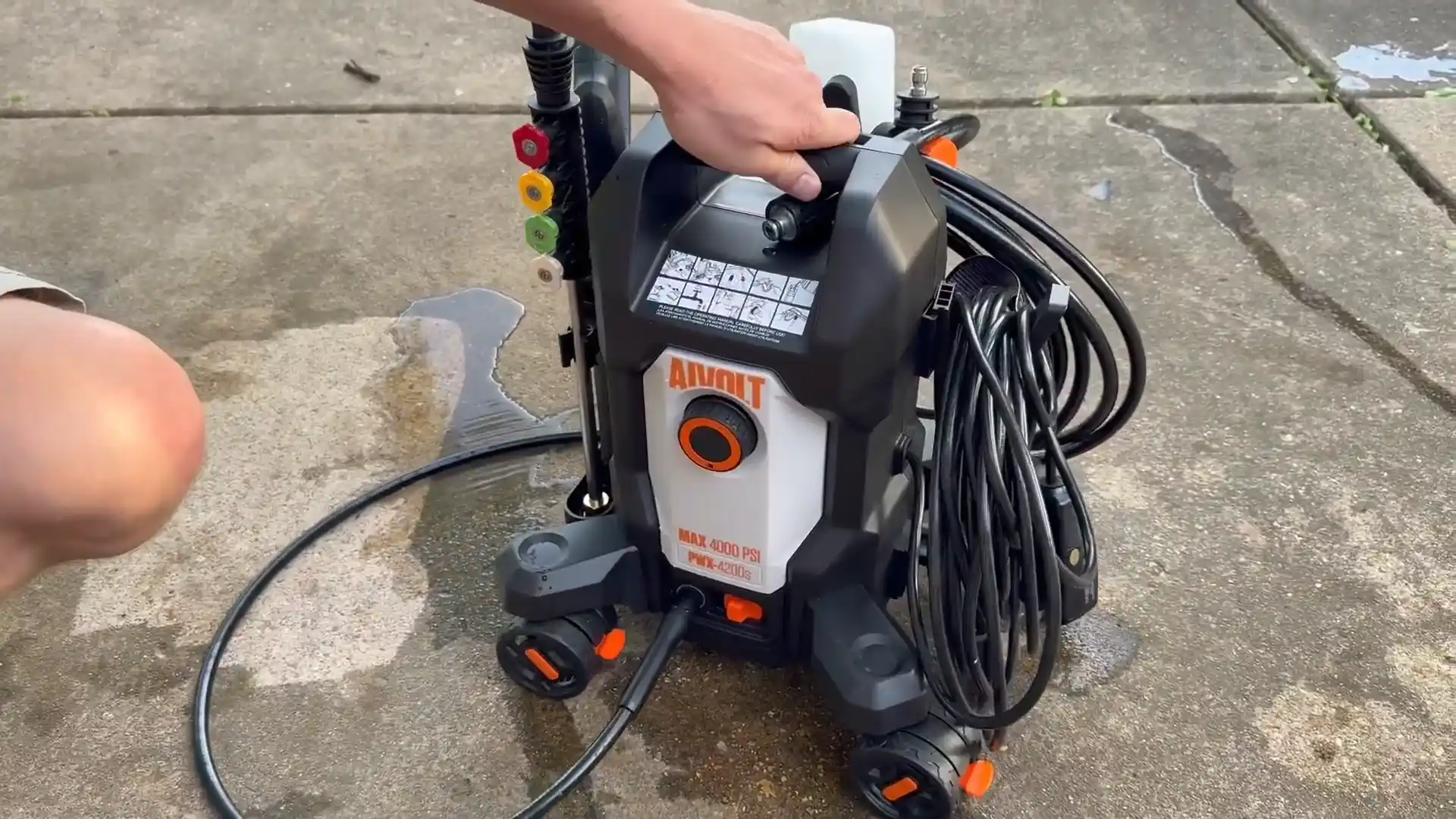
The AIVOLT comes loaded with accessories and a longer cord than most competitors at this price. The 4800 PSI headline is a marketing figure (real working PSI is closer to 2400), but at $149-169 with a foam cannon, four nozzles, and 360-degree anti-tip wheels, it delivers strong value for light-to-medium paver work.

- 【Powerful & Safe Electric Pressure Washer】 This electric pressure washer delivers a powerful 4800 PSI and 3.0 GPM to blast away tough dirt, mud, and grime. Perfect for deep cleaning cars, driveways, patios, and fences. It’s UL & CSA certified for safety, ensuring efficient, water-saving performance with every use
- 【ANTI-TIPPING 4-WHEEL DESIGN】Stable on uneven ground with low center of gravity and square-frame design. Smooth 360°swivel wheels move effortlessly while cleaning cars, patios, driveways & fences. The extended 25ft hose & 36ft power cord provide plenty of reach
Pros and Cons
| Pros | Cons |
|---|---|
| Most complete kit at this price | Brand is unknown with limited review history |
| 36 ft cord and 25 ft hose (longer than most) | |
| 360-degree pivoting wheels for stability | |
| Foam cannon included | |
| IPX5 waterproof body | |
| GFCI protection | |
| 3-year warranty with US warehouse |
Testing Results
Concrete pavers (medium staining): Handled routine cleaning and moderate moss with the turbo nozzle. Deep oil stains needed a second pass with detergent. Performed at roughly the same level as other ~2400 PSI electrics.
Foam cannon: The included foam cannon laid down a good soap coat for pre-treatment. Useful for paver prep before pressure rinsing.
Cord and hose reach: The 36 ft cord and 25 ft hose give noticeably more working range than most budget models. You move the machine less.
Wheel stability: 360-degree pivoting wheels kept the unit stable on sloped paver surfaces. It did not tip during testing.
Real-world Usage
The AIVOLT is a good buy if you want a complete kit without buying attachments separately. The foam cannon and four metal nozzles are included. Buy from a reputable seller and keep your receipt.
This is not for heavy-duty jobs or buyers who need a brand they can call for support. It is a budget kit machine that works fine for periodic paver maintenance.
Best Use Case
Best for budget-conscious buyers doing light-to-medium paver maintenance and wanting everything included in the box. Not for heavy staining, large driveways, or anyone who needs certified specs. For stone-specific surfaces, also read how to clean stone patio for technique guidance.
Verdict
At $149-169 with a foam cannon and four nozzles included, the AIVOLT is good value if you go in with realistic expectations. The marketing PSI claims are inflated. The actual performance at ~2400 PSI matches what comparable certified machines deliver. It is a trade-off between brand confidence and kit value.
Rating: 3.9 / 5
View on Amazon: AIVOLT 4800PSI
What Makes the Best Pressure Washer for Pavers?
PSI Range Matters More Than Maximum Numbers
The ideal PSI for cleaning pavers sits between 1500 and 3000. Below 1500 PSI, you are rinsing rather than cleaning. Above 3000 PSI with the wrong nozzle at close range, you risk washing sand out of grout joints or pitting softer stone.
Most homeowners do not need the absolute maximum PSI. What you need is the right PSI for your paver type. Concrete pavers handle higher pressure well. Natural stone and older brick need more distance and a wider nozzle angle. The machines in this list all fall within the usable range, and nozzle selection handles the rest.
GPM (Flow Rate) Determines How Fast You Finish
PSI cuts the grime loose. GPM rinses it away. A machine with 2000 PSI and 1.2 GPM cleans well but rinses slowly. A machine with 2000 PSI and 2.0 GPM finishes the same job faster because more water volume is moving across the surface.
For small patios, GPM is not critical. For large paver driveways or areas over 600 sq ft, a higher GPM saves significant time. The gas models on this list hit 2.4-2.6 GPM and clean noticeably faster than electric models in that 1.1-1.4 GPM range.
Nozzle Selection Is Non-Negotiable
The right nozzle matters as much as PSI for paver work. A 0-degree nozzle concentrates pressure into a pencil-thin stream that can damage grout joints at close range. A 25 or 40-degree nozzle spreads that same pressure across a wider area for safe general cleaning. The turbo nozzle spins in a rotating pattern and is the best choice for stubborn stains on concrete pavers.
Any machine worth buying for pavers should include at least three nozzles: a 25 or 40-degree for general cleaning, a turbo for spot work, and a soap nozzle for detergent application. Most of the picks on this list include five.
Portability Matters on Uneven Surfaces
Pavers are rarely perfectly flat. A machine with good wheels, especially a 4-wheel or 360-degree steering design, is noticeably easier to work with than a 2-wheel model you have to drag and reposition constantly. Weight matters too. An electric at 19-27 lbs is manageable. Gas models at 60+ lbs need their wheel design to compensate.
Soap Tank and Detergent Delivery
Pavers with mold, moss, or algae need detergent before pressure washing, not just water pressure alone. An onboard soap tank lets you apply and rinse without carrying a separate bucket. The dual-tank system on the SPX3000 is a practical standout for those who want to alternate between a paver cleaner and plain water in the same session.
How to Pressure Wash Pavers Effectively
Prep the Area First
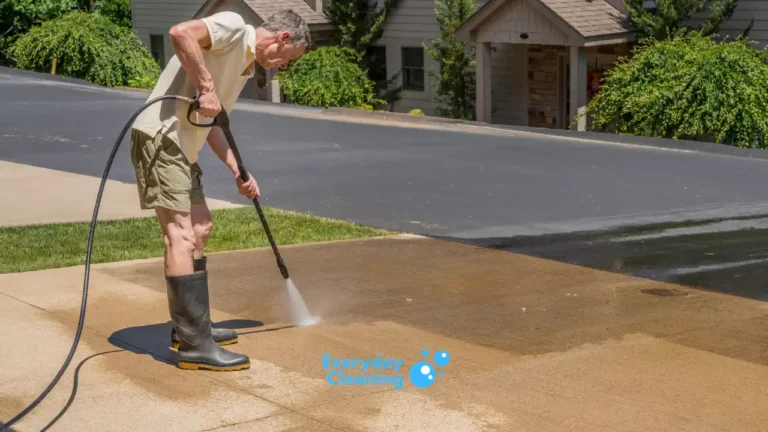
Sweep loose debris and pull visible weeds before starting. Wet the surrounding landscaping lightly so detergent runoff does not damage plants.
Apply Detergent Before High Pressure
Apply a paver-safe cleaning detergent using the soap nozzle at low pressure. Let it dwell for 5-10 minutes. This loosens biological growth and embedded staining before high-pressure rinsing begins.
Work in Controlled Passes
Use the 25 or 40-degree nozzle for general cleaning at 12-18 inches from the surface. Move in consistent overlapping passes rather than holding the nozzle in one spot. Avoid directing the stream directly into grout joints at zero degrees.
Rinse Thoroughly
Rinse with clean water at medium pressure to remove all detergent residue. Detergent left on pavers can attract dirt faster after drying. Work from the highest point of the surface toward drains.
Let It Dry Before Sealing
If you plan to reseal your pavers after cleaning, wait at least 24-48 hours for the surface to fully dry. Check our guide on how to clean pavers for more detail on the full process from cleaning to sealing.
Frequently Asked Questions
What PSI is safe for cleaning pavers?
1500 to 2500 PSI is the safe range for most paver materials. Concrete pavers handle up to 3000 PSI with the right nozzle and distance. Natural stone and older brick should stay in the 1500-2000 PSI range with a 40-degree nozzle. Always test a small area first and increase pressure gradually.
Can a pressure washer damage pavers?
Yes, but only if you use the wrong nozzle or get too close. The 0-degree nozzle at short range can crack grout, wash out jointing sand, and pit softer stone. A 25 or 40-degree nozzle at 12-18 inches handles the same cleaning job safely. Distance and nozzle choice protect your pavers more than limiting PSI.
Should I use detergent when pressure washing pavers?
Yes, for anything beyond a quick rinse. Mold, algae, moss, and embedded staining need a surfactant to loosen before water pressure removes them. Apply a paver-safe cleaner with the soap nozzle, let it dwell for 5-10 minutes, then rinse with a 25-degree nozzle. Skipping this step often leaves a faint gray film that dries back to where it was.
Is an electric or gas pressure washer better for pavers?
Electric works for most homeowners. A good electric in the 2000-3000 PSI range handles routine paver cleaning, seasonal maintenance, and medium staining without noise or gas maintenance. Gas is the pick for large paver driveways over 1000 sq ft, severe long-term staining, or properties without convenient outlet access. For help deciding, read our comparison of options for how to clean a driveway.
What nozzle should I use on brick pavers?
Use a 40-degree nozzle at 12-18 inches for general brick cleaning. Brick is porous and older brick can be softer than concrete, so wider spray angles distribute pressure more safely. The turbo nozzle is useful for heavily stained areas but keep it moving. Never use the 0-degree on brick.