How to Keep Carpet Clean with Pets: Your Complete Guide to a Fresh, Hair-Free Home

Table of Contents
We all love our furry companions—they bring joy, laughter, and unconditional love into our homes. But let’s be honest: keeping carpets clean when you have pets can feel like a never-ending battle. Between shed fur clinging to every fiber, muddy paw prints after walks, and those occasional “accidents,” it’s easy to feel overwhelmed.
Here’s the good news: you don’t have to choose between a clean home and your beloved pet. This comprehensive guide will walk you through everything you need to know—from smart prevention strategies and daily maintenance routines to handling emergency messes. By the end, you’ll have a complete toolkit to confidently maintain fresh, clean carpets while enjoying every moment with your four-legged friend.
Why Keeping Your Carpet Clean Matters Even More with Pets
When you have pets, carpet cleanliness isn’t just about appearances. Pet dander, fur, and the oils from their paws can accumulate deep in carpet fibers, triggering allergies and creating unpleasant odors. Urine accidents can seep into the carpet padding, creating permanent stains and lingering smells if not treated quickly. Regular carpet maintenance protects your investment, improves indoor air quality, and creates a healthier environment for both you and your pets.
Part 1: Prevention Is Your Best Defense
The easiest way to keep your carpet clean with pets is to prevent messes before they happen. A few simple strategies can dramatically reduce the amount of fur, dirt, and stains your carpet has to endure.
Train Your Pet & Establish the “Golden Rules”
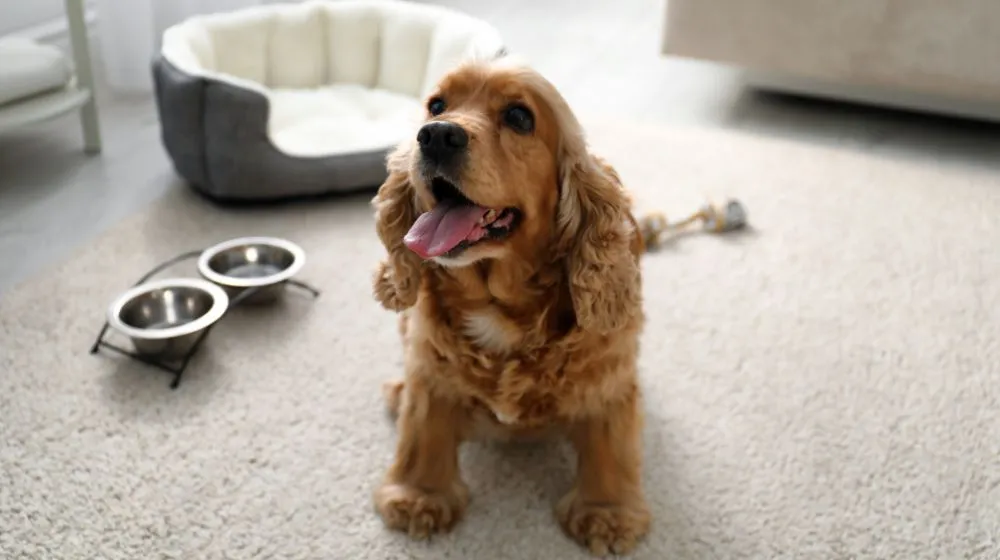
Proper training is your first line of defense. Teaching your pet where they should (and shouldn’t) go to the bathroom saves you countless hours of cleaning.
Potty training basics: Whether you have a puppy or an older dog, consistency is key. Establish a regular bathroom schedule and reward your pet immediately after they go in the right spot. For cats, make sure litter boxes are clean and accessible—many accidents happen simply because the litter box wasn’t appealing.
Breaking the repeat-accident cycle: Pets often return to spots where they’ve previously had accidents because the scent remains. Even if you can’t smell it, they can. Use enzymatic cleaners (more on this later) to completely eliminate odor molecules, not just mask them.
Create designated eating areas: Set up a specific feeding zone with an easy-to-clean mat or tray underneath food and water bowls. This catches spills before they reach your carpet.
Establish off-limits zones: If certain rooms have particularly nice carpets or you want to minimize cleaning, teach your pets that these areas are off-limits. Baby gates or closed doors work wonders during the training phase.
Proper Pet Care to Minimize Mess
How you care for your pet directly impacts how clean your carpets stay.
Brush regularly: This simple habit makes an enormous difference. Brushing your pet several times a week (daily during shedding season) removes loose fur before it ends up on your carpet. You’ll be amazed at how much less vacuuming you’ll need to do.
Clean those paws: Place a highly absorbent doormat at every entrance and get into the habit of wiping your pet’s paws after walks. Keep a small towel by the door for quick cleanups. For muddy days, consider a dedicated paw-cleaning station with a shallow container of water and a towel.
Choose the Right “Armor” for Your Carpet
Strategic use of washable rugs and runners can protect high-traffic areas while making your life easier.
Layer with area rugs: Place washable rugs or runners in spots where your pet frequently walks or rests. These act as a protective barrier and are much easier to clean than wall-to-wall carpeting. When they get dirty, simply toss them in the washing machine.
Furniture covers: If your pet loves lounging on furniture above carpeted areas, use washable furniture covers to catch fur and prevent them from tracking debris onto the floor below.
Should You Choose Pet-Friendly Carpet?
If you’re in the market for new carpet or planning a renovation, selecting the right material makes a huge difference in how easy it is to keep carpet clean with pets.
Best fiber types: Synthetic fibers like nylon and olefin (polypropylene) are your best friends when you have pets. They’re incredibly durable, resist staining, and clean up easily. Nylon offers excellent resilience and bounce-back, while olefin resists moisture and is naturally stain-resistant. Avoid natural fibers like wool, which can be damaged by enzymatic cleaners and hold onto odors.
Color and pattern choices: Dark colors or multi-toned patterns are more forgiving than light, solid colors. They naturally camouflage fur, minor stains, and dirt between cleanings.
Pile style matters: Cut-pile carpets work better than loop-pile when you have pets. Loop-pile carpets can snag on pet nails, causing pulls and damage over time.
Part 2: Your Regular Cleaning & Maintenance Routine
Prevention helps, but regular maintenance is what truly keeps your carpets looking and smelling fresh. Here’s your game plan for daily and weekly cleaning.
Vacuum, Vacuum, and Always Vacuum!
When learning how to keep carpet clean with pets, there’s one rule that trumps all others: vacuum frequently.
Ideal frequency: With pets in the house, you should vacuum high-traffic areas and pet favorite spots every single day. For the rest of your carpeted areas, aim for at least three times per week. During heavy shedding seasons (typically spring and fall), you might need to increase this frequency.
Proper vacuuming technique: Don’t rush through it. Make multiple passes over each area—one pass removes surface debris, but subsequent passes pull up embedded fur and dander. Vacuum in different directions (north-south, then east-west) to lift fur from all angles. Pay special attention to corners, edges, and under furniture where pet hair loves to hide.
Choose the Right Vacuum for Pet Hair
Not all vacuums are created equal when it comes to pet hair. The right machine makes the job infinitely easier.
Essential features to look for:
- Strong suction power (at least 200 air watts for effective pet hair removal)
- Specialized rotating brush designed specifically for pet hair
- HEPA filtration to trap allergens and dander
- Multiple attachments, including a pet hair tool and crevice tool
- Tangle-free brush roll (pet hair wraps around standard brushes quickly)
I currently use the Miele Blizzard CX1 Cat & Dog and couldn’t be happier with it. It’s specifically designed for pet owners, delivers powerful suction, and features an anti-tangle brush roll that actually works. For a detailed comparison of top-rated pet vacuums and to find the perfect match for your needs, check out my comprehensive guide on the best vacuum for pet hair.
Deodorize Regularly with Natural Methods
Even with frequent vacuuming, carpets can develop that subtle “pet smell” over time. Regular deodorizing keeps your home smelling fresh without harsh chemicals.
Natural deodorizers work by neutralizing odors rather than just covering them up. Baking soda is particularly effective—it absorbs odors at the molecular level. For safe, pet-friendly deodorizing methods and recipes you can make at home, I’ve put together a complete guide on creating a DIY carpet deodorizer safe for pets that covers everything you need to know.
How to Handle Pet Stains on Carpet

Even the best-trained pets have accidents occasionally. When they do, speed is your best friend—the faster you act, the easier the stain will be to remove and the less likely it is to leave a permanent mark or odor.
The golden rule: Clean up pet accidents as soon as you discover them. Fresh stains are exponentially easier to remove than set-in ones.
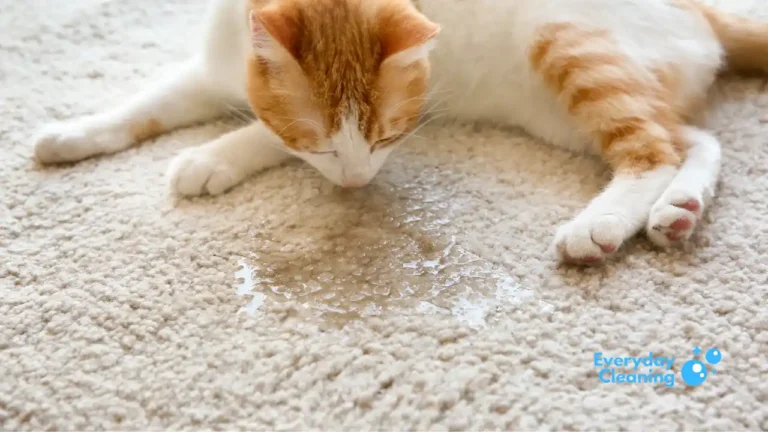
Different types of accidents require slightly different approaches. If you’re dealing with diarrhea, my guide on how to clean diarrhea from carpet provides step-by-step instructions for this particularly challenging mess. For older accidents you’ve just discovered, check out my detailed tutorial on how to clean old dog pee from carpet, which covers techniques for removing both stains and odors from set-in urine.
Essential Products to Keep on Hand
Being prepared makes all the difference when accidents happen. Stock these supplies in an easily accessible spot:
Enzymatic cleaners: These are absolute must-haves for pet owners. Unlike regular cleaners that just mask odors, enzymatic cleaners contain beneficial bacteria that literally eat the organic compounds in urine, feces, and vomit. This eliminates both stains and odors at the source. Some highly-rated options include:
- Nature’s Miracle Advanced Stain and Odor Eliminator – Works on tough, set-in stains
- Rocco & Roxie Professional Strength Stain & Odor Eliminator – Enzyme-powered and safe for pets
Baking soda: This versatile powder absorbs moisture and neutralizes odors. Sprinkle it liberally on fresh stains after blotting up excess liquid, let it sit for several hours or overnight, then vacuum thoroughly.
The best spray to prevent dogs from peeing on carpet: Prevention sprays create an invisible barrier using scents that dogs naturally avoid. Look for products containing essential oils like citrus, peppermint, or eucalyptus. Apply these to previously soiled spots (after they’re completely clean) and areas where you want to discourage marking. Popular options include Bodhi Dog Not Here! Spray and Angry Orange Pet Deterrent.
FAQ
What can I spray on my carpet to stop my dog from peeing on it?
Look for deterrent sprays specifically designed to discourage dogs from marking. The most effective products contain natural scents dogs dislike, such as citrus, vinegar, or bitter apple. Spray these on clean, dry carpet in areas your dog has targeted. Some popular options include Bodhi Dog Not Here! Spray and Nature’s Miracle No More Marking. Remember to always clean accidents completely with an enzymatic cleaner before applying deterrent spray, or your dog will continue returning to the spot because of lingering scent markers.
How do I stop my dog from peeing on the carpet at night?
Nighttime accidents often indicate a need for a late-evening bathroom break. Take your dog out right before bedtime and restrict water access two hours before sleep (but ensure they’re well-hydrated during the day). If accidents persist, consider crate training—most dogs won’t soil their sleeping area. For older dogs, nighttime accidents might signal a medical issue like incontinence or a urinary tract infection, so consult your vet if the problem continues.
How do I stop my dog from peeing on the carpet in the same spot?
Dogs return to the same spot because they can still smell the urine, even after you’ve cleaned it. You need to completely eliminate the odor using an enzymatic cleaner—regular cleaners won’t work. After cleaning, apply a deterrent spray to the area. You can also temporarily block access to that spot with furniture or a baby gate while retraining your dog. Consider placing a pee pad or designated potty area nearby if your dog genuinely needs an indoor option.
What scent keeps dogs from peeing on carpet?
Dogs generally avoid areas that smell like citrus (lemon, orange, grapefruit), vinegar, eucalyptus, and peppermint. Commercially prepared deterrent sprays use these scents in concentrations that are unpleasant to dogs but tolerable to humans. You can also make a DIY version by mixing one part white vinegar with one part water in a spray bottle, or adding a few drops of citrus essential oil to water. Always test on a small, hidden carpet area first to ensure it doesn’t cause discoloration.
How do I permanently remove cat urine smell from carpet?
Cat urine is particularly stubborn because it contains high concentrations of uric acid that crystallizes and bonds to surfaces. Regular cleaning won’t touch these crystals—you absolutely must use an enzymatic cleaner specifically formulated for cat urine. Saturate the affected area completely (the urine likely penetrated to the padding), let the enzyme cleaner work for at least 10-15 minutes, then blot thoroughly. You may need to repeat this process several times. For severe cases, you might need professional extraction cleaning or even padding replacement. A blacklight flashlight can help you identify all affected areas, as dried urine glows under UV light.
Are robot vacuums effective with pet hair?
Modern robot vacuums have come a long way and many models now handle pet hair quite well. Look for models specifically marketed for pet owners, which typically feature stronger suction, self-cleaning brush rolls, and larger dustbins. Brands like iRobot (Roomba j7+ or s9+), Roborock (S7 MaxV), and Eufy offer excellent pet-specific models. However, robot vacuums work best as a supplement to regular vacuuming, not a replacement. They excel at daily maintenance between deeper manual cleanings, keeping surface hair under control so it doesn’t work its way deep into carpet fibers.
How often should I deep clean my carpet when I have pets?
Professional deep cleaning (or thorough DIY steam cleaning) should happen every 3-6 months when you have pets, compared to once a year for pet-free homes. The exact frequency depends on factors like the number of pets, how much they shed, and how much time they spend on carpeted areas. If you notice persistent odors, visible stains, or your carpet feels sticky or matted despite regular vacuuming, it’s time for a deep clean. Regular deep cleaning not only keeps your home fresh but also extends your carpet’s lifespan by removing the oils, dander, and ground-in dirt that damage fibers over time.