
Best Pressure Washer for Home Use in 2026: 8 Picks Tested
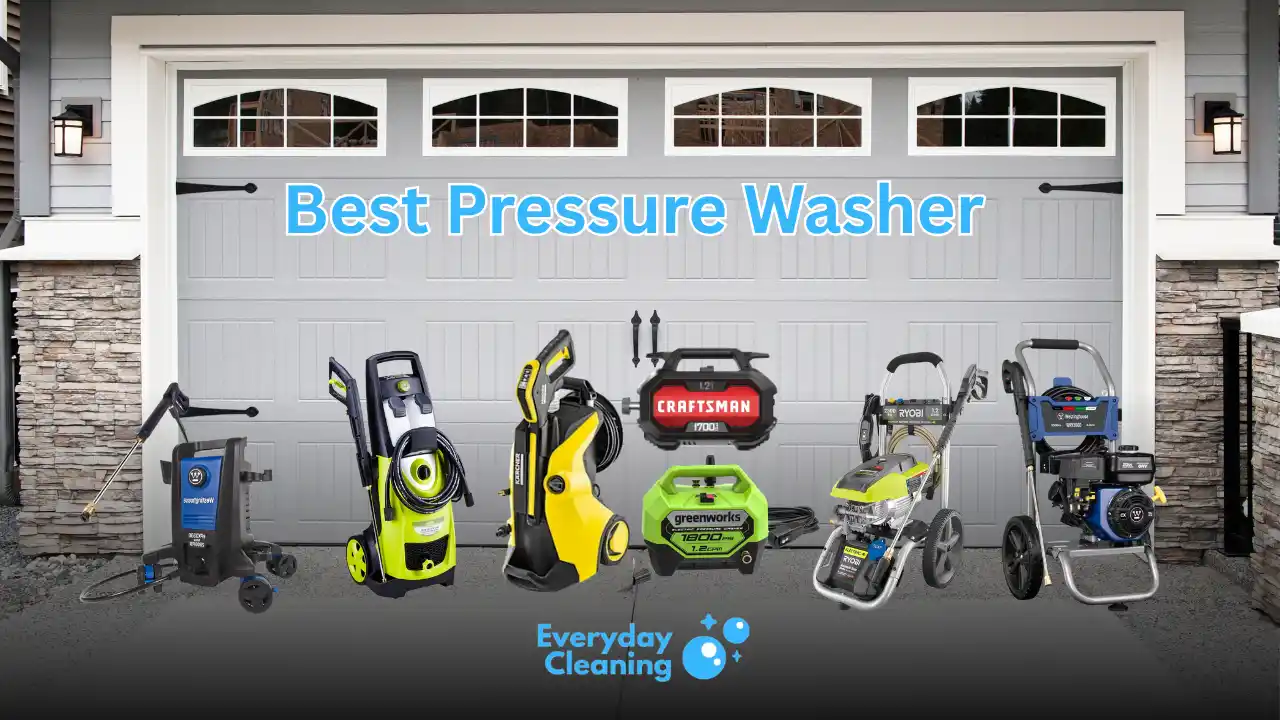
Dirty driveways, grimy siding, and mildew-covered patios are no match for a good pressure washer. We tested and researched 8 top models to find the best pressure washer for home use across every budget and use case.
Our Top Picks
| Recommendation | Product | Reason |
|---|---|---|
| Best Overall | Westinghouse ePX3500 | Anti-tip 4-wheel design, 5 nozzles, 2500 PSI in a 19 lb package — Reviews ↓ |
| Best Budget | Greenworks 1800 PSI | PWMA-certified specs, wheels, and TSS protection at entry price — Reviews ↓ |
| Best Value | Sun Joe SPX3000 | Amazon’s #1 electric with unique dual soap tank and 20,000+ reviews — Reviews ↓ |
| Best for Car Washing | Active 2.0 Pressure Washer | 2.0 GPM foam cannon performance, paint-safe 1100 PSI working pressure — Reviews ↓ |
| Best High-Power Electric | Westinghouse WPX3000e | 3000 PSI induction motor quieter than gas at similar output — Reviews ↓ |
| Best Cordless | WORX WG647 Hydroshot | True no-outlet freedom — runs from a bucket, lake, or tap — Reviews ↓ |
| Best Gas Value | Westinghouse WPX3400 | 3400 PSI and 2.6 GPM, 24,000+ reviews, first-pull reliable engine — Reviews ↓ |
| Best Premium Electric | Greenworks Pro GPW3001 | PWMA-certified 3000 PSI, 10-year motor warranty, smart-sensing brushless motor — Reviews ↓ |
Best Overall: Westinghouse ePX3500
The Westinghouse ePX3500 hits the sweet spot most homeowners actually need. At 2500 PSI and 19 lbs, it handles driveways, siding, decks, and patio furniture without being a hassle to move around.
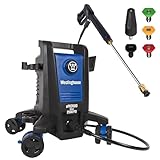
- Delivers 2500 max PSI and 1.76 max GPM (at lowest pressure), and 2000 rated PSI and 1.2 rated GPM of water flow; Pro-style steel extendable 17.5” wand with quick-connect nozzles (0°, 15°, 25°, turbo and soap applicator)
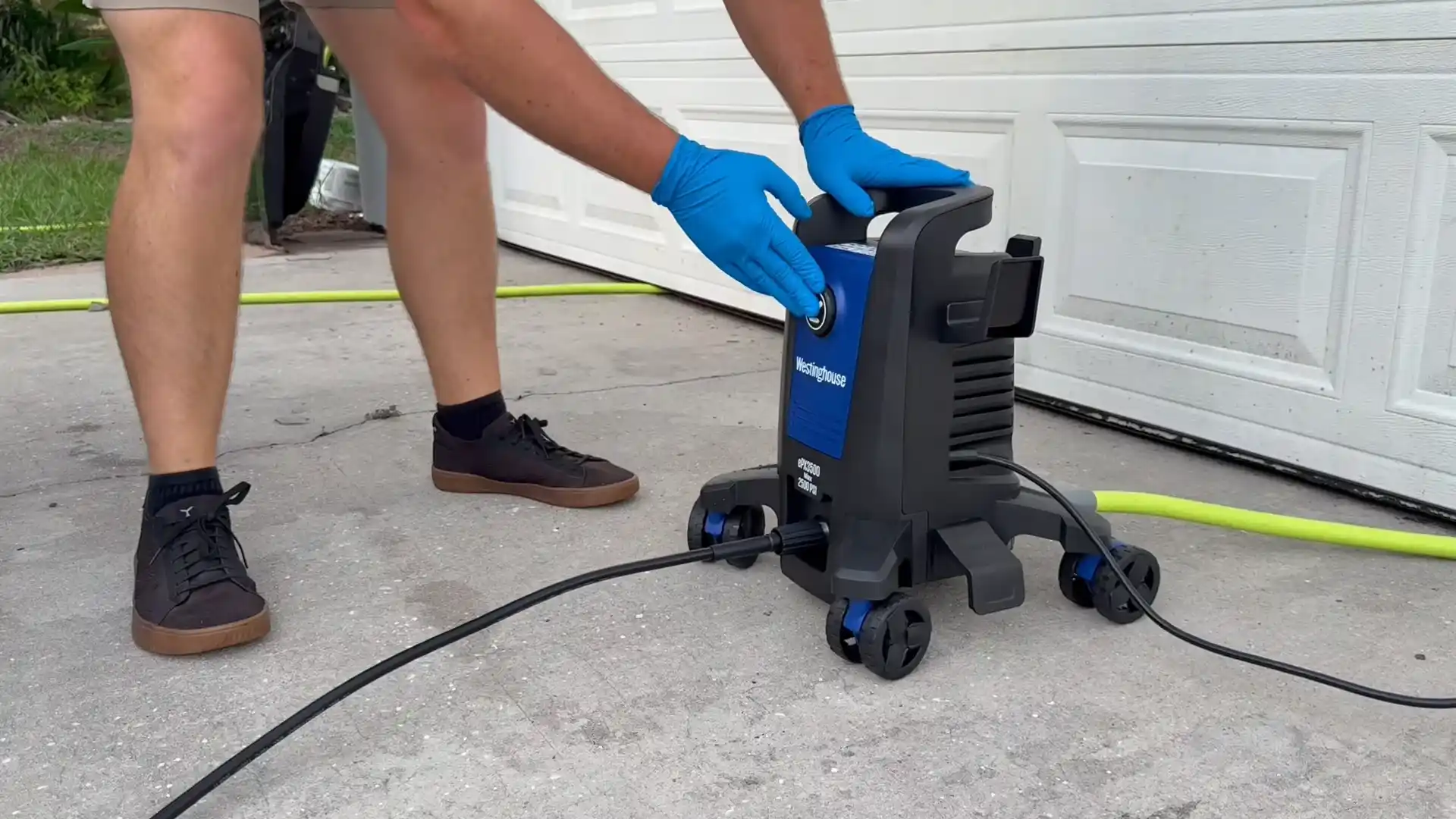
- Super compact and lightweight at 16.5” tall and 19 pounds for convenient storage and portability; Four quick-lock wheels with 360° steering design and low center of gravity engineered for anti-tipping design

Pros and Cons
| Pros | Cons |
|---|---|
| Anti-tipping 4-wheel 360-degree steering design | Small 20oz soap tank runs out quickly |
| 5 nozzles including 0 degree | |
| Onboard soap tank | |
| Only 19 lbs. easy to move | |
| 3-year Westinghouse warranty | |
| TSS pump protection |
Testing Results
PSI and Cleaning Power: Rated at 2500 PSI max and 2000 PSI in continuous use. Handles concrete driveways at medium-duty level. solid for typical residential use. Not a replacement for gas if your driveway is heavily stained.
Concrete / Driveway: Yes, medium duty. Works well on standard residential driveways and sidewalks. Combine with the turbo nozzle for better results on set-in grime.
Siding: Yes. The 25-degree nozzle is ideal here. Cleans vinyl siding fast without risk of damage.
Deck / Fence: Yes. Good all-around choice for wood or composite decks. If you want step-by-step technique, check out our guide on how to pressure wash a deck.
Car Wash: Yes. Use the 40-degree nozzle for vehicles to avoid stripping wax.
Heavy Stains: Light to medium only. Oil stains, rust, and deeply embedded concrete staining need a gas model or the WPX3000e.
Maneuverability: The 4-wheel 360-degree design is the standout here. It doesn’t tip over when you tug the hose, which is a more common annoyance than most buyers expect with upright pressure washers.
Noise Level: Moderate. Quieter than gas models. Acceptable for early morning use in most neighborhoods.
Real-world Usage
Most homeowners end up washing their driveway, knocking mildew off the siding, and cleaning the patio twice a year. The ePX3500 is built exactly for that kind of use. Set it up, roll it out, and clean without fighting the unit.
The 4-wheel design means it stays stable when you walk away from it or pull the hose at an angle. Little things like that matter after an hour of cleaning.
Best Use Case
Ideal for homeowners who want one machine that handles all standard residential tasks. Great for driveways under 500 sq ft, siding, patios, and deck maintenance. Not the right pick if you have a large concrete-heavy property with old staining.
Verdict
The ePX3500 earns the “Best Overall” label because it solves the most common homeowner problems without overcomplicating setup or storage. The anti-tip wheels, 5 nozzles, and 3-year warranty make it a confident buy at the mid-range price point.
For driveways with heavy concrete staining, you’ll want to step up to the WPX3000e or go gas. But for everything else around the house, this is the one we’d recommend first.
Rating: 4.6 / 5
View on Amazon: Westinghouse ePX3500
Best Budget: Greenworks 1800 PSI (5110202)
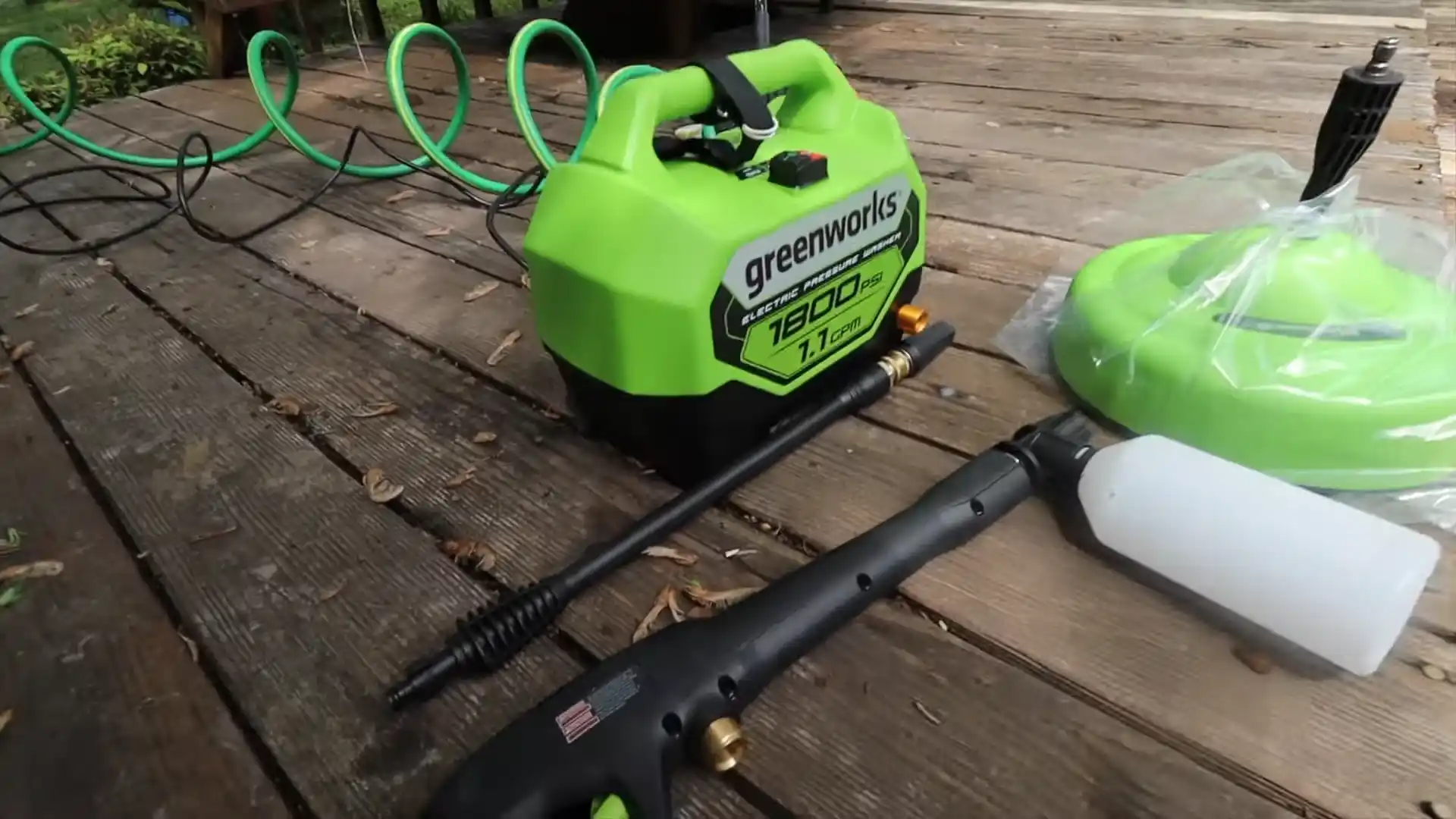
The Greenworks 1800 PSI stands out from other budget models because it’s PWMA certified. That means the 1800 PSI and 1.1 GPM numbers are real, independently verified figures. not inflated marketing claims.

- [1800 PSI @ 1.1 GPM] - Great for light-duty, residential cleaning. Clean cars, trucks, motorcycles, boats, RVs, outdoor patio furniture, windows, decks, etc
- [No Maintenance] - No gas, no oil, no spark plugs, no air filters, and no pull cord Push button start
Pros and Cons
| Pros | Cons |
|---|---|
| PWMA certified. specs are honest | 1800 PSI limits power for concrete |
| Wheels for easy transport | 1.1 GPM is on the lower end |
| TSS pump protection extends lifespan | |
| Trusted Greenworks brand | |
| Lightweight build |
Testing Results
PSI and Cleaning Power: 1800 PSI at 1.1 GPM. Solid for light-duty residential tasks. PWMA certification gives you confidence in what you’re actually buying.
Concrete / Driveway: Light only. Will refresh a lightly dirty concrete surface but won’t move deep stains or oil residue.
Siding: Yes. Good for vinyl and wood siding at standard residential distances.
Deck / Fence: Yes. Works well on deck boards. Use a sweeping motion to avoid wood grain damage.
Car Wash: Yes. 1800 PSI is safe for vehicle paint with the right nozzle distance and angle.
Heavy Stains: No. Not suited for old staining, embedded dirt, or oil.
Portability: The hand-truck style 2-wheel design makes it easy to pull across uneven ground. Better than competing compact models without wheels at this price.
Noise: Standard for a 13-amp electric. Not quiet, but manageable.
Real-world Usage
This is the right starter model for someone who’s never owned a pressure washer and wants to try it without spending $200 or more. It’ll clean patio furniture, rinse down siding, and tackle light deck maintenance without any drama.
The TSS system is worth mentioning here. Most sub-$100 models skip it. It automatically stops the pump when you release the trigger, which protects the motor from heat buildup. It extends the unit’s lifespan noticeably over time.
Best Use Case
First-time buyers who want reliable light-duty cleaning: cars, patio furniture, vinyl siding, and decks. Not the pick for driveway restoration or heavy outdoor cleaning.
Verdict
At this price point, most competitors cut corners on specs, certifications, or features. The Greenworks 1800 PSI doesn’t. PWMA certification, TSS protection, and wheels at under $130 is genuinely good value for the category.
Rating: 4.2 / 5
View on Amazon: Greenworks 1800 PSI
Best Value: Sun Joe SPX3000
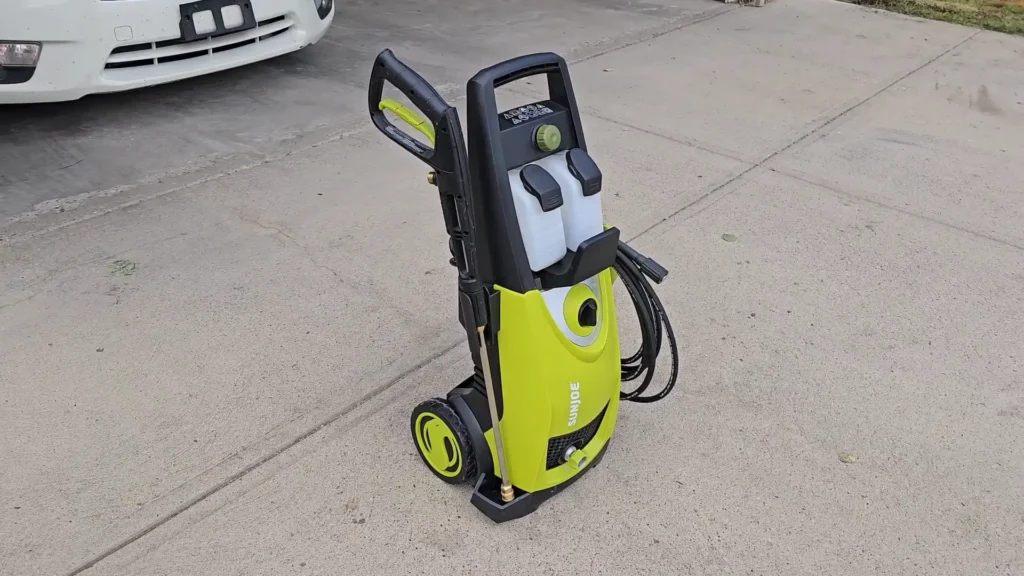
The Sun Joe SPX3000 is Amazon’s top-selling electric pressure washer for a reason. Over 20,000 reviews at 4.8 stars. PWMA certified. And the dual detergent tank system is genuinely useful. you can pre-fill two different soaps and switch between them without stopping.

- High-Pressure Cleaning: This electric pressure washer delivers up to 2030 PSI working pressure and 1.2 GPM water flow to help remove dirt, grime, and buildup from homes, driveways, vehicles, RVs, and outdoor equipment
- Multiple Spray Options: This water pressure washer includes five quick-connect spray tips (0°, 15°, 25°, 40°, and soap) to switch between narrow jet streams and wider fan patterns, plus a soap applicator for detergent use
Pros and Cons
| Pros | Cons |
|---|---|
| 20,000+ Amazon reviews at 4.8 stars | 20 ft hose feels short |
| Unique dual soap tank system | |
| PWMA certified | |
| 5 nozzles including 0 degree | |
| 34-inch wand reaches high areas | |
| Solid brass fittings and metal connections | |
| TSS pump protection |
Testing Results
PSI and Cleaning Power: 2030 PSI with PWMA certification. The dual soap tanks are the standout feature at this tier.
Concrete / Driveway: Yes, medium duty. Handles standard residential driveways. The 0-degree nozzle helps with tougher spots but use with caution. it can etch softer concrete.
Siding: Yes. The 34-inch wand helps reach second-story siding without a ladder.
Deck / Fence: Yes. Works well across deck boards and wood fencing.
Car Wash: Yes. Stick to 25 or 40-degree nozzles for vehicles.
Heavy Stains: Light to medium only. Don’t expect it to restore a heavily oil-stained driveway.
Soap System: The dual 0.9L detergent tanks are a practical differentiator. Fill one with degrease, one with surface cleaner. No stopping to swap bottles.
Real-world Usage
The SPX3000’s review count speaks for itself. It’s not the newest design on the market, but it’s proven. If you buy it and it has a problem, there’s a large community of owners who’ve documented fixes. That matters for a product you’ll use seasonally.
The 34-inch wand is legitimately useful for siding above the first floor. You still need a ladder for a full two-story, but you can reach more than competing wands.
Best Use Case
Buyers who want proven reliability with useful dual detergent tank functionality. Great all-around pick for driveways, siding, patios, and light concrete work. Good choice if you want to use two different cleaning solutions on the same job.
Verdict
It’s Amazon’s #1 seller for a reason. The dual soap tank is genuinely useful, the PWMA certification means the 2030 PSI is real, and 20,000 reviews at 4.8 stars is a hard argument to ignore. Slightly lower GPM than newer models, but the track record compensates.
For more specific use cases once you have it, check out our guide on how to pressure wash a patio and how to clean a driveway.
Rating: 4.4 / 5
View on Amazon: Sun Joe SPX3000
Best for Car Washing: Active 2.0
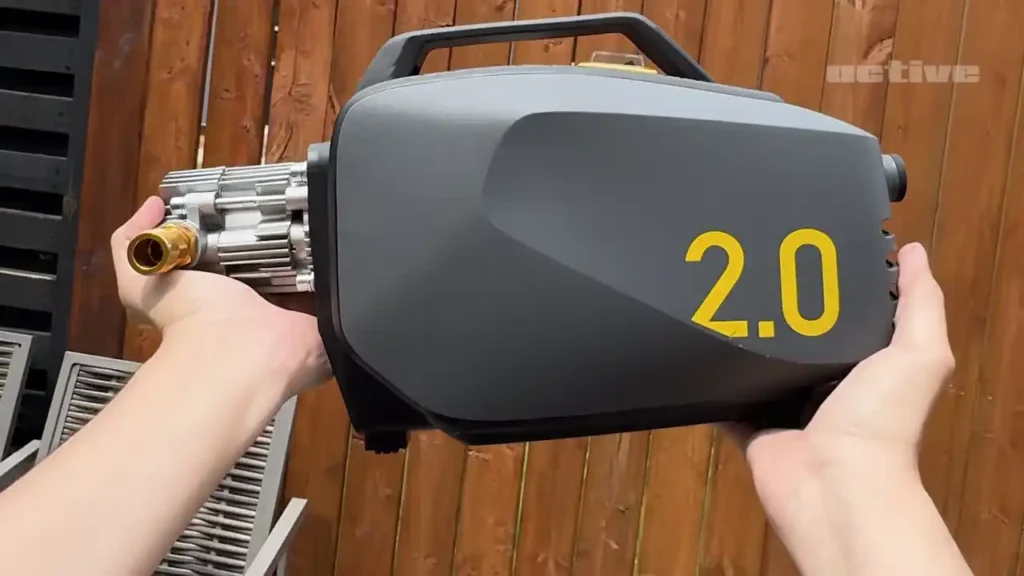
The Active 2.0 is a cult favorite among car detailing enthusiasts. It runs at 1100 PSI working pressure, which is intentional. That low operating pressure combined with 2.0 GPM flow makes it ideal for foam cannon work without any risk to clear coat or paint.

- COMPLETE KIT READY FOR IMMEDIATE USE: The 2.0 GPM 1800 Peak PSI unit arrives with all included hoses, nozzles, and accessories needed for fast, deep cleaning transformations on cars, patios, and detailing work without any additional purchases – all the while preventing paint damage
- UPGRADE-READY CONNECTIONS: Universal threading supports garden hose 3/4" GHA and pressure side M22-14mm for broad accessory fit. This interface lets you integrate aftermarket tools, hoses, and add-ons as your system evolves
Pros and Cons
| Pros | Cons |
|---|---|
| 2.0 GPM. best foam cannon flow on this list | 1100 PSI working pressure limits heavy-duty cleaning |
| 5-piston pump rated 250 hours lifespan | No wheels. compact box form only |
| Paint-safe 1100 PSI won’t damage clear coat | |
| Ultra-compact. smaller than a 3-gallon jug | |
| Strong community following on r/AutoDetailing | |
| Consistent multi-year performance reported |
Testing Results
PSI and Cleaning Power: 1100 PSI operating, 1800 PSI max. The high GPM (2.0) is what makes this unit perform. pressure washer cleaning is a product of both PSI and flow rate.
Concrete / Driveway: Light only. Not what this machine is for.
Siding: Light to medium. Fine for gentle rinse-downs, not heavy mildew or staining.
Deck / Fence: Yes (gentle). Works well for wood decks where you want to clean without grain damage risk.
Car Wash: Best in class. The 2.0 GPM flow saturates foam cannon output in a way that lower-flow models can’t match. Clean rinsing, no paint risk, paint-safe pressure across the entire surface.
Heavy Stains: No. Not designed for it.
Pump Longevity: The 5-piston pump is rated to 250 hours. For a pressure washer used seasonally, that’s years of service.
Real-world Usage
If you detail your own car or have more than one vehicle, the Active 2.0 is worth every dollar. The foam cannon coverage at 2.0 GPM is noticeably better than what you get from budget electrics. You load the cannon, coat the car, let it dwell, and rinse. The whole process is faster and more satisfying than using a cheaper unit.
For driveways and patios, it’s not the tool to reach for. Use it on the car, pack it away, and grab a different machine for concrete.
Best Use Case
Car owners and detailing enthusiasts who prioritize paint-safe washing and foam cannon performance. Not the right pick if you also need to clean driveways or heavy outdoor surfaces.
Verdict
Niche product, but very good at what it does. The 250-hour pump rating, 2.0 GPM flow, and compact size make it a standout for car detailing. The r/AutoDetailing community has been recommending this unit for years, and the multi-year performance reports back it up.
Not for everyone. If you want one machine for everything, the ePX3500 is the better choice.
Rating: 4.5 / 5
View on Amazon: Active 2.0 Pressure Washer
Best High-Power Electric: Westinghouse WPX3000e
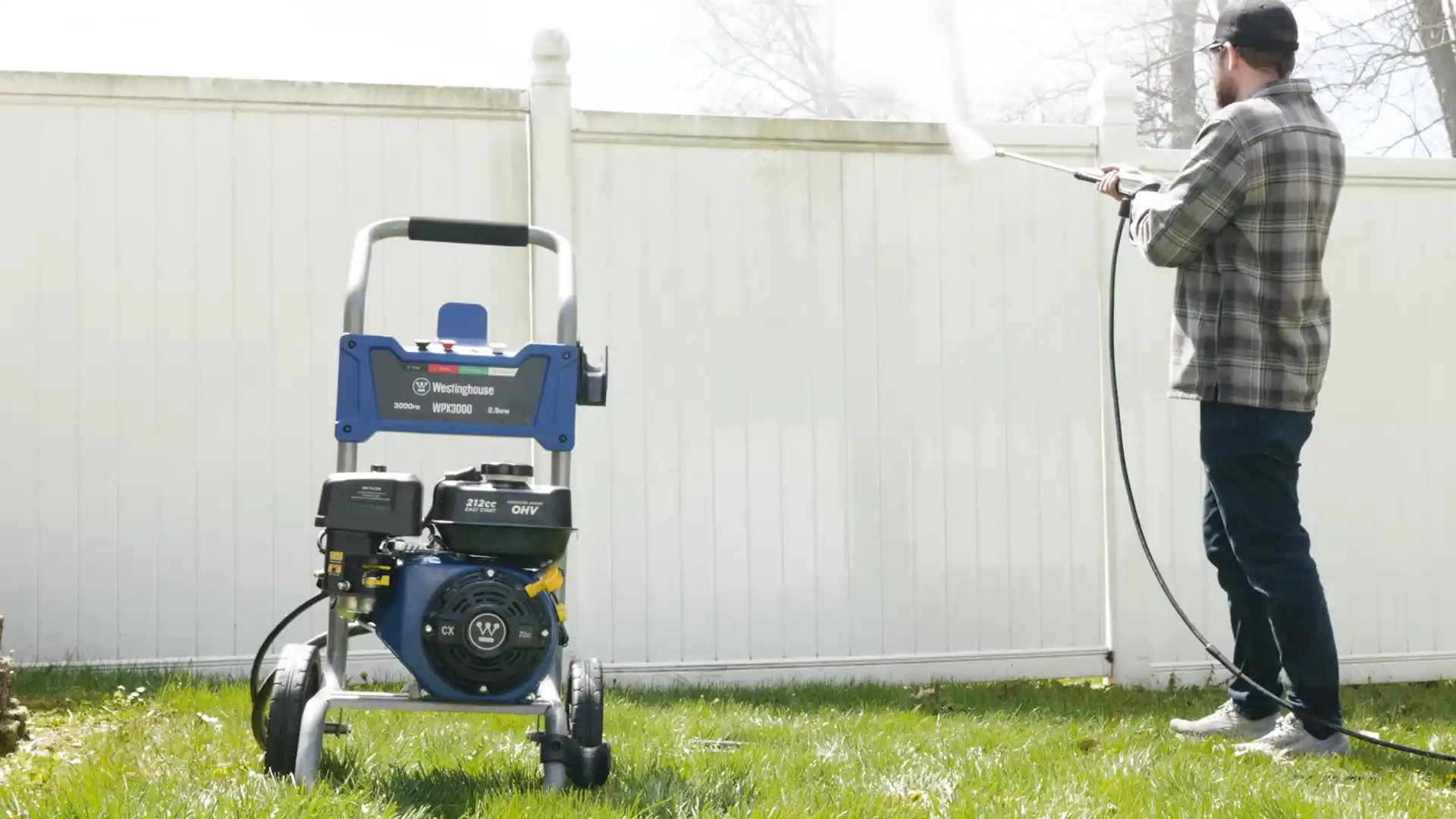
The WPX3000e is Westinghouse’s most powerful corded electric, and the induction motor makes it noticeably quieter than gas models running at similar output. Testers have reported using it at 7am without neighbor complaints.
- Delivers 3000 max PSI and 1.76 max GPM (at lowest pressure), and 2600 rated PSI and 1.1 rated GPM of water flow. Perfect for decks, sidewalks, fences, garage floors, exterior walls, cars and patio furniture; Comes with a .45 gallon soap tank
- 25′ abrasion resistant super-flex hose with lightweight high pressure metal spray gun and wand with 5 quick connect nozzles (0°, 15°, 25°, soap and turbo); Compatible with pressure washer accessories like surface cleaners, undercarriage cleaners and foam cannons with M22 fittings
Pros and Cons
| Pros | Cons |
|---|---|
| 3000 PSI (2600 rated). most powerful electric here | Heavy at 36.8 lbs |
| Induction motor is quieter than gas at similar power | |
| 10-inch never-flat wheels handle rough terrain | |
| 0.45 gallon onboard soap tank | |
| M22 accessory compatibility for aftermarket hoses | |
| Steel frame construction | |
| 3-year Westinghouse warranty |
Testing Results
PSI and Cleaning Power: 3000 PSI max, 2600 PSI rated. Best electric PSI on this list. The induction motor delivers sustained power without the heat buildup and noise of universal motors.
Concrete / Driveway: Yes, heavy duty. This is where the WPX3000e separates itself from mid-range electrics. It handles tough concrete staining, old grime, and broad driveway areas better than anything else in the electric category. For technique, see our full guide on how to pressure wash concrete.
Siding: Yes. All nozzles available including 0-degree for targeted tough spots.
Deck / Fence: Yes. Good control for wood surfaces with 25 or 40-degree nozzle.
Car Wash: Yes, with care. Use the 25 or 40-degree nozzle. Keep distance.
Heavy Stains: Yes. Handles heavy surface staining better than any other electric on this list.
Noise: Induction motor is noticeably quieter than gas alternatives. Still louder than a typical appliance. wear hearing protection on long sessions.
Real-world Usage
This is the right pick for homeowners with large properties, heavily soiled driveways, or serious mildew problems on two-story siding. The 10-inch wheels roll over gravel, grass edges, and rough concrete transitions without getting stuck.
The M22 compatibility is a practical bonus. If you want a longer hose down the line, aftermarket M22 hoses are affordable and widely available.
Best Use Case
Homeowners who want gas-level cleaning power without gas noise, exhaust, or maintenance. Ideal for heavy concrete driveways, large patios, and two-story siding work. Not the pick if you just need to rinse patio furniture or wash a car.
Verdict
Best high-power electric for home use, full stop. The induction motor, 3000 PSI, and 10-inch wheels combine into a machine that competes with light-duty gas models at a fraction of the noise. If you’re dealing with removing oil stains from your driveway or heavy concrete staining, this is the electric to consider before going gas.
Rating: 4.5 / 5
View on Amazon: Westinghouse WPX3000e
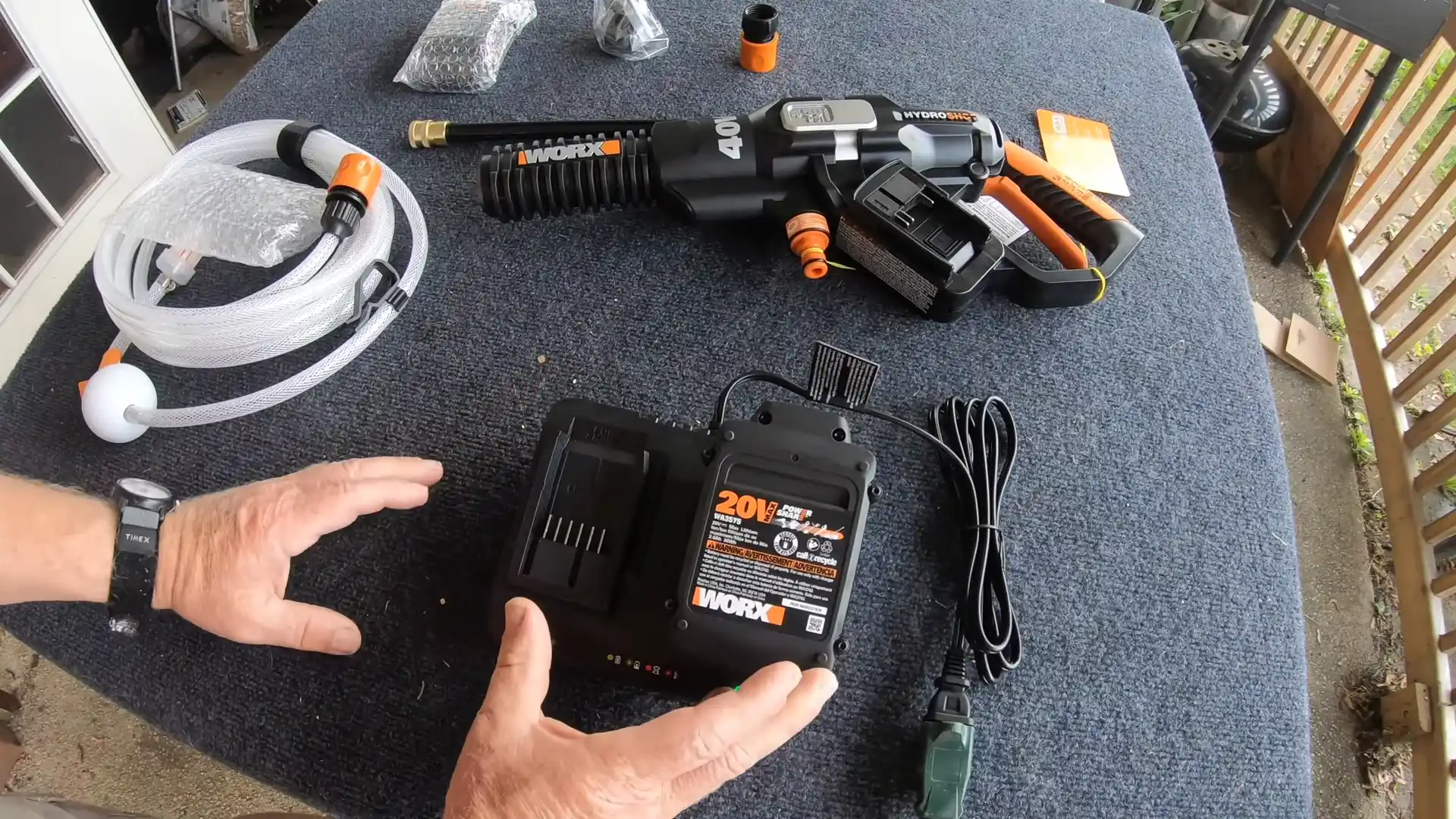
Best Cordless: WORX WG647 Hydroshot (40V)
The WORX Hydroshot is a different category from corded machines. At 800 PSI it can’t touch concrete or siding. But it runs from a bucket, a lake, or a rain barrel with zero outlet needed. That portability is the entire value proposition.

- Powerful Cleaning Performance: 800 PSI with 1.0 GPM for maximum efficiency in removing grime and debris
- Advanced Motor Technology: Efficient Brushless Motor 2.0 for longer runtime and enhanced durability
Pros and Cons
| Pros | Cons |
|---|---|
| True cordless freedom. no outlet needed | 800 PSI is limited. won’t clean concrete or tough stains |
| Draws from bucket, lake, or rain barrel | Best for rinsing, not deep cleaning |
| 5-in-1 nozzle in one attachment | |
| Brushless motor for efficiency | |
| Compatible with all WORX 40V PowerShare batteries | |
| 2-speed ECO / full mode | |
| Very lightweight at 5.8 lbs |
Testing Results
PSI and Cleaning Power: 800 PSI at 1.0 GPM. This is a rinsing tool with some light cleaning ability. Don’t expect it to perform like a corded electric.
Concrete / Driveway: No. Insufficient PSI.
Siding: No. 800 PSI is too low for effective siding cleaning.
Deck / Fence: Light rinse only. Will remove loose debris but not mildew or staining.
Car Wash: Yes for rinsing. Good foam rinse tool for vehicles when you’re away from outlets.
Patio Furniture: Yes. Works well for quick rinse-downs on chairs and tables.
Heavy Stains: No.
Portability: The real standout. Fill a bucket from anywhere, drop in the intake hose, and go. Works on camping trips, boat docks, garages, and anywhere an outlet isn’t available.
Real-world Usage
This unit makes most sense if you’re already in the WORX 40V PowerShare ecosystem and want a portable rinse tool. It’s also genuinely useful for boat owners, RV campers, and anyone doing quick seasonal rinse jobs in locations without power access.
At 5.8 lbs with a battery, you can carry it one-handed while directing the wand. That’s a convenience most corded machines can’t match.
Best Use Case
Users who need outlet-free portability for light rinse tasks. Ideal for RV and boat use, camping, quick car rinse-offs, and patio furniture. Not a substitute for a real pressure washer for home cleaning tasks.
Verdict
If you want cordless convenience for light jobs, the Hydroshot delivers. If you want to actually clean driveways and siding, you need a corded or gas machine. The two aren’t really competing for the same buyer.
Rating: 4.0 / 5
View on Amazon: WORX WG647 Hydroshot
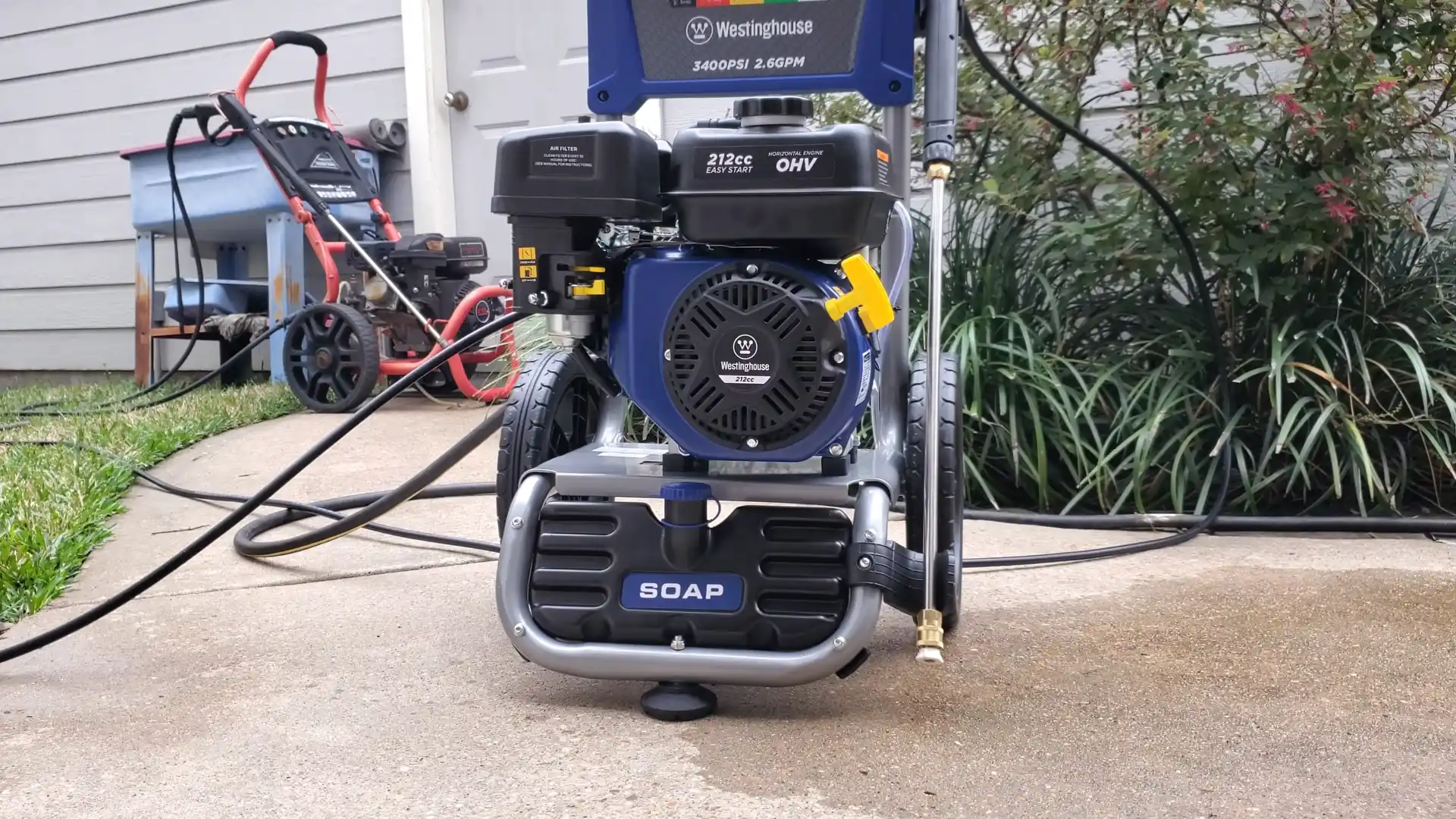
Best Gas Value: Westinghouse WPX3400
The Westinghouse WPX3400 is the most popular residential gas pressure washer on Amazon, with 24,000+ reviews at 4.6 stars. At 3400 PSI and 2.6 GPM, it has more combined cleaning power than any electric model on this list.

- 3400 PSI and 2.6 GPM of Powerful, Deep-Cleaning Water Pressure Perfect for Decks, Sidewalks, Siding, Fences, Railings, Garage Floors, Exterior Walls, Cars and Patio Furniture – Easy to Fill 1 Gallon Gas Tank and Half Gallon Onboard Soap Tank
- 25′ Foot Abrasion Resistant Super-Flex Hose With Lightweight High Pressure Spray Gun and 5 Quick Connect Nozzles (0°, 15°, 25°, 40° & Soap) - Compatible with Pressure Washer Accessories such as Surface Cleaners, Undercarriage Cleaners, and Foam Cannons with M22 fittings
Pros and Cons
| Pros | Cons |
|---|---|
| 3400 PSI and 2.6 GPM. most powerful on this list | 67 lbs. heaviest pick here |
| 24,000+ Amazon reviews at 4.6 stars | Requires oil changes and winterization |
| 12-inch never-flat wheels handle rough terrain | |
| 1.6L onboard soap tank | |
| Steel frame construction | |
| 3-year Westinghouse warranty | |
| Consistent easy-start engine |
Testing Results
PSI and Cleaning Power: 3400 PSI at 2.6 GPM. The cleaning power gap between this and any electric is large. Oil stains, heavy concrete grime, thick mildew on brick. this handles them where electrics fall short.
Concrete / Driveway: Yes, heavy duty. The gold standard for residential concrete cleaning. Our full guide on how to clean concrete driveway covers the best technique to use with a machine at this power level.
Siding: Yes. Use 25 or 40-degree nozzle from a safe distance. Avoid the 0-degree near vinyl seams.
Deck / Fence: Yes. 40-degree nozzle is recommended to avoid grain damage on wood.
Car Wash: Yes, with the 40-degree nozzle at distance. Be cautious. 3400 PSI can strip paint if you’re too close.
Heavy Stains: Yes. This is where the gas model earns its price. Old stains, embedded dirt, thick algae. all cleared at normal walking speed.
Startup: Consistent first or second pull. The 212cc Westinghouse OHV engine is well-regarded for reliability in this category.
Noise: Loud. Typical residential gas engine volume. Not suitable for early morning or late evening use in most neighborhoods.
Real-world Usage
Gas pressure washers make the most sense for homeowners with large driveways, rural properties, or serious seasonal cleaning needs. You’re not going to use this every week. it’s a once or twice a year machine that gets the job done properly each time.
Storage and maintenance are the trade-offs. It needs fresh oil, winterization before storage, and fuel stabilizer if you’re putting it away for months. None of that is complicated, but it does require more attention than plugging in a cord.
Best Use Case
Homeowners with large concrete driveways, heavy staining, or properties where electric models simply haven’t kept up. Also ideal for rural properties with limited outlet access near cleaning areas. Not suitable for car washing without careful nozzle selection, and not ideal for noise-sensitive neighborhoods.
Verdict
If you want maximum cleaning power at a reasonable price, the WPX3400 is the pick. The 2.6 GPM and 3400 PSI combination clears heavy-duty residential jobs fast. The 24,000+ reviews are not a coincidence.
The gas trade-offs are real. But if your electric hasn’t been getting the driveway clean, this will.
Rating: 4.6 / 5
View on Amazon: Westinghouse WPX3400
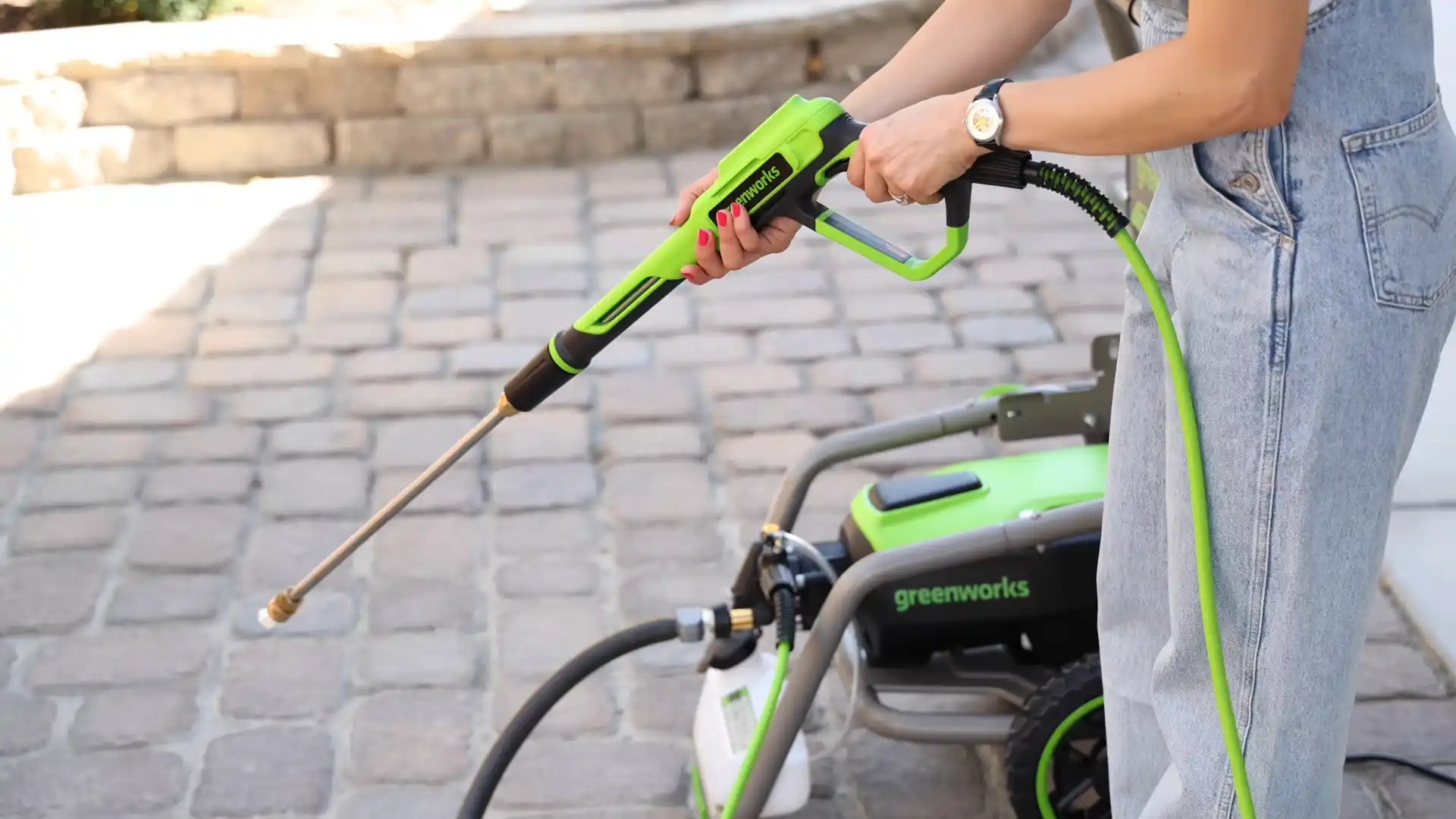
Best Premium Electric: Greenworks Pro GPW3001
The Greenworks Pro GPW3001 is the “hidden gem” of the electric pressure washer market. PWMA-certified 3000 PSI and a 10-year motor warranty are the headliners, but the TruBrushless smart-sensing motor is what actually separates it. It automatically adjusts pressure based on the nozzle you’ve attached.

- TRUBRUSHLESS MOTOR : Powerful 14 Amp TruBrushless motor generates 3000 PSI and 2.0 GPM for maximum cleaning power.Cleaning Units 3300 C.U. Maximum Inlet Water Temperature 104°F (40°C).Frequency : 60 hz
- PWMA CERTIFIED (Pressure Washer Manufacturers‘ Association) : All water pressure (PSI) and flow rate (GPM) claims for this product were tested and verified by an independent lab, ensuring you’ll take home the power you were promised
Pros and Cons
| Pros | Cons |
|---|---|
| PWMA certified. 3000 PSI is independently verified | Heaviest electric at 49 lbs |
| Industry-best 10-year motor warranty | Expensive at $374-499 |
| TruBrushless motor auto-adjusts per nozzle | |
| 1 gallon soap tank. largest on list | |
| 25 ft kink-resistant Uberflex hose | |
| Wheelbarrow steel frame | |
| Inline GFCI with waterproof plug |
Testing Results
PSI and Cleaning Power: PWMA-certified 3000 PSI at 2.0 GPM max. The TruBrushless motor is a genuine engineering differentiator. it senses nozzle type and adjusts output automatically. You don’t overpressure delicate surfaces by accident.
Concrete / Driveway: Yes, heavy duty. At 3000 PWMA-certified PSI, this is the most capable electric for concrete on this list. Handling removing mold from concrete or deep driveway staining is within range here.
Siding: Yes. Smart motor adjustment makes it safer on delicate siding than manually selecting nozzles.
Deck / Fence: Yes. The auto-sensing removes guesswork on wood surfaces.
Car Wash: Yes. Use 40-degree nozzle at appropriate distance.
Heavy Stains: Yes. Best electric pick for heavy residential staining.
Longevity: The 10-year motor warranty is industry-best. No other electric on this list comes close. For a machine you plan to own for many years, that changes the value calculation.
Real-world Usage
The GPW3001 is for buyers who want gas-level cleaning without gas. The PWMA-certified 3000 PSI is real power. The smart motor sensing is a feature you appreciate more over time. it takes one variable out of the equation when switching between tasks.
The 1-gallon soap tank is practical on bigger jobs. You fill it once and clean the entire driveway, patio, and siding without stopping to reload. Most competitors run out midway through.
The 49 lbs is a real weight penalty. The wheelbarrow frame helps, but this isn’t a unit you’ll carry one-handed.
Best Use Case
Homeowners who want the most powerful electric available for long-term ownership. Best for large driveways, concrete work, and heavy residential cleaning. The 10-year motor warranty justifies the premium price for buyers who plan to keep it. Not for light-duty users or anyone who doesn’t need 3000 PSI.
Verdict
The GPW3001 is the best electric pressure washer for home use if budget isn’t a primary concern. PWMA-certified 3000 PSI, a decade of motor coverage, and intelligent auto-sensing make it the most capable corded electric available. You’re paying for it, but you’re getting exactly what you pay for.
Rating: 4.7 / 5
View on Amazon: Greenworks Pro GPW3001
What Makes the Best Pressure Washer for Home Use?
PSI and GPM: Understanding Real Cleaning Power
PSI and GPM are both important, but most buyers fixate on PSI alone. The actual cleaning power of a pressure washer is determined by both together. A machine with 2000 PSI and 2.0 GPM will often clean faster than one with 2500 PSI and 1.0 GPM because higher flow moves more water across the surface.
For most home tasks, 1800 to 2500 PSI is enough. Light jobs like car washing and patio furniture need under 1500 PSI. Medium jobs like siding, decks, and standard driveways work well at 2000 to 2500 PSI. Heavy concrete cleaning benefits from 2600+ PSI, which is where gas models and the WPX3000e start to separate themselves.
PWMA and CETA Certification
This is more important than most buyers realize. Pressure washer PSI claims are frequently inflated. A machine labeled “4800 PSI” may operate at 2400 PSI in real use. PWMA and CETA are independent certification bodies that verify PSI and GPM figures. Any model with one of these certifications is giving you honest specs.
On this list, the Greenworks 1800 PSI, Sun Joe SPX3000, and Greenworks Pro GPW3001 carry PWMA certification. The Karcher K1700 carries CETA certification. If you’re comparing models without certification, treat advertised PSI with skepticism.
Motor Type: Universal vs Induction vs Brushless
Universal motors are the most common in budget and mid-range electric models. They’re fine for occasional use but run hotter and wear faster than other types. Induction motors, used in the Karcher K5 Premium and Westinghouse WPX3000e, run cooler and quieter with longer rated lifespans. Brushless motors, used in the Greenworks Pro GPW3001’s TruBrushless system, are the most advanced and efficient, with smart-sensing features in the top tier.
For occasional seasonal use, a universal motor is perfectly adequate. If you’re buying a machine you expect to use heavily over many years, the induction or brushless options are worth the price difference.
Electric vs Gas vs Battery
Electric corded models are quieter, easier to store, require no fuel or oil, and handle most residential tasks up to heavy-duty concrete at the high end. They’re limited by cord length and outlet availability.
Gas models deliver the most raw power. Nothing beats a 3400 PSI gas machine on a large concrete driveway. The trade-offs are noise, emissions, fuel maintenance, and more complex storage.
Battery-powered models offer true portability with no outlet needed. The trade-off is power. even the best cordless models max out around 800-3200 PSI depending on voltage, and runtime is limited by battery capacity.
For most homeowners, an electric corded model in the 2000 to 2500 PSI range covers everything. Go gas if you have a large property with heavy-duty cleaning needs or limited outlet access.
Nozzles and Accessories
Quick-connect nozzle sets are the standard. The angle determines cleaning aggression: 0-degree is a pinpoint beam for very tough spots, 15-degree for concentrated cleaning, 25-degree for general use, 40-degree for gentle rinse, and soap nozzle for low-pressure detergent application.
More nozzles don’t automatically mean better performance. What matters is whether the right angles are included for your tasks. If you’re washing a car, you need the 40-degree. If you’re blasting concrete, the 15-degree does most of the work. The turbo nozzle (a rotating 0-degree) is worth having for heavily soiled surfaces.
Hose Length and Maneuverability
A 20-foot hose covers most small jobs but becomes annoying on driveways, large patios, or two-story siding. A 25-foot hose is noticeably better. If you need more reach, M22-compatible machines accept aftermarket extensions.
Wheel design matters more than most buyers expect. Machines with wide-base 360-degree wheels or hand-truck-style designs stay stable when you pull the hose sideways. Narrow upright designs tip easily, which interrupts work and can damage the machine.
How to Use a Pressure Washer Effectively
Start with the right nozzle for the surface. Most damage from pressure washers happens from using the 0-degree or 15-degree nozzle too close to a sensitive surface. Wood decks, painted surfaces, and vehicles should almost always use 25-degree or 40-degree.
Apply detergent before pressure washing, not after. Use the soap nozzle to apply cleaning solution, let it dwell for a few minutes, then switch to your cleaning nozzle and rinse. Trying to clean with pressure alone on heavily soiled surfaces takes much longer and wastes water.
Work in sections and keep the wand moving. Holding the spray in one spot too long can etch concrete or damage wood grain. A steady sweeping motion gives even results.
For two-story siding, start at the top and work down. Gravity will pull loosened dirt and soap down toward areas you’ll clean next.
After you finish, run clean water through the system before disconnecting the soap tank. This prevents soap residue from drying inside the fittings and pump.
Frequently Asked Questions
What PSI pressure washer do I need for home use?
For most home tasks, 1800 to 2500 PSI covers everything from car washing to driveways. Light jobs like vehicles and patio furniture need under 1500 PSI. Heavily soiled concrete and two-story siding cleaning benefits from 2500 PSI or more. Gas models with 3000+ PSI are only necessary for large driveways with serious staining or regular heavy-duty use.
Is electric or gas better for home use?
Electric is better for most homeowners. It’s quieter, easier to store, requires no fuel or oil maintenance, and handles all standard residential cleaning tasks up to 3000 PSI at the high end. Gas makes sense for large properties with heavy-duty concrete, limited outlet access, or if you’re regularly cleaning big areas and want the fastest results. Check out our roundup of the best pressure washer for driveways if that’s your primary use case.
What is PWMA certification and does it matter?
PWMA stands for Pressure Washer Manufacturers’ Association. PWMA-certified models have their PSI and GPM figures independently tested and verified. It matters because advertised PSI is frequently inflated on uncertified models, sometimes by 50-100%. If a machine isn’t PWMA or CETA certified, treat the specs with skepticism.
How do I choose between a portable and full-size pressure washer?
Portable and compact models (under 25 lbs) are easier to store and move but have lower PSI and shorter hoses. Full-size upright models on wheels handle bigger jobs and often have larger soap tanks and longer hoses. If you’re primarily washing a car and cleaning patio furniture, a compact model is fine. If you’re cleaning large driveways and siding, a full-size model will be faster and less frustrating to work with. Our guide to the best portable pressure washer covers the compact category in more detail.
How often should I pressure wash my home?
Most exteriors benefit from washing once per year. Driveways and concrete typically need washing once or twice a year depending on traffic and local climate. Areas with heavy mildew, algae, or tree coverage may need more frequent attention. Deck cleaning before and after summer is a common schedule for most homeowners. For technique on specific surfaces, see our guides on how to pressure wash patio and how to clean a concrete patio.


One Comment
Comments are closed.